The Sound of Mr. Matusow<\/strong><\/h4>\n\n\n\nAs with everything else in the last 18 months, the work of the Unlocking Our Sound Heritage<\/a> (UOSH) project has had to adapt around the restrictions of the Covid-19 pandemic. Back in April, with our project-specific recordings inaccessible until the summer months, we shifted focus onto digitising a number of recordings held in the Library Special Collections at the Keep. Among these recordings are several boxes of items belonging to the Harvey Matusow Archives.<\/p>\n\n\n\nFor the uninitiated, Harvey Matusow (1926-2002) is a complex character to say the least.\u00a0 With a life said to \u2018intersected every major artery of post-war America\u2019<\/a> one could likely dedicate years of study to just a single facet of his existence without ever quite getting a hold on what the man was truly all about.<\/p>\n\n\n\nA (very) boiled down account of his life goes something like this:<\/p>\n\n\n\n
Born 1926 in New York City to Russian immigrant parents, Matusow served in the Second World War before becoming affiliated with the communist part in Manhattan. In 1950 he approached the FBI offering his services as a paid informant, beginning a professional career in testimony and blacklisting which eventually saw him become campaign aide to Joseph McCarthy and member of the House of Unamerican Activities Committee (HUAC). The next few years in this capacity would see Matusow rise to the status of a minor celebrity in anti-communist circles before an eventual fall WHEN. Shockingly, he then recanted and produced his 1955 book \u2018False Witness\u2019 in which he revealed that much of his prior testimony was built not only on fiction and untruth but was actively encouraged and paid for by McCarthy et al. This admission ultimately landed Matusow in jail for perjury where he served a five year sentence (Wilhelm Reich was apparently in the cell next door). Upon his release, a socially ostracised Matusow struggled to build a new life in New York but found himself alienated and despised by many across all sides of the political spectrum. He decided to relocate to London in 1966, immediately attaching himself to the fledgling underground counterculture, spending a little under a decade working in the arts and media. Perhaps his most notable achievement during this era was to produce the International Carnival of Experimental Sound in 1972 \u2013 a veritable who (was) who of avant-garde music and experimental composition of the time, showcasing work from the likes of John Cage, Charlotte Moorman, Nam June Paik and Robert Ashley to name only a few. Following the event, Matusow moved back to America in 1973 and become involved with theatre and television, often in the guise of \u2018Cockyboo\u2019 \u2013 a clown persona he developed in this period. Accounts of the final decades of Matusow\u2019s life depict a somewhat more sedate, spiritual existence in which he converted to the Mormon faith, changed his name for a time to Job, worked frequently with charitable causes and even became a children\u2019s entertainer. In 2002 Matusow was involved in a car accident which would ultimately put an end to his dazzlingly unpredictable and multi directional life.<\/p>\n\n\n\n
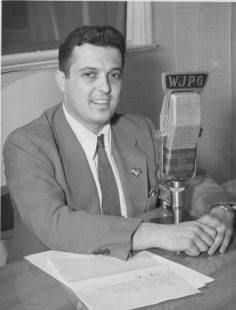
Harvey Matusow – SxMs23<\/strong><\/figcaption><\/figure><\/div>\n\n\n\nThe materials held by Special Collections are split into two separate archives which chronicle Matusow\u2019s political and creative pursuits across the years. Contained within both are a number of audio recordings captured mostly on open reel tape. My own interest in Matusow was piqued when I learned of his artistic inclinations during the 1970s. Upon Googling his name whilst digitising tapes from the political archive I was gobsmacked to read that Matusow had rubbed shoulders with such luminary artists as Henry Chopin, Lars-Gunnar Bodin, the Fylkingen group and, most staggeringly, composer Anna Lockwood to whom he had been married and collaborated with frequently. The name \u2018Harvey Matusow\u2019 was suddenly imbedded in an era of sound and culture that I had spent years of my life consuming, yet I could recall nothing of having ever noticed it before. As if the victim of a kind of avant-garde Mandela Effect, I began to realise that I even had music and writing by the man sat on my shelves at home.<\/p>\n\n\n\n
In spite of these discoveries and even having now had the chance to digitise recordings from his creative archive, I cannot say I feel much closer to understanding precisely who he was, what he did nor why. It seems I am not alone in this confusion however as even still opinions of Matusow and views on his activities tend to be united only by an inability to arrive at a single, provable conclusion. Views on the nature of his true motivations as informant and member of HUAC still defy consensus, even in spite of the significant documentation and media attention those activities received. Voices from the Left and Right of American politics have described his conduct during this era as damaging and unethical, yet there also exists sympathetic praise for the way in which his movements exposed the grizzly political machinations of the age. Others simply paint Matusow as a career hustler, driven by spotting opportunities for renown and a quick buck more so than any of ideology he aligned himself with. Some will cite their admiration for just how much he engaged with in his life, particularly in the creative world, while by others he is regarded as a brazen claimant of achievements and initiatives that he was barely involved in. Even friends who describe him as affable, generous and creative company seem to measure their experiences with Matusow in grains of salt. Whatever divide he found himself straddling, views on Matusow from either end are often entangled in a web of personal relations, histories and the vested interests of a complex cast of figures both political and cultural. To further complicate matters, these divergent, independent opinions exist in comparative scarcity when placed within the wider narrative about Harvey Matusow, which more often than not tends to be formed from things previously said, written or recorded by the man himself.<\/p>\n\n\n\n
With my engagement in the archive mostly limited to creating digital copies of the audio content (quickly and in large volumes) it would not be an especially interesting blog post for me to proffer my own opinions about what he might truly have been getting at. Rather, I find it more interesting to talk about some of what can be found in the archive itself, focussing simply on what it is we hear when listening. In a visual culture such as ours, audio recordings can often obscure as much as they reveal about their subjects and we are required to depend on a degree of imagination and guesswork when filling in the gaps left by a lack of visual confirmation. Audio materials also requires us to pay close attention to the content and listen intently lest we miss vital fragments of information which disappear as suddenly as they arrive. We do not have an aural equivalent for the term \u2018blink and you\u2019ll miss it\u2019 but if we did, it would be a perfect description of the challenges in researching or cataloguing sound recordings. The trade-off when we do choose to engage with this form of listening is that such recordings can open up layers of detail unavailable to us in the materials we visually study. For someone like Matusow who evades easy classification and whose legacy exists largely as the result of his own curation, we find in his recordings a wealth of such details and the insights or contexts they can offer us are quite unlike anything we may find elsewhere in his extensive archives. <\/p>\n\n\n\n
In next week’s post Duncan will be talking about and sharing some of his favourite audio clips from the Matusow archive.<\/p>\n\n\n\n
The Matusow papers are split into two collections SxMs8<\/a> and SxMs23<\/a>, if you would like to consult the papers please visit The Keep website<\/a> for further information, or email library.specialcoll@sussex.ac.uk <\/p>\n\n\n\n<\/p>\n","protected":false},"excerpt":{"rendered":"
A glimpse into the audio archive of Harvey Matusow By Duncan Harrison – UOSH Audio preservation engineer The Sound of Mr. Matusow As with everything else in the last 18 months, the work of the Unlocking Our Sound Heritage (UOSH)…<\/span><\/p>\n
For the uninitiated, Harvey Matusow (1926-2002) is a complex character to say the least.\u00a0 With a life said to \u2018intersected every major artery of post-war America\u2019<\/a> one could likely dedicate years of study to just a single facet of his existence without ever quite getting a hold on what the man was truly all about.<\/p>\n\n\n\n A (very) boiled down account of his life goes something like this:<\/p>\n\n\n\n Born 1926 in New York City to Russian immigrant parents, Matusow served in the Second World War before becoming affiliated with the communist part in Manhattan. In 1950 he approached the FBI offering his services as a paid informant, beginning a professional career in testimony and blacklisting which eventually saw him become campaign aide to Joseph McCarthy and member of the House of Unamerican Activities Committee (HUAC). The next few years in this capacity would see Matusow rise to the status of a minor celebrity in anti-communist circles before an eventual fall WHEN. Shockingly, he then recanted and produced his 1955 book \u2018False Witness\u2019 in which he revealed that much of his prior testimony was built not only on fiction and untruth but was actively encouraged and paid for by McCarthy et al. This admission ultimately landed Matusow in jail for perjury where he served a five year sentence (Wilhelm Reich was apparently in the cell next door). Upon his release, a socially ostracised Matusow struggled to build a new life in New York but found himself alienated and despised by many across all sides of the political spectrum. He decided to relocate to London in 1966, immediately attaching himself to the fledgling underground counterculture, spending a little under a decade working in the arts and media. Perhaps his most notable achievement during this era was to produce the International Carnival of Experimental Sound in 1972 \u2013 a veritable who (was) who of avant-garde music and experimental composition of the time, showcasing work from the likes of John Cage, Charlotte Moorman, Nam June Paik and Robert Ashley to name only a few. Following the event, Matusow moved back to America in 1973 and become involved with theatre and television, often in the guise of \u2018Cockyboo\u2019 \u2013 a clown persona he developed in this period. Accounts of the final decades of Matusow\u2019s life depict a somewhat more sedate, spiritual existence in which he converted to the Mormon faith, changed his name for a time to Job, worked frequently with charitable causes and even became a children\u2019s entertainer. In 2002 Matusow was involved in a car accident which would ultimately put an end to his dazzlingly unpredictable and multi directional life.<\/p>\n\n\n\n The materials held by Special Collections are split into two separate archives which chronicle Matusow\u2019s political and creative pursuits across the years. Contained within both are a number of audio recordings captured mostly on open reel tape. My own interest in Matusow was piqued when I learned of his artistic inclinations during the 1970s. Upon Googling his name whilst digitising tapes from the political archive I was gobsmacked to read that Matusow had rubbed shoulders with such luminary artists as Henry Chopin, Lars-Gunnar Bodin, the Fylkingen group and, most staggeringly, composer Anna Lockwood to whom he had been married and collaborated with frequently. The name \u2018Harvey Matusow\u2019 was suddenly imbedded in an era of sound and culture that I had spent years of my life consuming, yet I could recall nothing of having ever noticed it before. As if the victim of a kind of avant-garde Mandela Effect, I began to realise that I even had music and writing by the man sat on my shelves at home.<\/p>\n\n\n\n In spite of these discoveries and even having now had the chance to digitise recordings from his creative archive, I cannot say I feel much closer to understanding precisely who he was, what he did nor why. It seems I am not alone in this confusion however as even still opinions of Matusow and views on his activities tend to be united only by an inability to arrive at a single, provable conclusion. Views on the nature of his true motivations as informant and member of HUAC still defy consensus, even in spite of the significant documentation and media attention those activities received. Voices from the Left and Right of American politics have described his conduct during this era as damaging and unethical, yet there also exists sympathetic praise for the way in which his movements exposed the grizzly political machinations of the age. Others simply paint Matusow as a career hustler, driven by spotting opportunities for renown and a quick buck more so than any of ideology he aligned himself with. Some will cite their admiration for just how much he engaged with in his life, particularly in the creative world, while by others he is regarded as a brazen claimant of achievements and initiatives that he was barely involved in. Even friends who describe him as affable, generous and creative company seem to measure their experiences with Matusow in grains of salt. Whatever divide he found himself straddling, views on Matusow from either end are often entangled in a web of personal relations, histories and the vested interests of a complex cast of figures both political and cultural. To further complicate matters, these divergent, independent opinions exist in comparative scarcity when placed within the wider narrative about Harvey Matusow, which more often than not tends to be formed from things previously said, written or recorded by the man himself.<\/p>\n\n\n\n With my engagement in the archive mostly limited to creating digital copies of the audio content (quickly and in large volumes) it would not be an especially interesting blog post for me to proffer my own opinions about what he might truly have been getting at. Rather, I find it more interesting to talk about some of what can be found in the archive itself, focussing simply on what it is we hear when listening. In a visual culture such as ours, audio recordings can often obscure as much as they reveal about their subjects and we are required to depend on a degree of imagination and guesswork when filling in the gaps left by a lack of visual confirmation. Audio materials also requires us to pay close attention to the content and listen intently lest we miss vital fragments of information which disappear as suddenly as they arrive. We do not have an aural equivalent for the term \u2018blink and you\u2019ll miss it\u2019 but if we did, it would be a perfect description of the challenges in researching or cataloguing sound recordings. The trade-off when we do choose to engage with this form of listening is that such recordings can open up layers of detail unavailable to us in the materials we visually study. For someone like Matusow who evades easy classification and whose legacy exists largely as the result of his own curation, we find in his recordings a wealth of such details and the insights or contexts they can offer us are quite unlike anything we may find elsewhere in his extensive archives. <\/p>\n\n\n\n In next week’s post Duncan will be talking about and sharing some of his favourite audio clips from the Matusow archive.<\/p>\n\n\n\n The Matusow papers are split into two collections SxMs8<\/a> and SxMs23<\/a>, if you would like to consult the papers please visit The Keep website<\/a> for further information, or email library.specialcoll@sussex.ac.uk <\/p>\n\n\n\n <\/p>\n","protected":false},"excerpt":{"rendered":" A glimpse into the audio archive of Harvey Matusow By Duncan Harrison – UOSH Audio preservation engineer The Sound of Mr. Matusow As with everything else in the last 18 months, the work of the Unlocking Our Sound Heritage (UOSH)…<\/span><\/p>\n