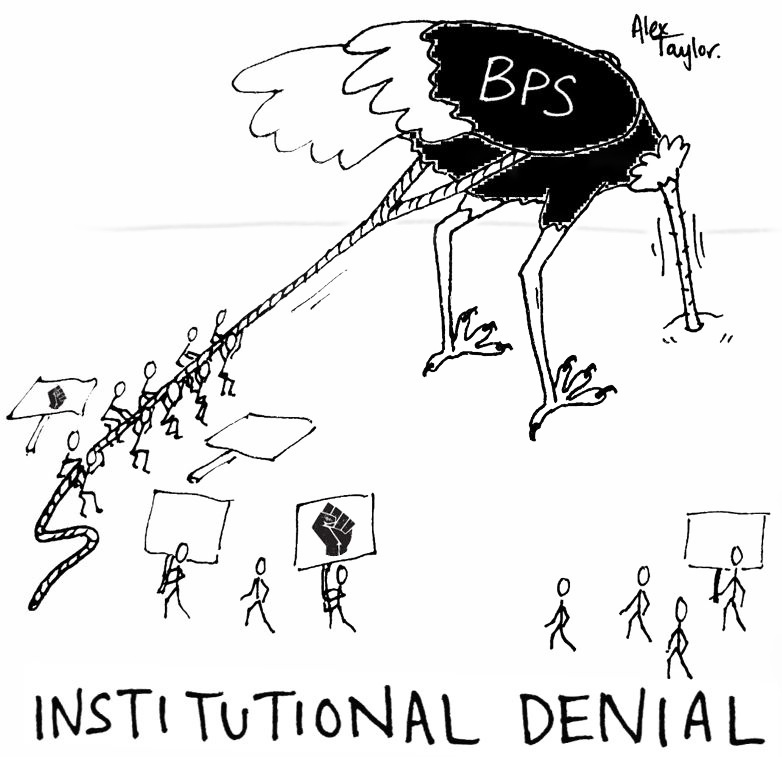
{"id":1204,"date":"2021-02-03T08:45:00","date_gmt":"2021-02-03T08:45:00","guid":{"rendered":"http:\/\/blogs.sussex.ac.uk\/psychology\/?p=1204"},"modified":"2021-02-02T16:05:35","modified_gmt":"2021-02-02T16:05:35","slug":"the-american-psychiatric-associations-apology-to-black-indigenous-and-people-of-color-performative-action-or-genuine-atonement","status":"publish","type":"post","link":"https:\/\/blogs.sussex.ac.uk\/psychology\/2021\/02\/03\/the-american-psychiatric-associations-apology-to-black-indigenous-and-people-of-color-performative-action-or-genuine-atonement\/","title":{"rendered":"The American Psychiatric Association&#8217;s apology to \u2018Black, Indigenous, and People of Color\u2019: Performative Action or Genuine Atonement?"},"content":{"rendered":"\n<p>By Alexandra Taylor<\/p>\n\n\n\n<p>On January 18<sup>th<\/sup>, 2021, the American Psychiatric Association (APA) released the &#8216;<a href=\"https:\/\/www.psychiatry.org\/newsroom\/apa-apology-for-its-support-of-structural-racism-in-psychiatry\">APA&#8217;s Apology to Black, Indigenous and People of Color for Its Support of Structural Racism in Psychiatry<\/a>&#8216;. The letter from its Board of trustees aimed to acknowledge the institution&#8217;s shameful racist history. There is still, without question, a long way to go before we see equality in the field, but this apology is a start.<\/p>\n\n\n\n<p>Their statement marks a milestone in Psychiatry. The institution has a history of racist practices dating back to its inception in 1844, including its founding segregated treatment system. At the time, the diagnosis &#8216;drapetomania&#8217; was accepted \u2013 a diagnosis of mental illness for Black people who disliked the idea of being enslaved. Racist theories of white superiority were continually evidenced by the APA&#8217;s &#8216;scientific&#8217; research. Despite outcry from its ethnic minority members, the APA continued to stay silent on racist practices throughout the US Civil Rights Movement. Their <a href=\"https:\/\/www.psychiatry.org\/newsroom\/historical-addendum-to-apa-apology\">2021 apology statement and historical addendum<\/a> finally acknowledge their historic support of a racist agenda and apologise to those affected. But is this really the turning point they describe?<\/p>\n\n\n\n<p>The statement makes no attempt to explain why it has not come sooner. The APA&#8217;s newest President Jeffrey Geller, MD, MPH, spearheaded its publication. As quoted by <a href=\"https:\/\/alert.psychnews.org\/2021\/01\/apa-issues-apology-for-history-of.html\">the APA&#8217;s newspaper Psychiatric News<\/a>, he stated, &#8220;the events of 2020 \u2013 the killings of Black people by police, the health inequities laid bare by the pandemic \u2013 were an eye-opener for many among our membership.&#8221; A disappointing, but typical, admission of the distress levels BAME people must endure to be recognised.<\/p>\n\n\n\n<p>The apology must be followed by tangible action to avoid going down in history as performative. &#8216;Anti-racist&#8217; is a critical phrase the APA used to describe their future. Real anti-racism will require them to change their racist policies, meaning all those leading to racist outcomes. Currently, they acknowledge that leadership, education and training, research, and outcomes for patients must all be improved. Still today, we inappropriately pathologise people dealing with the effects of racism. Although their apology is admirable, it must preface structural change.<\/p>\n\n\n\n<p class=\"has-text-align-left\">All related disciplines will need to take positive action to overcome the inequality of our social services. The APA&#8217;s institution-wide apology is a necessary step for scientific integrity. But more importantly, it is a step towards practitioners who recognise the intergenerational trauma that has been created and continues to be perpetuated by our disciplines. <\/p>\n\n\n\n<div class=\"wp-block-image\"><figure class=\"alignleft size-large is-resized\"><img data-attachment-id=\"1206\" data-permalink=\"https:\/\/blogs.sussex.ac.uk\/psychology\/2021\/02\/03\/the-american-psychiatric-associations-apology-to-black-indigenous-and-people-of-color-performative-action-or-genuine-atonement\/institutional-denial-fin\/\" data-orig-file=\"https:\/\/i1.wp.com\/blogs.sussex.ac.uk\/psychology\/files\/2021\/02\/Institutional-Denial-fin.jpg?fit=782%2C757&amp;ssl=1\" data-orig-size=\"782,757\" data-comments-opened=\"1\" data-image-meta=\"{&quot;aperture&quot;:&quot;0&quot;,&quot;credit&quot;:&quot;&quot;,&quot;camera&quot;:&quot;&quot;,&quot;caption&quot;:&quot;&quot;,&quot;created_timestamp&quot;:&quot;0&quot;,&quot;copyright&quot;:&quot;&quot;,&quot;focal_length&quot;:&quot;0&quot;,&quot;iso&quot;:&quot;0&quot;,&quot;shutter_speed&quot;:&quot;0&quot;,&quot;title&quot;:&quot;&quot;,&quot;orientation&quot;:&quot;0&quot;}\" data-image-title=\"Institutional Denial\" data-image-description=\"\" data-image-caption=\"\" data-medium-file=\"https:\/\/i1.wp.com\/blogs.sussex.ac.uk\/psychology\/files\/2021\/02\/Institutional-Denial-fin.jpg?fit=300%2C290&amp;ssl=1\" data-large-file=\"https:\/\/i1.wp.com\/blogs.sussex.ac.uk\/psychology\/files\/2021\/02\/Institutional-Denial-fin.jpg?fit=550%2C532&amp;ssl=1\" loading=\"lazy\" src=\"https:\/\/i1.wp.com\/blogs.sussex.ac.uk\/psychology\/files\/2021\/02\/Institutional-Denial-fin.jpg?resize=296%2C286\" alt=\"Cartoon shows Black Lives Matter protestors trying to force the BPS ostrich to take its head out of the sand\" class=\"wp-image-1206\" width=\"296\" height=\"286\" srcset=\"https:\/\/i1.wp.com\/blogs.sussex.ac.uk\/psychology\/files\/2021\/02\/Institutional-Denial-fin.jpg?w=782&amp;ssl=1 782w, https:\/\/i1.wp.com\/blogs.sussex.ac.uk\/psychology\/files\/2021\/02\/Institutional-Denial-fin.jpg?resize=300%2C290&amp;ssl=1 300w, https:\/\/i1.wp.com\/blogs.sussex.ac.uk\/psychology\/files\/2021\/02\/Institutional-Denial-fin.jpg?resize=768%2C743&amp;ssl=1 768w, https:\/\/i1.wp.com\/blogs.sussex.ac.uk\/psychology\/files\/2021\/02\/Institutional-Denial-fin.jpg?resize=100%2C97&amp;ssl=1 100w, https:\/\/i1.wp.com\/blogs.sussex.ac.uk\/psychology\/files\/2021\/02\/Institutional-Denial-fin.jpg?resize=150%2C145&amp;ssl=1 150w, https:\/\/i1.wp.com\/blogs.sussex.ac.uk\/psychology\/files\/2021\/02\/Institutional-Denial-fin.jpg?resize=200%2C194&amp;ssl=1 200w, https:\/\/i1.wp.com\/blogs.sussex.ac.uk\/psychology\/files\/2021\/02\/Institutional-Denial-fin.jpg?resize=450%2C436&amp;ssl=1 450w, https:\/\/i1.wp.com\/blogs.sussex.ac.uk\/psychology\/files\/2021\/02\/Institutional-Denial-fin.jpg?resize=600%2C581&amp;ssl=1 600w\" sizes=\"(max-width: 296px) 100vw, 296px\" data-recalc-dims=\"1\" \/><\/figure><\/div>\n\n\n\n<p class=\"has-text-align-left\">As a future psychologist in the UK, I implore the British Psychological Society (BPS) to follow suit. In June of 2020, the <a href=\"https:\/\/www.bps.org.uk\/news-and-policy\/bps-statement-racial-injustice\">BPS released a statement in solidarity with those feeling pain due to the year&#8217;s racial injustices<\/a>. Yet, <a href=\"https:\/\/davidfmarks.com\/category\/racist-psychology\/\">after being called out in July<\/a>, they silently removed an article available on their website &#8216;evidencing&#8217; the low IQ of \u2018Negroids\u2019 and small genitalia of \u2018Mongoloids\u2019. Countless incidents such as these show that although an apology <em>is<\/em> only a first step, many institutions are still not ready to take it. They would first need to grasp what it is they are apologising for.<\/p>\n\n\n\n<p>The psychology of apologies tells us that <a href=\"https:\/\/doi.org\/10.1177\/0963721417741709\">little concern for the victim and worries about self-image are barriers to apologising<\/a>. An institutional apology, therefore, shows basic respect for those impacted by racist research and practice. Institutional egos are notoriously fragile, so I commend the APA for doing the right thing. However, an apology could never heal the pain their racism has caused for entire generations. It must now be the catalyst of a radical transformation into an organisation that carries no lingering trace of racism and condemns prejudice utterly, in thought, word and deed, to history.<\/p>\n\n\n\n<p><em>Alex is currently studying <\/em>our<em> <a href=\"https:\/\/blogs.sussex.ac.uk\/psychology\/2017\/07\/03\/tips-for-prospective-conversion-course-students\/\">MSc in Experimental Psychology<\/a>. She previously completed a BSc in Mathematics at King&#8217;s College London<\/em>.<\/p>\n","protected":false},"excerpt":{"rendered":"<p>By Alexandra Taylor On January 18th, 2021, the American Psychiatric Association (APA) released the &#8216;APA&#8217;s Apology to Black, Indigenous and People of Color for Its Support of Structural Racism in Psychiatry&#8216;. The letter from its Board of trustees aimed to<span class=\"ellipsis\">&hellip;<\/span><\/p>\n<div class=\"read-more\"><a href=\"https:\/\/blogs.sussex.ac.uk\/psychology\/2021\/02\/03\/the-american-psychiatric-associations-apology-to-black-indigenous-and-people-of-color-performative-action-or-genuine-atonement\/\">Read more &#8250;<\/a><\/div>\n<p><!-- end of .read-more --><\/p>\n","protected":false},"author":156,"featured_media":0,"comment_status":"open","ping_status":"open","sticky":false,"template":"","format":"standard","meta":{"spay_email":"","jetpack_publicize_message":"","jetpack_is_tweetstorm":false},"categories":[168187],"tags":[168188,68454,168190],"jetpack_featured_media_url":"","jetpack_publicize_connections":[],"jetpack_sharing_enabled":true,"jetpack_shortlink":"https:\/\/wp.me\/pafdEV-jq","jetpack-related-posts":[{"id":1080,"url":"https:\/\/blogs.sussex.ac.uk\/psychology\/2020\/10\/30\/do-you-know-what-im-thinking-a-journey-from-mozambique-to-sussex\/","url_meta":{"origin":1204,"position":0},"title":"Do you know what I'm thinking? - a Journey from Mozambique to Sussex","date":"October 30, 2020","format":false,"excerpt":"Paloma Manguele is a PhD student in the Attention Lab. She studies mind wandering, a concept she is cautious to translate into her first language, Portuguese. \u201cI guess the word could be \u2018divaga\u00e7ao\u2019 \u2013 digression \u2013 but not exactly,\u201d she explains. There are not many studies about mind wandering in\u2026","rel":"","context":"In &quot;PhD research&quot;","img":{"alt_text":"","src":"https:\/\/i0.wp.com\/blogs.sussex.ac.uk\/psychology\/files\/2020\/10\/Paloma-Manguele-EEG-2.jpg?resize=350%2C200&ssl=1","width":350,"height":200},"classes":[]},{"id":1062,"url":"https:\/\/blogs.sussex.ac.uk\/psychology\/2020\/10\/19\/celebrating-the-25-black-women-making-history-in-uks-professoriate\/","url_meta":{"origin":1204,"position":1},"title":"Celebrating the 25 Black women making history in UK\u2019s Professoriate","date":"October 19, 2020","format":false,"excerpt":"By Dr Varuni Wimalasiri Overall there were 85 Black Professors in the UK\u2019s Professoriate of 21,000 in 2019 (Rollock, 2019). Whilst 11.2% of White faculty occupy the senior role of Professor, at 4.6%, Black faculty are two and a half times less likely to make to this position (Advance HE,\u2026","rel":"","context":"In &quot;Faculty research&quot;","img":{"alt_text":"","src":"","width":0,"height":0},"classes":[]},{"id":1026,"url":"https:\/\/blogs.sussex.ac.uk\/psychology\/2020\/06\/15\/why-does-civil-unrest-spread-between-cities\/","url_meta":{"origin":1204,"position":2},"title":"Why does civil unrest spread between cities?","date":"June 15, 2020","format":false,"excerpt":"By Prof John Drury Protests and riots that began in Minneapolis after police killed an unarmed African American have now spread to over 23 states. I recently led a large-scale programme of research on the wave of riots in England in 2011 to address the question of how such events\u2026","rel":"","context":"In &quot;Faculty research&quot;","img":{"alt_text":"","src":"https:\/\/i0.wp.com\/blogs.sussex.ac.uk\/psychology\/files\/2020\/06\/Black_Lives_Matter_Hyde_Park_London_protest_3.6.24.jpg?resize=350%2C200&ssl=1","width":350,"height":200},"classes":[]},{"id":377,"url":"https:\/\/blogs.sussex.ac.uk\/psychology\/2017\/05\/15\/surviving-or-thriving-lifelong-mental-health-in-children-with-chronic-physical-illness\/","url_meta":{"origin":1204,"position":3},"title":"Surviving or Thriving? Lifelong mental health in children with chronic physical illness","date":"May 15, 2017","format":false,"excerpt":"By Ekin Secinti Chronic physical illness affects large numbers of children and families. Worldwide, 1 in 5 children has a chronic physical illness, including arthritis, asthma, cancer, chronic renal failure, congenital heart disease, cystic fibrosis, type-1 diabetes, and epilepsy. With the advances of medical therapies in the last decades, more\u2026","rel":"","context":"In &quot;Masters research&quot;","img":{"alt_text":"","src":"https:\/\/i1.wp.com\/blogs.sussex.ac.uk\/psychology\/files\/2017\/05\/vulnerable-child3-718x1024.jpeg?resize=350%2C200","width":350,"height":200},"classes":[]},{"id":1712,"url":"https:\/\/blogs.sussex.ac.uk\/psychology\/2022\/10\/06\/whats-in-a-word-using-speech-marker-to-diagnose-alzheimers-early\/","url_meta":{"origin":1204,"position":4},"title":"What\u2019s in a word? Using speech marker to diagnose Alzheimer\u2019s early","date":"October 6, 2022","format":false,"excerpt":"By Alice Stanton September was World Alzheimer\u2019s Month, an international event run by Alzheimer\u2019s Disease International to spread awareness and challenge the stigmas that surround Alzheimer\u2019s and other forms of dementia. Alzheimer's is a degenerative neurological condition that is currently affecting more than 944,000 people in the UK and Alzheimer\u2019s\u2026","rel":"","context":"Similar post","img":{"alt_text":"","src":"https:\/\/i1.wp.com\/blogs.sussex.ac.uk\/psychology\/files\/2022\/10\/dementia-595638_1920.jpg?resize=350%2C200&ssl=1","width":350,"height":200},"classes":[]},{"id":1503,"url":"https:\/\/blogs.sussex.ac.uk\/psychology\/2022\/03\/30\/traumatic-experiences-among-late-diagnosed-autistic-women\/","url_meta":{"origin":1204,"position":5},"title":"Traumatic Experiences Among               Late-diagnosed Autistic Women","date":"March 30, 2022","format":false,"excerpt":"By Sophie Longley, MSc Experimental Psychology student I was diagnosed with autism last year, at 28 years old. Strangely, the diagnosis was not a surprise. In fact, it finally provided answers for why I felt so out of place in the world and why I would get so incredibly overwhelmed\u2026","rel":"","context":"In \"Autism\"","img":{"alt_text":"","src":"https:\/\/i1.wp.com\/blogs.sussex.ac.uk\/psychology\/files\/2022\/03\/Sophie-longley-1-002-1.png?resize=350%2C200&ssl=1","width":350,"height":200},"classes":[]}],"_links":{"self":[{"href":"https:\/\/blogs.sussex.ac.uk\/psychology\/wp-json\/wp\/v2\/posts\/1204"}],"collection":[{"href":"https:\/\/blogs.sussex.ac.uk\/psychology\/wp-json\/wp\/v2\/posts"}],"about":[{"href":"https:\/\/blogs.sussex.ac.uk\/psychology\/wp-json\/wp\/v2\/types\/post"}],"author":[{"embeddable":true,"href":"https:\/\/blogs.sussex.ac.uk\/psychology\/wp-json\/wp\/v2\/users\/156"}],"replies":[{"embeddable":true,"href":"https:\/\/blogs.sussex.ac.uk\/psychology\/wp-json\/wp\/v2\/comments?post=1204"}],"version-history":[{"count":5,"href":"https:\/\/blogs.sussex.ac.uk\/psychology\/wp-json\/wp\/v2\/posts\/1204\/revisions"}],"predecessor-version":[{"id":1210,"href":"https:\/\/blogs.sussex.ac.uk\/psychology\/wp-json\/wp\/v2\/posts\/1204\/revisions\/1210"}],"wp:attachment":[{"href":"https:\/\/blogs.sussex.ac.uk\/psychology\/wp-json\/wp\/v2\/media?parent=1204"}],"wp:term":[{"taxonomy":"category","embeddable":true,"href":"https:\/\/blogs.sussex.ac.uk\/psychology\/wp-json\/wp\/v2\/categories?post=1204"},{"taxonomy":"post_tag","embeddable":true,"href":"https:\/\/blogs.sussex.ac.uk\/psychology\/wp-json\/wp\/v2\/tags?post=1204"}],"curies":[{"name":"wp","href":"https:\/\/api.w.org\/{rel}","templated":true}]}}