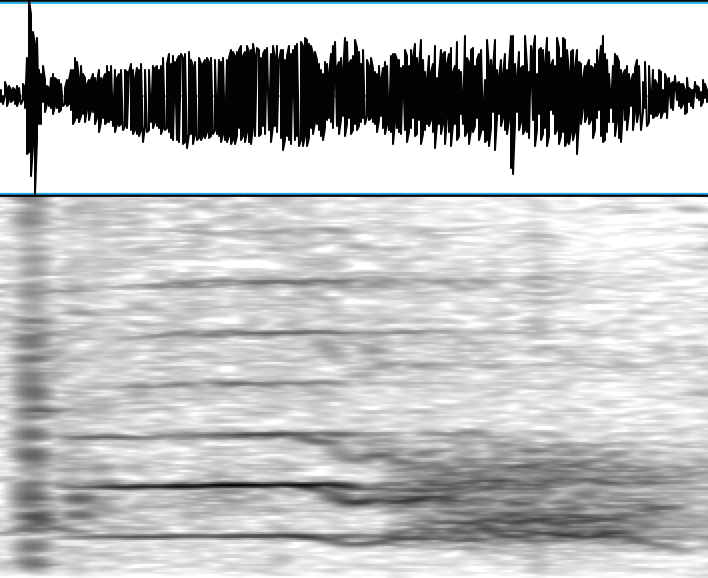
{"id":191,"date":"2016-04-25T12:27:24","date_gmt":"2016-04-25T12:27:24","guid":{"rendered":"http:\/\/blogs.sussex.ac.uk\/psychology\/?p=191"},"modified":"2020-05-28T14:10:03","modified_gmt":"2020-05-28T14:10:03","slug":"its-not-just-what-youre-saying","status":"publish","type":"post","link":"https:\/\/blogs.sussex.ac.uk\/psychology\/2016\/04\/25\/its-not-just-what-youre-saying\/","title":{"rendered":"It\u2019s not just what you\u2019re saying"},"content":{"rendered":"<p>By Jordan Raine<\/p>\n<p>Have you ever heard of the <a href=\"http:\/\/www.damninteresting.com\/the-baader-meinhof-phenomenon\/\">Baader-Meinhof<\/a> phenomenon? If you haven\u2019t, you\u2019ve definitely experienced it at some time in your life. It\u2019s the term given for when you learn, notice or experience something for the first time, and then you start noticing it everywhere.<\/p>\n<p>Most PhD students will tell you that this phenomenon ramps up into overdrive for the particular subject matter that they have decided to dedicate a vast proportion of their foreseeable future to. For me, that something is every noise that comes out of any person\u2019s mouth that isn\u2019t speech. The cacophony of grunts, moans, shouts, roars, whines and screams that pepper the interactions of human society play an almost invisible role in most people\u2019s experience, but to me they stick out like a sore thumb.<\/p>\n<p>Animals, lacking sufficient vocal control and cognitive complexity, don\u2019t have the luxury of communicating by combining sets of words with culturally agreed meanings. The systems controlling their vocal apparatus are intimately tied to their internal states, and their vocalisations communicate simple but information relevant to survival.<\/p>\n<p>Before humans developed the ability to control their voice and detach it from underlying feelings \u2013 which colleagues and I argue in a <a href=\"http:\/\/authors.elsevier.com\/a\/1SlJe4sIRu~fdE\">recent review<\/a> was vital in the gradual evolution of speech \u2013 we most probably communicated in the same way. Even though this arbitrary system for conveying meaning now predominates, nonverbal vocalisations still retain their more ancient communicative function. Yet, aside from laughter, nonverbal vocalisations have remained almost untouched by the scientific community. So, my research aims to discover what is communicated in such vocalisations, and what influence they have on listeners.<\/p>\n<p>One area in particular that I am investigating is tennis grunts. Their legitimacy has been widely debated in the tennis community amid accusations they are distracting, but my research aims to show that they may provide cues to each player\u2019s mental state.<\/p>\n<p><a href=\"https:\/\/i2.wp.com\/blogs.sussex.ac.uk\/psychology\/files\/2016\/04\/Screen-Shot-2016-04-25-at-13.17.24.png\"><img data-attachment-id=\"192\" data-permalink=\"https:\/\/blogs.sussex.ac.uk\/psychology\/2016\/04\/25\/its-not-just-what-youre-saying\/screen-shot-2016-04-25-at-13-17-24\/\" data-orig-file=\"https:\/\/i2.wp.com\/blogs.sussex.ac.uk\/psychology\/files\/2016\/04\/Screen-Shot-2016-04-25-at-13.17.24.png?fit=708%2C578&amp;ssl=1\" data-orig-size=\"708,578\" data-comments-opened=\"1\" data-image-meta=\"{&quot;aperture&quot;:&quot;0&quot;,&quot;credit&quot;:&quot;&quot;,&quot;camera&quot;:&quot;&quot;,&quot;caption&quot;:&quot;&quot;,&quot;created_timestamp&quot;:&quot;0&quot;,&quot;copyright&quot;:&quot;&quot;,&quot;focal_length&quot;:&quot;0&quot;,&quot;iso&quot;:&quot;0&quot;,&quot;shutter_speed&quot;:&quot;0&quot;,&quot;title&quot;:&quot;&quot;,&quot;orientation&quot;:&quot;0&quot;}\" data-image-title=\"Sharapova&#8217;s Grunt\" data-image-description=\"\" data-image-caption=\"\" data-medium-file=\"https:\/\/i2.wp.com\/blogs.sussex.ac.uk\/psychology\/files\/2016\/04\/Screen-Shot-2016-04-25-at-13.17.24.png?fit=300%2C245&amp;ssl=1\" data-large-file=\"https:\/\/i2.wp.com\/blogs.sussex.ac.uk\/psychology\/files\/2016\/04\/Screen-Shot-2016-04-25-at-13.17.24.png?fit=550%2C449&amp;ssl=1\" loading=\"lazy\" class=\"size-medium wp-image-192 alignright\" src=\"https:\/\/i2.wp.com\/blogs.sussex.ac.uk\/psychology\/files\/2016\/04\/Screen-Shot-2016-04-25-at-13.17.24.png?resize=300%2C245\" alt=\"Sharapova's Grunt\" width=\"300\" height=\"245\" srcset=\"https:\/\/i2.wp.com\/blogs.sussex.ac.uk\/psychology\/files\/2016\/04\/Screen-Shot-2016-04-25-at-13.17.24.png?resize=300%2C245&amp;ssl=1 300w, https:\/\/i2.wp.com\/blogs.sussex.ac.uk\/psychology\/files\/2016\/04\/Screen-Shot-2016-04-25-at-13.17.24.png?resize=100%2C82&amp;ssl=1 100w, https:\/\/i2.wp.com\/blogs.sussex.ac.uk\/psychology\/files\/2016\/04\/Screen-Shot-2016-04-25-at-13.17.24.png?resize=150%2C122&amp;ssl=1 150w, https:\/\/i2.wp.com\/blogs.sussex.ac.uk\/psychology\/files\/2016\/04\/Screen-Shot-2016-04-25-at-13.17.24.png?resize=200%2C163&amp;ssl=1 200w, https:\/\/i2.wp.com\/blogs.sussex.ac.uk\/psychology\/files\/2016\/04\/Screen-Shot-2016-04-25-at-13.17.24.png?resize=450%2C367&amp;ssl=1 450w, https:\/\/i2.wp.com\/blogs.sussex.ac.uk\/psychology\/files\/2016\/04\/Screen-Shot-2016-04-25-at-13.17.24.png?resize=600%2C490&amp;ssl=1 600w, https:\/\/i2.wp.com\/blogs.sussex.ac.uk\/psychology\/files\/2016\/04\/Screen-Shot-2016-04-25-at-13.17.24.png?w=708&amp;ssl=1 708w\" sizes=\"(max-width: 300px) 100vw, 300px\" data-recalc-dims=\"1\" \/><\/a><\/p>\n<p>We know from previous research that higher pitch is associated with higher levels of arousal and distress, and lower pitch with dominance, in both humans and other mammals, and that listeners perceive these associations. I have performed acoustic analysis on hundreds of grunts from TV footage of professional matches, and am currently running experiments to determine whether listeners can predict the winner of a match just from a set of grunts. If they can, it is likely that when a player grunts, they are broadcasting signals that may provide their opponent with a mental advantage.<\/p>\n<p>I am also interested in the expression of strength in aggressive roars (see below) and fear screams. In evolutionary terms, strength is a useful attribute to be able to perceive, as it would allow the listener to make good decisions about whether to enter into conflict with fellow competing males or not.<\/p>\n<p><span class=\"embed-youtube\" style=\"text-align:center; display: block;\"><iframe loading=\"lazy\" class=\"youtube-player\" width=\"550\" height=\"310\" src=\"https:\/\/www.youtube.com\/embed\/yJ25xzSByGo?version=3&#038;rel=1&#038;showsearch=0&#038;showinfo=1&#038;iv_load_policy=1&#038;fs=1&#038;hl=en-GB&#038;autohide=2&#038;wmode=transparent\" allowfullscreen=\"true\" style=\"border:0;\" sandbox=\"allow-scripts allow-same-origin allow-popups allow-presentation\"><\/iframe><\/span><\/p>\n<p>I\u2019m asking people to imagine themselves in a situation where they need to convey aggression, and one where they should express fear, and recording the upper-body strength of each individual. Given that the process of evolution would favour strength-tracking capabilities, we are predicting that listeners will be able to track strength from these vocalisations, and that the acoustic structure of aggressive roars may be designed to increase perceptions of strength. We are also investigating whether males might engage in behavioural strategies to exaggerate their strength, in the similar way to some species of deer.<\/p>\n<p>We produce vocalisations in many more contexts than the two examples mentioned here \u2013 this is just the tip of the iceberg. In many nonverbal interactions, seemingly meaningless noises may actually contain a wealth of information and substantially influence our perceptions and behaviour. I\u2019m only halfway through my PhD but already I see human vocal behaviour in a new, broader light. Maybe after reading this you\u2019ll have some vocalisation-related Baader-Meinhof experiences of your own\u2026!<\/p>\n<p><em>Jordan is doing a PhD on human non-verbal vocalisations\u00a0with Dr David Reby. He has recently published an article in The Conversation about <a href=\"https:\/\/theconversation.com\/the-evolutionary-origins-of-laughter-are-rooted-more-in-survival-than-enjoyment-57750\">the evolutionary origins of laughter<\/a>.<\/em><\/p>\n<p>Find out more about our <a href=\"http:\/\/www.sussex.ac.uk\/psychology\/research\/cognitivepsychology\">research on Cognitive Psychology<\/a>.<\/p>\n","protected":false},"excerpt":{"rendered":"<p>By Jordan Raine Have you ever heard of the Baader-Meinhof phenomenon? If you haven\u2019t, you\u2019ve definitely experienced it at some time in your life. It\u2019s the term given for when you learn, notice or experience something for the first time,<span class=\"ellipsis\">&hellip;<\/span><\/p>\n<div class=\"read-more\"><a href=\"https:\/\/blogs.sussex.ac.uk\/psychology\/2016\/04\/25\/its-not-just-what-youre-saying\/\">Read more &#8250;<\/a><\/div>\n<p><!-- end of .read-more --><\/p>\n","protected":false},"author":156,"featured_media":0,"comment_status":"open","ping_status":"open","sticky":false,"template":"","format":"standard","meta":{"spay_email":"","jetpack_publicize_message":"","jetpack_is_tweetstorm":false},"categories":[1],"tags":[98537,97941,24],"jetpack_featured_media_url":"","jetpack_publicize_connections":[],"jetpack_sharing_enabled":true,"jetpack_shortlink":"https:\/\/wp.me\/pafdEV-35","jetpack-related-posts":[{"id":225,"url":"https:\/\/blogs.sussex.ac.uk\/psychology\/2016\/06\/14\/reflections-of-a-first-year-phd-student\/","url_meta":{"origin":191,"position":0},"title":"Reflections of a first year PhD student","date":"June 14, 2016","format":false,"excerpt":"By Mateo Legan\u00e9s Fonteneau Doing a PhD was never my lifetime objective. When I finished college I started studying an engineering degree, but I realised quite soon that it wasn\u2019t what I\u2019d expected. I then went on to study Social Work, hoping to help drug addicts when I finished. As\u2026","rel":"","context":"In \"First Year\"","img":{"alt_text":"Mateo with his colleagues, about to win a race","src":"https:\/\/i2.wp.com\/blogs.sussex.ac.uk\/psychology\/files\/2016\/06\/Unknown-300x169.jpeg?resize=350%2C200","width":350,"height":200},"classes":[]},{"id":176,"url":"https:\/\/blogs.sussex.ac.uk\/psychology\/2016\/04\/11\/my-first-paper\/","url_meta":{"origin":191,"position":1},"title":"My first paper","date":"April 11, 2016","format":false,"excerpt":"By Jennifer Mankin This spring, my first paper on synaesthesia and language appears in an upcoming edition of Cognition. While I know that getting a paper published is always a rigorous and difficult process \u2013 as indeed it should be \u2013 I am not only excited and nervous for this\u2026","rel":"","context":"In \"Academic Writing\"","img":{"alt_text":"","src":"https:\/\/i0.wp.com\/blogs.sussex.ac.uk\/psychology\/files\/2016\/04\/paper-face-300x225.jpg?resize=350%2C200","width":350,"height":200},"classes":[]},{"id":339,"url":"https:\/\/blogs.sussex.ac.uk\/psychology\/2017\/02\/13\/life-as-a-postdoc-10-things-to-consider\/","url_meta":{"origin":191,"position":2},"title":"Life as a postdoc \u2013 10 things to consider","date":"February 13, 2017","format":false,"excerpt":"By Dr Christiane Oedekoven \u00a0 I am currently working as a postdoc in Chris Bird\u2019s Episodic Memory Lab after doing my first postdoc in Tuebingen, in a more clinical setting. Of course, every lab is different, and obviously not everyone has the same experience, but the issues we discussed in\u2026","rel":"","context":"In \"Academia\"","img":{"alt_text":"","src":"https:\/\/i1.wp.com\/blogs.sussex.ac.uk\/psychology\/files\/2017\/02\/Photo-credit-Phlebotomy-Tech_Medium-300x200.jpg?resize=350%2C200","width":350,"height":200},"classes":[]},{"id":583,"url":"https:\/\/blogs.sussex.ac.uk\/psychology\/2018\/10\/15\/grouping-by-attainment-in-schools-can-psychological-interventions-help-turbo-charge-poor-students-performance\/","url_meta":{"origin":191,"position":3},"title":"Grouping by attainment in schools: can psychological interventions help turbo-charge poor students\u2019 performance?","date":"October 15, 2018","format":false,"excerpt":"By Ian Hadden Last month I attended the impressive \u2013\u00a0and buzzy \u2013 sell-out researchED 2018 annual conference in London. The highlight for me was a fascinating piece of research presented by Becky Francis and Jeremy Hodgen of the UCL Institute of Education (IOE) on grouping secondary school students into classes\u2026","rel":"","context":"In &quot;PhD research&quot;","img":{"alt_text":"","src":"https:\/\/i1.wp.com\/blogs.sussex.ac.uk\/psychology\/files\/2018\/10\/Unknown-1024x617.jpeg?resize=350%2C200","width":350,"height":200},"classes":[]},{"id":498,"url":"https:\/\/blogs.sussex.ac.uk\/psychology\/2018\/02\/05\/meet-your-pgr-student-reps-2017-2018\/","url_meta":{"origin":191,"position":4},"title":"Meet your PGR Student Reps (2017-2018)","date":"February 5, 2018","format":false,"excerpt":"Lina\u00a0 I\u2019m currently in the first year of my PhD, working on the brain-body interaction in associative learning and consciousness. My main motivation to become a PGR rep was the importance of community in postgrad life, and ensuring that everyone feels part of a group despite working individually for the\u2026","rel":"","context":"In \"PGR Research Series\"","img":{"alt_text":"","src":"https:\/\/i0.wp.com\/blogs.sussex.ac.uk\/psychology\/files\/2018\/02\/Photo-from-Jolyon-1024x768.jpg?resize=350%2C200","width":350,"height":200},"classes":[]},{"id":52,"url":"https:\/\/blogs.sussex.ac.uk\/psychology\/2015\/09\/28\/psychology-phd-poster-conference-2015\/","url_meta":{"origin":191,"position":5},"title":"Psychology PhD Poster Conference 2015","date":"September 28, 2015","format":false,"excerpt":"At the start of every academic year, PhD students moving from Year 1 to Year 2 of their studies are asked to prepare a poster presentation of their research to date. This year it will be held on Wednesday 30th September from 2.30 to 5pm in the Creativity Zone, a\u2026","rel":"","context":"In \"PhD students\"","img":{"alt_text":"","src":"https:\/\/i0.wp.com\/blogs.sussex.ac.uk\/psychology\/files\/2015\/09\/Screen-Shot-2015-09-28-at-12.10.21.png?resize=350%2C200","width":350,"height":200},"classes":[]}],"_links":{"self":[{"href":"https:\/\/blogs.sussex.ac.uk\/psychology\/wp-json\/wp\/v2\/posts\/191"}],"collection":[{"href":"https:\/\/blogs.sussex.ac.uk\/psychology\/wp-json\/wp\/v2\/posts"}],"about":[{"href":"https:\/\/blogs.sussex.ac.uk\/psychology\/wp-json\/wp\/v2\/types\/post"}],"author":[{"embeddable":true,"href":"https:\/\/blogs.sussex.ac.uk\/psychology\/wp-json\/wp\/v2\/users\/156"}],"replies":[{"embeddable":true,"href":"https:\/\/blogs.sussex.ac.uk\/psychology\/wp-json\/wp\/v2\/comments?post=191"}],"version-history":[{"count":4,"href":"https:\/\/blogs.sussex.ac.uk\/psychology\/wp-json\/wp\/v2\/posts\/191\/revisions"}],"predecessor-version":[{"id":997,"href":"https:\/\/blogs.sussex.ac.uk\/psychology\/wp-json\/wp\/v2\/posts\/191\/revisions\/997"}],"wp:attachment":[{"href":"https:\/\/blogs.sussex.ac.uk\/psychology\/wp-json\/wp\/v2\/media?parent=191"}],"wp:term":[{"taxonomy":"category","embeddable":true,"href":"https:\/\/blogs.sussex.ac.uk\/psychology\/wp-json\/wp\/v2\/categories?post=191"},{"taxonomy":"post_tag","embeddable":true,"href":"https:\/\/blogs.sussex.ac.uk\/psychology\/wp-json\/wp\/v2\/tags?post=191"}],"curies":[{"name":"wp","href":"https:\/\/api.w.org\/{rel}","templated":true}]}}