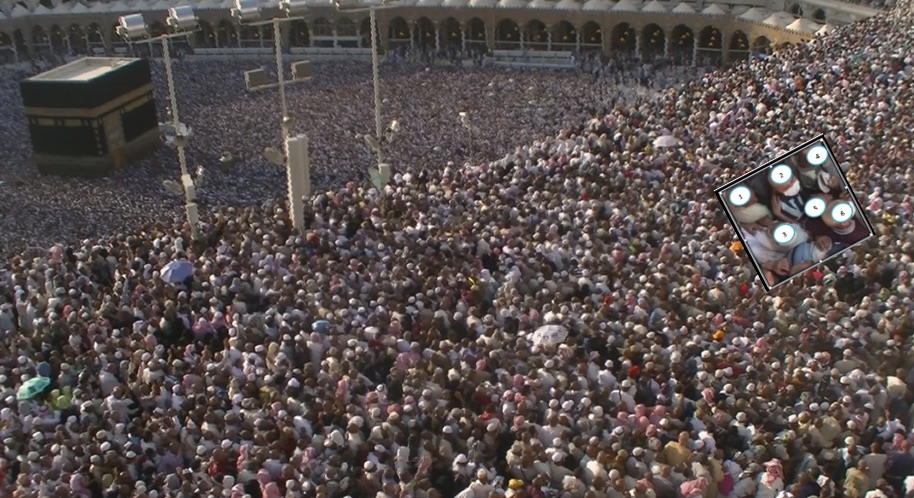
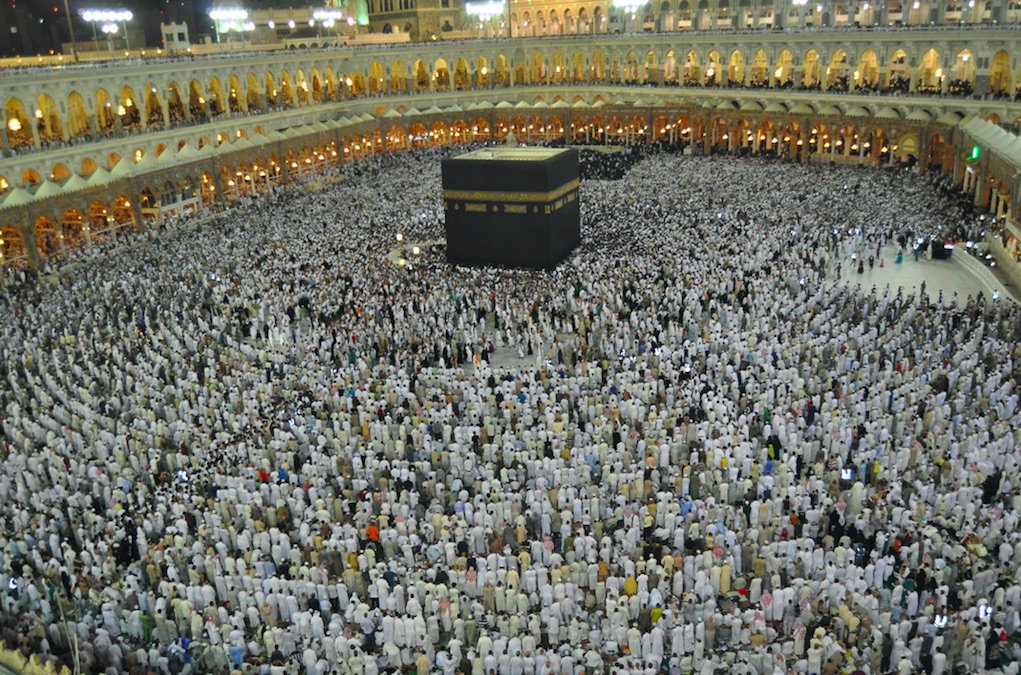
{"id":451,"date":"2017-09-04T10:15:49","date_gmt":"2017-09-04T10:15:49","guid":{"rendered":"http:\/\/blogs.sussex.ac.uk\/psychology\/?p=451"},"modified":"2020-05-28T13:54:55","modified_gmt":"2020-05-28T13:54:55","slug":"the-social-psychology-of-the-hajj","status":"publish","type":"post","link":"https:\/\/blogs.sussex.ac.uk\/psychology\/2017\/09\/04\/the-social-psychology-of-the-hajj\/","title":{"rendered":"The social psychology of the Hajj"},"content":{"rendered":"<p>By John Drury<\/p>\n<p>Last week, the annual Hajj took place in Mecca (Makkah) and the other holy places nearby. This Muslim pilgrimage is one of the world\u2019s largest crowd events \u2013 <a href=\"http:\/\/www.data.gov.sa\/en\/general-authority-statistics\">the official figure for those attending last year was 1,862,909<\/a>. The Hajj has been called the world\u2019s \u2018global gathering\u2019 because it is a place where Muslims from all over the world come together. The Hajj has also been the scene of a number of tragedies, including <a href=\"https:\/\/www.theguardian.com\/world\/2015\/oct\/03\/hajj-crush-how-crowd-disasters-happen-and-how-they-can-be-avoided\">the crush in 2015<\/a> where over 700 people died at a crossroads near the holy city of Mina.<\/p>\n<p>Despite its global significance and importance to so many people, few psychological studies have been carried out on the Hajj. Most research studies of the events are from medical or engineering perspectives. Hani Alnabulsi, my PhD student, and I recently had a unique opportunity to study the experience and behaviour of the Hajj crowd, through his research on the 2011 and 2012 pilgrimages. As part of his PhD at Sussex, Hani carried out dozens of interviews and surveyed over 1000 pilgrims, all in and around the Grand Mosque, Mecca. This unique data-set allowed us to address a number of important questions on the social psychology of the Hajj for the first time. Hani finished his PhD in 2015, and we are now in the process of writing up the work as journal articles. Here is a summary of some of the key findings.<\/p>\n<p><strong>How do people feel safe in such dense crowds?<\/strong><\/p>\n<p>In <a href=\"http:\/\/www.pnas.org\/content\/111\/25\/9091.full\">a first analysis<\/a>, we looked at predictors of feeling safe in the Hajj crowd, which can reach densities of up to nine people per metre<sup>2<\/sup> near the Ka\u2019aba. We tested the hypothesis that the effect of crowd density on feeling safe would vary depending on whether there is shared social identification in the crowd. Analysis of the data showed that the negative effect of crowd density on reported safety was indeed moderated by social identification with the crowd. Whereas low identifiers reported reduced safety with greater crowd density, high identifiers actually reported increased safety with greater crowd density. Mediation analysis suggested that a reason that some people felt safer was the perception that other crowd members were supportive. We also found that those from Arab countries and Iran felt especially safe at the Hajj compared with pilgrims from other countries. These differences in reported safety across national groups also seemed to be because these groups experienced greater crowd identification and perceived support than other groups.<\/p>\n<div id=\"attachment_455\" style=\"width: 495px\" class=\"wp-caption alignright\"><a href=\"https:\/\/i0.wp.com\/blogs.sussex.ac.uk\/psychology\/files\/2017\/09\/Inset-shows-density-of-6ppm2.jpg\"><img aria-describedby=\"caption-attachment-455\" data-attachment-id=\"455\" data-permalink=\"https:\/\/blogs.sussex.ac.uk\/psychology\/2017\/09\/04\/the-social-psychology-of-the-hajj\/inset-shows-density-of-6ppm2\/\" data-orig-file=\"https:\/\/i0.wp.com\/blogs.sussex.ac.uk\/psychology\/files\/2017\/09\/Inset-shows-density-of-6ppm2.jpg?fit=914%2C498&amp;ssl=1\" data-orig-size=\"914,498\" data-comments-opened=\"1\" data-image-meta=\"{&quot;aperture&quot;:&quot;0&quot;,&quot;credit&quot;:&quot;&quot;,&quot;camera&quot;:&quot;&quot;,&quot;caption&quot;:&quot;&quot;,&quot;created_timestamp&quot;:&quot;0&quot;,&quot;copyright&quot;:&quot;&quot;,&quot;focal_length&quot;:&quot;0&quot;,&quot;iso&quot;:&quot;0&quot;,&quot;shutter_speed&quot;:&quot;0&quot;,&quot;title&quot;:&quot;&quot;,&quot;orientation&quot;:&quot;1&quot;}\" data-image-title=\"Inset shows density of 6ppm2\" data-image-description=\"\" data-image-caption=\"&lt;p&gt;Inset shows density of 6ppm2&lt;\/p&gt;\n\" data-medium-file=\"https:\/\/i0.wp.com\/blogs.sussex.ac.uk\/psychology\/files\/2017\/09\/Inset-shows-density-of-6ppm2.jpg?fit=300%2C163&amp;ssl=1\" data-large-file=\"https:\/\/i0.wp.com\/blogs.sussex.ac.uk\/psychology\/files\/2017\/09\/Inset-shows-density-of-6ppm2.jpg?fit=550%2C300&amp;ssl=1\" loading=\"lazy\" class=\" wp-image-455\" src=\"https:\/\/i0.wp.com\/blogs.sussex.ac.uk\/psychology\/files\/2017\/09\/Inset-shows-density-of-6ppm2.jpg?resize=485%2C264\" alt=\"\" width=\"485\" height=\"264\" srcset=\"https:\/\/i0.wp.com\/blogs.sussex.ac.uk\/psychology\/files\/2017\/09\/Inset-shows-density-of-6ppm2.jpg?w=914&amp;ssl=1 914w, https:\/\/i0.wp.com\/blogs.sussex.ac.uk\/psychology\/files\/2017\/09\/Inset-shows-density-of-6ppm2.jpg?resize=300%2C163&amp;ssl=1 300w, https:\/\/i0.wp.com\/blogs.sussex.ac.uk\/psychology\/files\/2017\/09\/Inset-shows-density-of-6ppm2.jpg?resize=768%2C418&amp;ssl=1 768w, https:\/\/i0.wp.com\/blogs.sussex.ac.uk\/psychology\/files\/2017\/09\/Inset-shows-density-of-6ppm2.jpg?resize=100%2C54&amp;ssl=1 100w, https:\/\/i0.wp.com\/blogs.sussex.ac.uk\/psychology\/files\/2017\/09\/Inset-shows-density-of-6ppm2.jpg?resize=150%2C82&amp;ssl=1 150w, https:\/\/i0.wp.com\/blogs.sussex.ac.uk\/psychology\/files\/2017\/09\/Inset-shows-density-of-6ppm2.jpg?resize=200%2C109&amp;ssl=1 200w, https:\/\/i0.wp.com\/blogs.sussex.ac.uk\/psychology\/files\/2017\/09\/Inset-shows-density-of-6ppm2.jpg?resize=450%2C245&amp;ssl=1 450w, https:\/\/i0.wp.com\/blogs.sussex.ac.uk\/psychology\/files\/2017\/09\/Inset-shows-density-of-6ppm2.jpg?resize=600%2C327&amp;ssl=1 600w, https:\/\/i0.wp.com\/blogs.sussex.ac.uk\/psychology\/files\/2017\/09\/Inset-shows-density-of-6ppm2.jpg?resize=900%2C490&amp;ssl=1 900w\" sizes=\"(max-width: 485px) 100vw, 485px\" data-recalc-dims=\"1\" \/><\/a><p id=\"caption-attachment-455\" class=\"wp-caption-text\">Inset shows density of 6ppm2<\/p><\/div>\n<p><strong>Psychological changes, including changed attitudes to other social groups<\/strong><\/p>\n<p>Towards the end of <a href=\"http:\/\/al-rasid.com\/shared_uploads\/The.Autobiography.of.MalcolmX.pdf\">his autobiography, the activist Malcolm X<\/a> described in compelling terms the revelation he experienced on attending the Hajj:<\/p>\n<p>My pilgrimage broadened my scope. It blessed me with new insight. In two weeks in the Holy Land, I saw what I had never seen in thirty-nine years here in America. I saw all <em>races<\/em>, all <em>colors<\/em>, &#8211; blue-eyed blonds to black-skinned Africans \u2013 in <em>true<\/em> brotherhood! In unity! \u2026 It was in the Holy World that my attitude was changed, by what I experienced there, and by what I witnessed there, in terms of brotherhood \u2013 not just brotherhood toward me, but brotherhood between all men, of all nationalities and complexions, who were there. (pp. 478-479, emphasis in original)<\/p>\n<p>His was not a unique experience. A brilliant <a href=\"https:\/\/academic.oup.com\/qje\/article-abstract\/124\/3\/1133\/1905120\/Estimating-the-Impact-of-The-Hajj-Religion-and?redirectedFrom=fulltext\">\u2018natural experiment\u2019 carried out by Clingingsmith and colleagues<\/a> on a large sample of Pakistanis famously showed that participation in the Hajj can lead to both more positive attitudes towards other groups and increased commitment to Muslim identity. In a second analysis, we have been investigating the process underlying these psychological changes. In line with contact theory and the social identity approach, we found that a key mechanism explaining increased positive attitudes to outgroups was identification with the Hajj crowd, which operates like <a href=\"http:\/\/www.tandfonline.com\/doi\/abs\/10.1080\/14792779343000004?journalCode=pers20\">common ingroup identity<\/a>. In line with <a href=\"http:\/\/onlinelibrary.wiley.com\/doi\/10.1111\/pops.12260\/full\">a social identity account of identity enactment,<\/a> we found that the key mechanism explaining enhanced identification was giving social support to others. Our finding that participation in an all-Muslim gathering increases positive views of other groups (including non-Muslims) through crowd identification offers an alternative perspective to claims about the supposed role of such gatherings in encouraging intolerance.<\/p>\n<p><strong>Place, space and the virtuous cycle of cooperation<\/strong><\/p>\n<p><a href=\"https:\/\/i0.wp.com\/blogs.sussex.ac.uk\/psychology\/files\/2017\/09\/DIYJvpOWsAAljPD.jpg\"><img data-attachment-id=\"454\" data-permalink=\"https:\/\/blogs.sussex.ac.uk\/psychology\/2017\/09\/04\/the-social-psychology-of-the-hajj\/diyjvpowsaaljpd\/\" data-orig-file=\"https:\/\/i0.wp.com\/blogs.sussex.ac.uk\/psychology\/files\/2017\/09\/DIYJvpOWsAAljPD.jpg?fit=1021%2C675&amp;ssl=1\" data-orig-size=\"1021,675\" data-comments-opened=\"1\" data-image-meta=\"{&quot;aperture&quot;:&quot;0&quot;,&quot;credit&quot;:&quot;&quot;,&quot;camera&quot;:&quot;&quot;,&quot;caption&quot;:&quot;&quot;,&quot;created_timestamp&quot;:&quot;0&quot;,&quot;copyright&quot;:&quot;&quot;,&quot;focal_length&quot;:&quot;0&quot;,&quot;iso&quot;:&quot;0&quot;,&quot;shutter_speed&quot;:&quot;0&quot;,&quot;title&quot;:&quot;&quot;,&quot;orientation&quot;:&quot;0&quot;}\" data-image-title=\"DIYJvpOWsAAljPD\" data-image-description=\"\" data-image-caption=\"\" data-medium-file=\"https:\/\/i0.wp.com\/blogs.sussex.ac.uk\/psychology\/files\/2017\/09\/DIYJvpOWsAAljPD.jpg?fit=300%2C198&amp;ssl=1\" data-large-file=\"https:\/\/i0.wp.com\/blogs.sussex.ac.uk\/psychology\/files\/2017\/09\/DIYJvpOWsAAljPD.jpg?fit=550%2C364&amp;ssl=1\" loading=\"lazy\" class=\"wp-image-454 alignleft\" src=\"https:\/\/i0.wp.com\/blogs.sussex.ac.uk\/psychology\/files\/2017\/09\/DIYJvpOWsAAljPD.jpg?resize=443%2C293\" alt=\"\" width=\"443\" height=\"293\" srcset=\"https:\/\/i0.wp.com\/blogs.sussex.ac.uk\/psychology\/files\/2017\/09\/DIYJvpOWsAAljPD.jpg?w=1021&amp;ssl=1 1021w, https:\/\/i0.wp.com\/blogs.sussex.ac.uk\/psychology\/files\/2017\/09\/DIYJvpOWsAAljPD.jpg?resize=300%2C198&amp;ssl=1 300w, https:\/\/i0.wp.com\/blogs.sussex.ac.uk\/psychology\/files\/2017\/09\/DIYJvpOWsAAljPD.jpg?resize=768%2C508&amp;ssl=1 768w, https:\/\/i0.wp.com\/blogs.sussex.ac.uk\/psychology\/files\/2017\/09\/DIYJvpOWsAAljPD.jpg?resize=100%2C66&amp;ssl=1 100w, https:\/\/i0.wp.com\/blogs.sussex.ac.uk\/psychology\/files\/2017\/09\/DIYJvpOWsAAljPD.jpg?resize=150%2C99&amp;ssl=1 150w, https:\/\/i0.wp.com\/blogs.sussex.ac.uk\/psychology\/files\/2017\/09\/DIYJvpOWsAAljPD.jpg?resize=200%2C132&amp;ssl=1 200w, https:\/\/i0.wp.com\/blogs.sussex.ac.uk\/psychology\/files\/2017\/09\/DIYJvpOWsAAljPD.jpg?resize=450%2C298&amp;ssl=1 450w, https:\/\/i0.wp.com\/blogs.sussex.ac.uk\/psychology\/files\/2017\/09\/DIYJvpOWsAAljPD.jpg?resize=600%2C397&amp;ssl=1 600w, https:\/\/i0.wp.com\/blogs.sussex.ac.uk\/psychology\/files\/2017\/09\/DIYJvpOWsAAljPD.jpg?resize=900%2C595&amp;ssl=1 900w\" sizes=\"(max-width: 443px) 100vw, 443px\" data-recalc-dims=\"1\" \/><\/a>The requirement to cooperate at Hajj is not only a shared spiritual value, but also a practical necessity due to the high levels of crowd density. In a third analysis, we sought to understand the determinants of cooperation in and around the Grand Mosque during the pilgrimage. In Hani\u2019s interviews, pilgrims described ecstatic experiences on seeing and being close to the Ka\u2019aba. However, precisely because of its spiritual value, many pilgrims seek to be close to the Ka\u2019aba at the same time. This leads to negative (e.g., competitive pushing) as well as positive (e.g., social support) experiences in the Mosque. Our survey analysis found that evidence of help was high across the participants, but was more likely to be reported on the plaza just outside the Mosque than inside the Mosque itself. We also found evidence of what we called a <em>virtuous cycle of cooperation<\/em>: seeing others in the crowd giving support predicted seeing them as good Muslims which predicted identification with the crowd which itself predicted giving help to others. This predictive pattern occurred in the plaza but not the Mosque itself, and suggests the role of place and space in modulating identity processes.<\/p>\n<p><strong>Conclusion<\/strong><\/p>\n<p>In the past, where the social psychology of the Hajj has been addressed it has been through <a href=\"http:\/\/www.thelancet.com\/journals\/laninf\/article\/PIIS1473-3099%2811%2970337-1\/fulltext\">concepts such as \u2018panic\u2019 and \u2018stampede\u2019<\/a>. However, use of these concepts is not based on systematic study of pilgrims\u2019 behaviour and experience. In addition, such concepts serve to <a href=\"https:\/\/thepsychologist.bps.org.uk\/blaming-victims\">blame the crowd<\/a>, rather than mismanagement, for disasters. Hani Alnabulsi\u2019s PhD research is the first to bring modern social psychological concepts to the Hajj \u2013 in particular the concepts of social identity and group norm. We argue that these concepts will not only provide a more accurate understanding of behaviour at the Hajj, they can also help contribute to a safer Hajj in the future by <a href=\"http:\/\/theconversation.com\/heres-how-to-make-the-hajj-safer-by-better-understanding-crowd-psychology-48128\">informing the planning and management<\/a> of this global gathering.<\/p>\n<p>This post was originally published in<a href=\"https:\/\/blogs.sussex.ac.uk\/crowdsidentities\/2017\/08\/28\/the-social-psychology-of-the-hajj\/\"> John Drury&#8217;s personal blog The Crowd<\/a><a href=\"http:\/\/drury-sussex-the-crowd.blogspot.co.uk\/2017\/08\/how-do-street-actions-strengthen-social.html\">.<\/a> John is the lead of the <a href=\"http:\/\/www.sussex.ac.uk\/psychology\/crowdsidentities\/index\">Crowds and Identities&#8217; Research Group<\/a>.<\/p>\n<p>Find out more about our <a href=\"http:\/\/www.sussex.ac.uk\/psychology\/research\/socialandappliedpsychology\">research on Social and Applied Psychology<\/a>.<\/p>\n","protected":false},"excerpt":{"rendered":"<p>By John Drury Last week, the annual Hajj took place in Mecca (Makkah) and the other holy places nearby. This Muslim pilgrimage is one of the world\u2019s largest crowd events \u2013 the official figure for those attending last year was<span class=\"ellipsis\">&hellip;<\/span><\/p>\n<div class=\"read-more\"><a href=\"https:\/\/blogs.sussex.ac.uk\/psychology\/2017\/09\/04\/the-social-psychology-of-the-hajj\/\">Read more &#8250;<\/a><\/div>\n<p><!-- end of .read-more --><\/p>\n","protected":false},"author":156,"featured_media":0,"comment_status":"open","ping_status":"open","sticky":false,"template":"","format":"standard","meta":{"spay_email":"","jetpack_publicize_message":"","jetpack_is_tweetstorm":false},"categories":[98528,24,1],"tags":[98571,98535,97941,24],"jetpack_featured_media_url":"","jetpack_publicize_connections":[],"jetpack_sharing_enabled":true,"jetpack_shortlink":"https:\/\/wp.me\/pafdEV-7h","jetpack-related-posts":[{"id":52,"url":"https:\/\/blogs.sussex.ac.uk\/psychology\/2015\/09\/28\/psychology-phd-poster-conference-2015\/","url_meta":{"origin":451,"position":0},"title":"Psychology PhD Poster Conference 2015","date":"September 28, 2015","format":false,"excerpt":"At the start of every academic year, PhD students moving from Year 1 to Year 2 of their studies are asked to prepare a poster presentation of their research to date. This year it will be held on Wednesday 30th September from 2.30 to 5pm in the Creativity Zone, a\u2026","rel":"","context":"In \"PhD students\"","img":{"alt_text":"","src":"https:\/\/i0.wp.com\/blogs.sussex.ac.uk\/psychology\/files\/2015\/09\/Screen-Shot-2015-09-28-at-12.10.21.png?resize=350%2C200","width":350,"height":200},"classes":[]},{"id":261,"url":"https:\/\/blogs.sussex.ac.uk\/psychology\/2016\/09\/27\/a-busy-week\/","url_meta":{"origin":451,"position":1},"title":"A busy week","date":"September 27, 2016","format":false,"excerpt":"By Dr Sarah King This is a fun but busy week for the Director of Doctoral Studies (DDS), the job I have recently taken over. I have been meeting all the new PhD students and signing their forms to approve the stats and methods courses they are taking to support\u2026","rel":"","context":"In \"DDS\"","img":{"alt_text":"","src":"","width":0,"height":0},"classes":[]},{"id":225,"url":"https:\/\/blogs.sussex.ac.uk\/psychology\/2016\/06\/14\/reflections-of-a-first-year-phd-student\/","url_meta":{"origin":451,"position":2},"title":"Reflections of a first year PhD student","date":"June 14, 2016","format":false,"excerpt":"By Mateo Legan\u00e9s Fonteneau Doing a PhD was never my lifetime objective. When I finished college I started studying an engineering degree, but I realised quite soon that it wasn\u2019t what I\u2019d expected. I then went on to study Social Work, hoping to help drug addicts when I finished. As\u2026","rel":"","context":"In \"First Year\"","img":{"alt_text":"Mateo with his colleagues, about to win a race","src":"https:\/\/i2.wp.com\/blogs.sussex.ac.uk\/psychology\/files\/2016\/06\/Unknown-300x169.jpeg?resize=350%2C200","width":350,"height":200},"classes":[]},{"id":1080,"url":"https:\/\/blogs.sussex.ac.uk\/psychology\/2020\/10\/30\/do-you-know-what-im-thinking-a-journey-from-mozambique-to-sussex\/","url_meta":{"origin":451,"position":3},"title":"Do you know what I'm thinking? - a Journey from Mozambique to Sussex","date":"October 30, 2020","format":false,"excerpt":"Paloma Manguele is a PhD student in the Attention Lab. She studies mind wandering, a concept she is cautious to translate into her first language, Portuguese. \u201cI guess the word could be \u2018divaga\u00e7ao\u2019 \u2013 digression \u2013 but not exactly,\u201d she explains. There are not many studies about mind wandering in\u2026","rel":"","context":"In &quot;PhD research&quot;","img":{"alt_text":"","src":"https:\/\/i0.wp.com\/blogs.sussex.ac.uk\/psychology\/files\/2020\/10\/Paloma-Manguele-EEG-2.jpg?resize=350%2C200&ssl=1","width":350,"height":200},"classes":[]},{"id":275,"url":"https:\/\/blogs.sussex.ac.uk\/psychology\/2016\/10\/18\/what-is-the-role-of-shared-identities-in-the-aftermath-of-floods\/","url_meta":{"origin":451,"position":4},"title":"What is the role of shared identities in the aftermath of floods?","date":"October 18, 2016","format":false,"excerpt":"By Evangelos Ntontis As a PhD student at the School of Psychology of Sussex University, I recently had the honour of winning the 2016 PhD poster conference. Of course winning is accompanied with writing a blog for the School\u2019s website, so I\u2019ll take this short space to briefly write about\u2026","rel":"","context":"In \"Academic Writing\"","img":{"alt_text":"","src":"https:\/\/i1.wp.com\/blogs.sussex.ac.uk\/psychology\/files\/2016\/10\/CtiS-_dWEAANpNI-225x300.jpg?resize=350%2C200","width":350,"height":200},"classes":[]},{"id":83,"url":"https:\/\/blogs.sussex.ac.uk\/psychology\/2015\/10\/26\/do-multiple-adverse-childhood-experiences-aces-lead-to-anxiety-and-depression-in-later-life-a-poster-by-ellen-thompson\/","url_meta":{"origin":451,"position":5},"title":"Do multiple Adverse Childhood Experiences (ACEs) lead to anxiety and depression in later life?","date":"October 26, 2015","format":false,"excerpt":"By Ellen Thompson I recently had the honour of winning The Best Poster Award at the 2015 Psychology student poster conference! I have just commenced the second year of my PhD (how time flies!) and wanted to take this opportunity to talk about my research and share a couple of\u2026","rel":"","context":"In \"Academic Writing\"","img":{"alt_text":"","src":"https:\/\/i2.wp.com\/blogs.sussex.ac.uk\/psychology\/files\/2015\/10\/Ellen_poster-225x300.jpg?resize=350%2C200","width":350,"height":200},"classes":[]}],"_links":{"self":[{"href":"https:\/\/blogs.sussex.ac.uk\/psychology\/wp-json\/wp\/v2\/posts\/451"}],"collection":[{"href":"https:\/\/blogs.sussex.ac.uk\/psychology\/wp-json\/wp\/v2\/posts"}],"about":[{"href":"https:\/\/blogs.sussex.ac.uk\/psychology\/wp-json\/wp\/v2\/types\/post"}],"author":[{"embeddable":true,"href":"https:\/\/blogs.sussex.ac.uk\/psychology\/wp-json\/wp\/v2\/users\/156"}],"replies":[{"embeddable":true,"href":"https:\/\/blogs.sussex.ac.uk\/psychology\/wp-json\/wp\/v2\/comments?post=451"}],"version-history":[{"count":5,"href":"https:\/\/blogs.sussex.ac.uk\/psychology\/wp-json\/wp\/v2\/posts\/451\/revisions"}],"predecessor-version":[{"id":980,"href":"https:\/\/blogs.sussex.ac.uk\/psychology\/wp-json\/wp\/v2\/posts\/451\/revisions\/980"}],"wp:attachment":[{"href":"https:\/\/blogs.sussex.ac.uk\/psychology\/wp-json\/wp\/v2\/media?parent=451"}],"wp:term":[{"taxonomy":"category","embeddable":true,"href":"https:\/\/blogs.sussex.ac.uk\/psychology\/wp-json\/wp\/v2\/categories?post=451"},{"taxonomy":"post_tag","embeddable":true,"href":"https:\/\/blogs.sussex.ac.uk\/psychology\/wp-json\/wp\/v2\/tags?post=451"}],"curies":[{"name":"wp","href":"https:\/\/api.w.org\/{rel}","templated":true}]}}