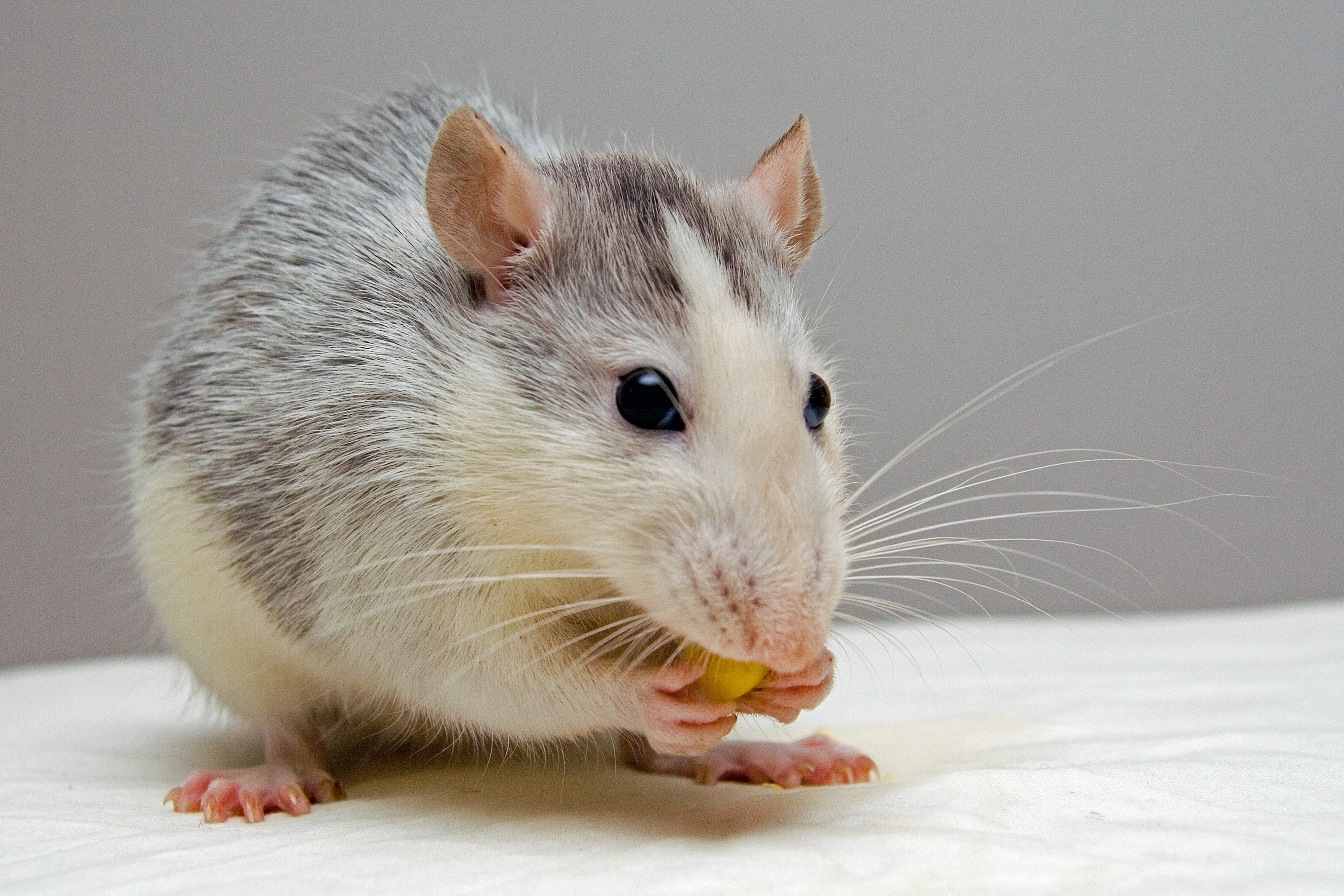
{"id":527,"date":"2018-05-21T15:10:42","date_gmt":"2018-05-21T15:10:42","guid":{"rendered":"http:\/\/blogs.sussex.ac.uk\/psychology\/?p=527"},"modified":"2020-05-28T12:47:27","modified_gmt":"2020-05-28T12:47:27","slug":"the-dangers-of-over-hyping-sugar-addiction","status":"publish","type":"post","link":"https:\/\/blogs.sussex.ac.uk\/psychology\/2018\/05\/21\/the-dangers-of-over-hyping-sugar-addiction\/","title":{"rendered":"The dangers of over-hyping \u2018sugar addiction\u2019."},"content":{"rendered":"<p>By Jenny Morris<\/p>\n<p>Sugar seems to be frequently vilified in the media. Just a quick google search and headlines report\u00a0<a href=\"http:\/\/iheartintelligence.com\/2015\/09\/19\/sugar-brain\/\">\u2018Sugar can destroy your brain\u2019<\/a>,\u00a0<a href=\"http:\/\/beta.nydailynews.com\/life-style\/health\/researcher-sugar-addictive-cocaine-obesity-diabetes-cancer-heart-disease-article-1.1054419\">\u2018Sugar is as addictive as cocaine\u2019<\/a>\u00a0and\u00a0<a href=\"https:\/\/www.independent.co.uk\/news\/science\/sugar-has-similar-effect-on-brain-as-cocaine-a6980336.html\">\u2018Sugar addiction \u2018should be treated as a form of drug abuse\u2019<\/a>. It\u2019s frequently referred to as an addictive drug, which supports people who build successful careers out of teaching people to avoid the perils of sugar. But how well founded are these claims and should you really cut sugar out of your diet?<\/p>\n<p>Firstly, it\u2019s important to understand that we absolutely need sugar in our diets. Glucose is an essential substance for cell growth and maintenance. The brain accounts for only 2% of our body weight yet uses approximately\u00a0<a href=\"https:\/\/www.ncbi.nlm.nih.gov\/pubmed\/13534602\">20% of glucose derived energy<\/a>, it\u2019s vital to consume sugar to support basic cognitive functions. Disruption of normal glucose metabolism can have dangerous effects, resulting in\u00a0<a href=\"https:\/\/www.sciencedirect.com\/science\/article\/pii\/S0166223613001306\">pathological brain function<\/a>. Yet there is concern that overconsumption may lead to a multitude of adverse health effects.\u00a0<!--more--><\/p>\n<p><strong>Is it addictive?<\/strong><\/p>\n<p>The impact of sugar on the brain is partly what has led many people to compare sugar to an addictive drug. Indeed, there are similarities, sugar activates the reward network which reinforces intake. It\u2019s been suggested that ingesting an addictive drug hijacks this reward network and causes addiction. When people mention the\u00a0<a href=\"http:\/\/www.jneurosci.org\/content\/22\/9\/3306\">reward pathway<\/a>\u00a0they are referring to the effect of dopamine on the pathway from the ventral tegmentum (VTA) to the nucleus accumbens and the effect of opioids in the amygdala and VTA. Dopamine underlies \u2018<a href=\"https:\/\/www.sciencedirect.com\/science\/article\/pii\/014976349500033B\">wanting\u2019<\/a>\u00a0of an addictive substance whereas opioids underlie \u2018<a href=\"https:\/\/www.sciencedirect.com\/science\/article\/pii\/014976349500033B\">liking<\/a>\u2019. Wanting causes the motivation to find and consume the substance, dopamine can be released in anticipation which increases craving, whereas liking is the enjoyment of actual consumption.<\/p>\n<p>Our preference for sweetness is the only taste we have an\u00a0<a href=\"https:\/\/www.sciencedirect.com\/science\/article\/pii\/S0149763400000518\">innate preference<\/a>\u00a0for and can be seen in newborn babies. This is adaptive because it signals the food is likely to be high in calories and therefore valuable, at least in the environment we evolved in where food was hard to find. However, our environment is now full of food cues and feeding opportunities so our natural preference for sweetness is now counterproductive. These cues increase the likelihood of craving and consumption, like in drug addiction. Addicts show a\u00a0<a href=\"https:\/\/www.ncbi.nlm.nih.gov\/pubmed\/18479844\">biased attention<\/a>\u00a0towards cues related to their addictive substance, this is usually measured as being quicker to detect them and finding it harder to ignore them. This is also seen with food in those who are\u00a0<a href=\"https:\/\/www.nature.com\/articles\/ijo2009138\">obese<\/a>,\u00a0<a href=\"https:\/\/www.sciencedirect.com\/science\/article\/pii\/S0195666309006606\">hungry<\/a>\u00a0or have\u00a0<a href=\"https:\/\/www.sciencedirect.com\/science\/article\/pii\/S0195666314001949\">problematic eating behaviours.<\/a>\u00a0In our obesogenic environment this is an issue as food cues are so frequently encountered.<\/p>\n<div id=\"attachment_531\" style=\"width: 560px\" class=\"wp-caption aligncenter\"><a href=\"https:\/\/i2.wp.com\/blogs.sussex.ac.uk\/psychology\/files\/2018\/05\/cooking-crowd-food-104884.jpg\"><img aria-describedby=\"caption-attachment-531\" data-attachment-id=\"531\" data-permalink=\"https:\/\/blogs.sussex.ac.uk\/psychology\/2018\/05\/21\/the-dangers-of-over-hyping-sugar-addiction\/cooking-crowd-food-104884\/\" data-orig-file=\"https:\/\/i2.wp.com\/blogs.sussex.ac.uk\/psychology\/files\/2018\/05\/cooking-crowd-food-104884.jpg?fit=5178%2C3154&amp;ssl=1\" data-orig-size=\"5178,3154\" data-comments-opened=\"1\" data-image-meta=\"{&quot;aperture&quot;:&quot;0&quot;,&quot;credit&quot;:&quot;&quot;,&quot;camera&quot;:&quot;&quot;,&quot;caption&quot;:&quot;&quot;,&quot;created_timestamp&quot;:&quot;0&quot;,&quot;copyright&quot;:&quot;&quot;,&quot;focal_length&quot;:&quot;0&quot;,&quot;iso&quot;:&quot;0&quot;,&quot;shutter_speed&quot;:&quot;0&quot;,&quot;title&quot;:&quot;&quot;,&quot;orientation&quot;:&quot;0&quot;}\" data-image-title=\"cooking-crowd-food-104884\" data-image-description=\"\" data-image-caption=\"&lt;p&gt;Our obesogenic environment offers temptations at every turn (CC0)&lt;\/p&gt;\n\" data-medium-file=\"https:\/\/i2.wp.com\/blogs.sussex.ac.uk\/psychology\/files\/2018\/05\/cooking-crowd-food-104884.jpg?fit=300%2C183&amp;ssl=1\" data-large-file=\"https:\/\/i2.wp.com\/blogs.sussex.ac.uk\/psychology\/files\/2018\/05\/cooking-crowd-food-104884.jpg?fit=550%2C335&amp;ssl=1\" loading=\"lazy\" class=\"size-large wp-image-531\" src=\"https:\/\/i2.wp.com\/blogs.sussex.ac.uk\/psychology\/files\/2018\/05\/cooking-crowd-food-104884.jpg?resize=550%2C335\" alt=\"\" width=\"550\" height=\"335\" srcset=\"https:\/\/i2.wp.com\/blogs.sussex.ac.uk\/psychology\/files\/2018\/05\/cooking-crowd-food-104884.jpg?resize=1024%2C624&amp;ssl=1 1024w, https:\/\/i2.wp.com\/blogs.sussex.ac.uk\/psychology\/files\/2018\/05\/cooking-crowd-food-104884.jpg?resize=300%2C183&amp;ssl=1 300w, https:\/\/i2.wp.com\/blogs.sussex.ac.uk\/psychology\/files\/2018\/05\/cooking-crowd-food-104884.jpg?resize=768%2C468&amp;ssl=1 768w, https:\/\/i2.wp.com\/blogs.sussex.ac.uk\/psychology\/files\/2018\/05\/cooking-crowd-food-104884.jpg?resize=100%2C61&amp;ssl=1 100w, https:\/\/i2.wp.com\/blogs.sussex.ac.uk\/psychology\/files\/2018\/05\/cooking-crowd-food-104884.jpg?resize=150%2C91&amp;ssl=1 150w, https:\/\/i2.wp.com\/blogs.sussex.ac.uk\/psychology\/files\/2018\/05\/cooking-crowd-food-104884.jpg?resize=200%2C122&amp;ssl=1 200w, https:\/\/i2.wp.com\/blogs.sussex.ac.uk\/psychology\/files\/2018\/05\/cooking-crowd-food-104884.jpg?resize=450%2C274&amp;ssl=1 450w, https:\/\/i2.wp.com\/blogs.sussex.ac.uk\/psychology\/files\/2018\/05\/cooking-crowd-food-104884.jpg?resize=600%2C365&amp;ssl=1 600w, https:\/\/i2.wp.com\/blogs.sussex.ac.uk\/psychology\/files\/2018\/05\/cooking-crowd-food-104884.jpg?resize=900%2C548&amp;ssl=1 900w, https:\/\/i2.wp.com\/blogs.sussex.ac.uk\/psychology\/files\/2018\/05\/cooking-crowd-food-104884.jpg?w=1100 1100w, https:\/\/i2.wp.com\/blogs.sussex.ac.uk\/psychology\/files\/2018\/05\/cooking-crowd-food-104884.jpg?w=1650 1650w\" sizes=\"(max-width: 550px) 100vw, 550px\" data-recalc-dims=\"1\" \/><\/a><p id=\"caption-attachment-531\" class=\"wp-caption-text\">Our obesogenic environment offers temptations at every turn (CC0)<\/p><\/div>\n<p>Despite the potential common mechanisms, addictive behaviours such as increased tolerance and withdrawal syndrome have not been seen in humans (Which the exception of a\u00a0<a href=\"https:\/\/www.researchgate.net\/profile\/Simon_Thornley\/publication\/24232113_Carbohydrate_withdrawal_Is_recognition_the_first_step_to_recovery\/links\/54f644440cf27d8ed71d7274.pdf\">single case study<\/a>). Instead most of the research is based on animal models. \u2018Sugar addiction\u2019 can be seen in rats, but only when they are given\u00a0<a href=\"https:\/\/www.ncbi.nlm.nih.gov\/pmc\/articles\/PMC2235907\/?&amp;sa=U&amp;ei=9ickVPqqEMi_ygPm14KoAw&amp;ved=0CEUQFjAI&amp;usg=AFQjCNErU766kM80sBTkc55HfZ9O-jNo9Q\">intermittent access<\/a>, this causes sugar bingeing and anxiety which might be evidence of withdrawal symptoms (although this could also be caused by hunger). This addictive behaviour is not seen in rats given free 24-hour access to sugar, even in those preselected to have a sugar preference. Given that free access is most like our own environment, this evidence is not particularly compelling. Furthermore, you get similar effects when using\u00a0<a href=\"https:\/\/www.ncbi.nlm.nih.gov\/pmc\/articles\/PMC1931610\/\">saccharin<\/a>\u00a0(artificial sweetener), so addictive behaviours are more likely caused by the rewarding sweet taste rather than at a chemical level. This makes sense when you consider self-confessed \u2018sugar-addicts\u2019 tend to crave sweet foods such as chocolate, cake and doughnuts, not sugar in its purest form.<\/p>\n<div id=\"attachment_529\" style=\"width: 560px\" class=\"wp-caption aligncenter\"><a href=\"https:\/\/i1.wp.com\/blogs.sussex.ac.uk\/psychology\/files\/2018\/05\/abundance-baked-bakery-205961.jpg\"><img aria-describedby=\"caption-attachment-529\" data-attachment-id=\"529\" data-permalink=\"https:\/\/blogs.sussex.ac.uk\/psychology\/2018\/05\/21\/the-dangers-of-over-hyping-sugar-addiction\/abundance-baked-bakery-205961\/\" data-orig-file=\"https:\/\/i1.wp.com\/blogs.sussex.ac.uk\/psychology\/files\/2018\/05\/abundance-baked-bakery-205961.jpg?fit=5886%2C3924&amp;ssl=1\" data-orig-size=\"5886,3924\" data-comments-opened=\"1\" data-image-meta=\"{&quot;aperture&quot;:&quot;0&quot;,&quot;credit&quot;:&quot;&quot;,&quot;camera&quot;:&quot;&quot;,&quot;caption&quot;:&quot;&quot;,&quot;created_timestamp&quot;:&quot;0&quot;,&quot;copyright&quot;:&quot;&quot;,&quot;focal_length&quot;:&quot;0&quot;,&quot;iso&quot;:&quot;0&quot;,&quot;shutter_speed&quot;:&quot;0&quot;,&quot;title&quot;:&quot;&quot;,&quot;orientation&quot;:&quot;0&quot;}\" data-image-title=\"abundance-baked-bakery-205961\" data-image-description=\"\" data-image-caption=\"&lt;p&gt;Whilst these foods are likely to be high in sugar, they are also high in fat as well as other nutrients. (CC0)&lt;\/p&gt;\n\" data-medium-file=\"https:\/\/i1.wp.com\/blogs.sussex.ac.uk\/psychology\/files\/2018\/05\/abundance-baked-bakery-205961.jpg?fit=300%2C200&amp;ssl=1\" data-large-file=\"https:\/\/i1.wp.com\/blogs.sussex.ac.uk\/psychology\/files\/2018\/05\/abundance-baked-bakery-205961.jpg?fit=550%2C367&amp;ssl=1\" loading=\"lazy\" class=\"size-large wp-image-529\" src=\"https:\/\/i1.wp.com\/blogs.sussex.ac.uk\/psychology\/files\/2018\/05\/abundance-baked-bakery-205961.jpg?resize=550%2C367\" alt=\"\" width=\"550\" height=\"367\" srcset=\"https:\/\/i1.wp.com\/blogs.sussex.ac.uk\/psychology\/files\/2018\/05\/abundance-baked-bakery-205961.jpg?resize=1024%2C683&amp;ssl=1 1024w, https:\/\/i1.wp.com\/blogs.sussex.ac.uk\/psychology\/files\/2018\/05\/abundance-baked-bakery-205961.jpg?resize=300%2C200&amp;ssl=1 300w, https:\/\/i1.wp.com\/blogs.sussex.ac.uk\/psychology\/files\/2018\/05\/abundance-baked-bakery-205961.jpg?resize=768%2C512&amp;ssl=1 768w, https:\/\/i1.wp.com\/blogs.sussex.ac.uk\/psychology\/files\/2018\/05\/abundance-baked-bakery-205961.jpg?resize=100%2C67&amp;ssl=1 100w, https:\/\/i1.wp.com\/blogs.sussex.ac.uk\/psychology\/files\/2018\/05\/abundance-baked-bakery-205961.jpg?resize=150%2C100&amp;ssl=1 150w, https:\/\/i1.wp.com\/blogs.sussex.ac.uk\/psychology\/files\/2018\/05\/abundance-baked-bakery-205961.jpg?resize=200%2C133&amp;ssl=1 200w, https:\/\/i1.wp.com\/blogs.sussex.ac.uk\/psychology\/files\/2018\/05\/abundance-baked-bakery-205961.jpg?resize=450%2C300&amp;ssl=1 450w, https:\/\/i1.wp.com\/blogs.sussex.ac.uk\/psychology\/files\/2018\/05\/abundance-baked-bakery-205961.jpg?resize=600%2C400&amp;ssl=1 600w, https:\/\/i1.wp.com\/blogs.sussex.ac.uk\/psychology\/files\/2018\/05\/abundance-baked-bakery-205961.jpg?resize=900%2C600&amp;ssl=1 900w, https:\/\/i1.wp.com\/blogs.sussex.ac.uk\/psychology\/files\/2018\/05\/abundance-baked-bakery-205961.jpg?w=1100 1100w, https:\/\/i1.wp.com\/blogs.sussex.ac.uk\/psychology\/files\/2018\/05\/abundance-baked-bakery-205961.jpg?w=1650 1650w\" sizes=\"(max-width: 550px) 100vw, 550px\" data-recalc-dims=\"1\" \/><\/a><p id=\"caption-attachment-529\" class=\"wp-caption-text\">Whilst these foods are likely to be high in sugar, they are also high in fat as well as other nutrients. (CC0)<\/p><\/div>\n<p><strong>Issues with evidence?<\/strong><\/p>\n<p>A further issue with claims of \u2018sugar addiction\u2019 is that claims are difficult to test. One problem is that human diets are varied, which makes it difficult to isolate the effect of sugar. Effects are usually\u00a0<a href=\"https:\/\/researchers.mq.edu.au\/en\/publications\/the-longer-term-impacts-of-western-diet-on-human-cognition-and-th\">confounded with lifestyle factors<\/a>\u00a0and other nutrients commonly found in the \u201cWestern diet\u201d such as fat. If you try to list some high sugar foods, you\u2019ll probably find these are also high in fat. Therefore, studies investigating the overall western diet do not provide compelling evidence for a direct causal link between sugar and negative health outcomes. To directly test this, we would need to put a sample of participants on a high sugar (controlling for all other dietary and lifestyle factors) diet for an extended period time. For obvious practical and ethical reasons, this is not possible (ethical boards tend to object to experiments where you intentionally damage the health of participants).<\/p>\n<p>Therefore, we use animal models, which go some way in addressing this issue as sugar can be isolated more effectively. However, animal studies are also subject to\u00a0<a href=\"https:\/\/www.ncbi.nlm.nih.gov\/pmc\/articles\/PMC2746847\/\">criticism<\/a>, as models are created from them to demonstrate the effects of sugar in the brain, but they do not necessarily translate to complex human behaviour in the real world. For example, humans can compensate for sugar compensation by choosing less sugary foods later, whereas rats in a controlled environment do not have this option.<\/p>\n<div id=\"attachment_532\" style=\"width: 560px\" class=\"wp-caption aligncenter\"><a href=\"https:\/\/i1.wp.com\/blogs.sussex.ac.uk\/psychology\/files\/2018\/05\/eating-mouse-rat-51340.jpg\"><img aria-describedby=\"caption-attachment-532\" data-attachment-id=\"532\" data-permalink=\"https:\/\/blogs.sussex.ac.uk\/psychology\/2018\/05\/21\/the-dangers-of-over-hyping-sugar-addiction\/eating-mouse-rat-51340\/\" data-orig-file=\"https:\/\/i1.wp.com\/blogs.sussex.ac.uk\/psychology\/files\/2018\/05\/eating-mouse-rat-51340.jpg?fit=3456%2C2304&amp;ssl=1\" data-orig-size=\"3456,2304\" data-comments-opened=\"1\" data-image-meta=\"{&quot;aperture&quot;:&quot;0&quot;,&quot;credit&quot;:&quot;&quot;,&quot;camera&quot;:&quot;&quot;,&quot;caption&quot;:&quot;&quot;,&quot;created_timestamp&quot;:&quot;0&quot;,&quot;copyright&quot;:&quot;&quot;,&quot;focal_length&quot;:&quot;0&quot;,&quot;iso&quot;:&quot;0&quot;,&quot;shutter_speed&quot;:&quot;0&quot;,&quot;title&quot;:&quot;&quot;,&quot;orientation&quot;:&quot;0&quot;}\" data-image-title=\"eating-mouse-rat-51340\" data-image-description=\"\" data-image-caption=\"&lt;p&gt;How similar do you think your behaviour is to this guy? (CC0)&lt;\/p&gt;\n\" data-medium-file=\"https:\/\/i1.wp.com\/blogs.sussex.ac.uk\/psychology\/files\/2018\/05\/eating-mouse-rat-51340.jpg?fit=300%2C200&amp;ssl=1\" data-large-file=\"https:\/\/i1.wp.com\/blogs.sussex.ac.uk\/psychology\/files\/2018\/05\/eating-mouse-rat-51340.jpg?fit=550%2C367&amp;ssl=1\" loading=\"lazy\" class=\"size-large wp-image-532\" src=\"https:\/\/i1.wp.com\/blogs.sussex.ac.uk\/psychology\/files\/2018\/05\/eating-mouse-rat-51340.jpg?resize=550%2C367\" alt=\"\" width=\"550\" height=\"367\" srcset=\"https:\/\/i1.wp.com\/blogs.sussex.ac.uk\/psychology\/files\/2018\/05\/eating-mouse-rat-51340.jpg?resize=1024%2C683&amp;ssl=1 1024w, https:\/\/i1.wp.com\/blogs.sussex.ac.uk\/psychology\/files\/2018\/05\/eating-mouse-rat-51340.jpg?resize=300%2C200&amp;ssl=1 300w, https:\/\/i1.wp.com\/blogs.sussex.ac.uk\/psychology\/files\/2018\/05\/eating-mouse-rat-51340.jpg?resize=768%2C512&amp;ssl=1 768w, https:\/\/i1.wp.com\/blogs.sussex.ac.uk\/psychology\/files\/2018\/05\/eating-mouse-rat-51340.jpg?resize=100%2C67&amp;ssl=1 100w, https:\/\/i1.wp.com\/blogs.sussex.ac.uk\/psychology\/files\/2018\/05\/eating-mouse-rat-51340.jpg?resize=150%2C100&amp;ssl=1 150w, https:\/\/i1.wp.com\/blogs.sussex.ac.uk\/psychology\/files\/2018\/05\/eating-mouse-rat-51340.jpg?resize=200%2C133&amp;ssl=1 200w, https:\/\/i1.wp.com\/blogs.sussex.ac.uk\/psychology\/files\/2018\/05\/eating-mouse-rat-51340.jpg?resize=450%2C300&amp;ssl=1 450w, https:\/\/i1.wp.com\/blogs.sussex.ac.uk\/psychology\/files\/2018\/05\/eating-mouse-rat-51340.jpg?resize=600%2C400&amp;ssl=1 600w, https:\/\/i1.wp.com\/blogs.sussex.ac.uk\/psychology\/files\/2018\/05\/eating-mouse-rat-51340.jpg?resize=900%2C600&amp;ssl=1 900w, https:\/\/i1.wp.com\/blogs.sussex.ac.uk\/psychology\/files\/2018\/05\/eating-mouse-rat-51340.jpg?w=1100 1100w, https:\/\/i1.wp.com\/blogs.sussex.ac.uk\/psychology\/files\/2018\/05\/eating-mouse-rat-51340.jpg?w=1650 1650w\" sizes=\"(max-width: 550px) 100vw, 550px\" data-recalc-dims=\"1\" \/><\/a><p id=\"caption-attachment-532\" class=\"wp-caption-text\">How similar do you think your behaviour is to this guy? (CC0)<\/p><\/div>\n<p>Brain imaging studies are another popular method to study the short-term effects of sugar on cognition. There is no shortage of articles describing how the brain\u00a0<a href=\"https:\/\/www.huffingtonpost.co.uk\/entry\/fed-up_n_5281670\">\u2018lights up\u2019<\/a>\u00a0or is\u00a0<a href=\"https:\/\/mic.com\/articles\/88015\/what-happens-to-your-brain-on-sugar-explained-by-science#.yXzzpew3W\">\u2018flooded with dopamine\u2019<\/a>\u00a0in response to sugar, like the patterns of activation seen in response to addictive drugs. However, we also see the same patterns in response\u00a0<a href=\"http:\/\/sussex-primo.hosted.exlibrisgroup.com\/primo_library\/libweb\/action\/openurl?date=2005&amp;aulast=Menon&amp;issue=1&amp;isSerivcesPage=true&amp;spage=175&amp;title=NeuroImage.&amp;dscnt=2&amp;auinit=V&amp;atitle=The+rewards+of+music+listening%3A+response+and+physiological+connectivity+of+the+mesolimbic+system&amp;url_ctx_fmt=null&amp;sid=google&amp;vid=44SUS_SP&amp;volume=28&amp;institution=44SUS_INST&amp;issn=1053-8119&amp;id=doi%3A10.1016%2Fj.neuroimage.2005.05.053&amp;dstmp=1525268580186&amp;fromLogin=true\">to listening to music<\/a>,\u00a0<a href=\"https:\/\/medicalxpress.com\/news\/2017-06-art-brain-reward-pathway.html\">drawing doodles<\/a>\u00a0and\u00a0<a href=\"https:\/\/journals.lww.com\/neuroreport\/Abstract\/2007\/01220\/Favorite_brands_as_cultural_objects_modulate.8.aspx\">cars<\/a>, but we don\u2019t think these things are addictive. It\u2019s also important to realise fMRI is only measuring increased blood flow to those areas, not neural activity, so the information we get from them is limited. Brain imaging studies provide valuable insights into the underlying mechanisms of behaviour, but the results should not be overstated.<\/p>\n<p><strong>Negative consequences of vilifying sugar<\/strong><\/p>\n<p>The issue with vilifying one specific substance is that it causes people to adopt overly restrained diets. Restrained eating is an issue because it is frequently linked to\u00a0<a href=\"http:\/\/psycnet.apa.org\/record\/2008-03696-005\">diet breakdown<\/a>, overeating and\u00a0<a href=\"http:\/\/psycnet.apa.org\/buy\/1991-17706-001\">weight fluctuation<\/a>. Tightly controlled diets involve a large amount of self-control, which usually fail and result in disinhibited eating. Making a\u00a0<a href=\"https:\/\/onlinelibrary.wiley.com\/doi\/abs\/10.1002\/eat.20195\">food forbidden<\/a>\u00a0increases craving and overeating of that food, particularly in restrained eaters. The breakdown of restraint often causes guilt and leads to an unhealthy psychological relationship with food. In contrast, intuitive eating\/flexible dietary control is associated with\u00a0<a href=\"https:\/\/www-sciencedirect-com.ezproxy.sussex.ac.uk\/science\/article\/pii\/S0195666315003219\">improved psychological well-being and lower BMI.<\/a><\/p>\n<p>Whilst there is no evidence to support \u2018sugar addiction\u2019 it\u2019s been suggested that a better term might be \u2018<a href=\"https:\/\/www.ncbi.nlm.nih.gov\/pubmed\/25205078\">eating addiction\u2019<\/a>. This term would describe the behavioural symptoms of loss of control, intense craving and overconsumption, rather than the substance-based addiction. The criteria for addiction in the most recent version of the DSM-5 (a diagnostic manual for clinicians) has been extended to account for non-substance-based addictions, such as gambling. However, there is concern that the term addiction implies that the behaviour is uncontrollable, which would undermine dieting attempts. Furthermore, there is some evidence that\u00a0<a href=\"https:\/\/www.ncbi.nlm.nih.gov\/pubmed\/25891042\">belief in \u2018food addiction\u2019<\/a>\u00a0increases food consumption, particularly in those who self-identify as an addict.<\/p>\n<p>To summarise, the causes of obesity are complex and cannot be reduced to a single substance. A combination of biological and psychological influences are involved, and to complicate matters further, the relative power of different factors differ between people. It would be more convenient if we could blame the multitude of potential health issues on sugar consumption, but at present there is no strong evidence to support this argument. Finally, over-hyped headlines and advice to cut sugar out of our diet completely is potentially harmful to our attempts to make positive changes to our diets and achieve long term health goals.<\/p>\n<p><em>Jenny Morris is a PhD student with <a href=\"http:\/\/www.sussex.ac.uk\/profiles\/3030\">Prof Martin Yeomans<\/a> and <a href=\"http:\/\/www.sussex.ac.uk\/profiles\/316091\">Dr Sophie Forster<\/a>. Her research involves cognitive psychology and behavioural methods to test the mechanisms of distraction induced over-eating. This post was originally published in <a href=\"https:\/\/eatingexplained.wordpress.com\/\">Jenny&#8217;s research blog.<\/a><\/em><\/p>\n<p>Find out more about our <a href=\"http:\/\/www.sussex.ac.uk\/psychology\/research\/behaviouralclinicalneuroscience\">research on Behavioural and Clinical Neuroscience<\/a>.<\/p>\n","protected":false},"excerpt":{"rendered":"<p>By Jenny Morris Sugar seems to be frequently vilified in the media. Just a quick google search and headlines report\u00a0\u2018Sugar can destroy your brain\u2019,\u00a0\u2018Sugar is as addictive as cocaine\u2019\u00a0and\u00a0\u2018Sugar addiction \u2018should be treated as a form of drug abuse\u2019. It\u2019s<span class=\"ellipsis\">&hellip;<\/span><\/p>\n<div class=\"read-more\"><a href=\"https:\/\/blogs.sussex.ac.uk\/psychology\/2018\/05\/21\/the-dangers-of-over-hyping-sugar-addiction\/\">Read more &#8250;<\/a><\/div>\n<p><!-- end of .read-more --><\/p>\n","protected":false},"author":156,"featured_media":0,"comment_status":"open","ping_status":"open","sticky":false,"template":"","format":"standard","meta":{"spay_email":"","jetpack_publicize_message":"","jetpack_is_tweetstorm":false},"categories":[98528,24],"tags":[98524,97941,24],"jetpack_featured_media_url":"","jetpack_publicize_connections":[],"jetpack_sharing_enabled":true,"jetpack_shortlink":"https:\/\/wp.me\/pafdEV-8v","jetpack-related-posts":[{"id":225,"url":"https:\/\/blogs.sussex.ac.uk\/psychology\/2016\/06\/14\/reflections-of-a-first-year-phd-student\/","url_meta":{"origin":527,"position":0},"title":"Reflections of a first year PhD student","date":"June 14, 2016","format":false,"excerpt":"By Mateo Legan\u00e9s Fonteneau Doing a PhD was never my lifetime objective. When I finished college I started studying an engineering degree, but I realised quite soon that it wasn\u2019t what I\u2019d expected. I then went on to study Social Work, hoping to help drug addicts when I finished. As\u2026","rel":"","context":"In \"First Year\"","img":{"alt_text":"Mateo with his colleagues, about to win a race","src":"https:\/\/i2.wp.com\/blogs.sussex.ac.uk\/psychology\/files\/2016\/06\/Unknown-300x169.jpeg?resize=350%2C200","width":350,"height":200},"classes":[]},{"id":704,"url":"https:\/\/blogs.sussex.ac.uk\/psychology\/2019\/04\/01\/desserts-of-the-world\/","url_meta":{"origin":527,"position":1},"title":"Desserts of the World","date":"April 1, 2019","format":false,"excerpt":"To support the University\u2019s One World Week, the Psychology Student Experience team hosted \u2018Desserts of the World\u2019 in the Pevensey 1 building. This event was aimed at celebrating our diverse staff and student population and using food to learn about different countries, cultures and traditions. Faculty and students were invited\u2026","rel":"","context":"Similar post","img":{"alt_text":"","src":"https:\/\/i0.wp.com\/blogs.sussex.ac.uk\/psychology\/files\/2019\/04\/WD-7.jpg?resize=350%2C200&ssl=1","width":350,"height":200},"classes":[]},{"id":2007,"url":"https:\/\/blogs.sussex.ac.uk\/psychology\/2023\/12\/19\/discussing-the-current-approach-to-the-treatment-of-addiction-a-public-session-hosted-by-saric-during-the-bna-festival\/","url_meta":{"origin":527,"position":2},"title":"Discussing the current approach to the treatment of addiction: a public session hosted by SARIC during the BNA festival","date":"December 19, 2023","format":false,"excerpt":"By Nina Cork and Hattie Lockwood (University of Sussex students) In April this year, SARIC (Sussex Addiction Research and Intervention Centre) hosted a public panel as part of the British Neuroscience Association\u2019s International Festival of Neuroscience 2023, discussing the need to bridge the gap between academia and the community regarding\u2026","rel":"","context":"Similar post","img":{"alt_text":"","src":"https:\/\/i2.wp.com\/blogs.sussex.ac.uk\/psychology\/files\/2023\/12\/BNA-Panel-Photo-scaled.jpeg?resize=350%2C200&ssl=1","width":350,"height":200},"classes":[]},{"id":1191,"url":"https:\/\/blogs.sussex.ac.uk\/psychology\/2021\/01\/18\/alcohol-addiction-research\/","url_meta":{"origin":527,"position":3},"title":"Alcohol Addiction Research","date":"January 18, 2021","format":false,"excerpt":"By Dr Bryan Singer The Sussex Addiction Research and Intervention Centre (SARIC) is made up of a collection of investigators who are dedicated to understanding the biopsychosocial underpinnings of addiction and developing rational therapies for its treatment. Over the years, SARIC has been extraordinarily active in investigating why there is\u2026","rel":"","context":"In &quot;Faculty research&quot;","img":{"alt_text":"","src":"https:\/\/i1.wp.com\/blogs.sussex.ac.uk\/psychology\/files\/2021\/01\/SARIC-covid19-graph.png?resize=350%2C200&ssl=1","width":350,"height":200},"classes":[]},{"id":498,"url":"https:\/\/blogs.sussex.ac.uk\/psychology\/2018\/02\/05\/meet-your-pgr-student-reps-2017-2018\/","url_meta":{"origin":527,"position":4},"title":"Meet your PGR Student Reps (2017-2018)","date":"February 5, 2018","format":false,"excerpt":"Lina\u00a0 I\u2019m currently in the first year of my PhD, working on the brain-body interaction in associative learning and consciousness. My main motivation to become a PGR rep was the importance of community in postgrad life, and ensuring that everyone feels part of a group despite working individually for the\u2026","rel":"","context":"In \"PGR Research Series\"","img":{"alt_text":"","src":"https:\/\/i0.wp.com\/blogs.sussex.ac.uk\/psychology\/files\/2018\/02\/Photo-from-Jolyon-1024x768.jpg?resize=350%2C200","width":350,"height":200},"classes":[]},{"id":1080,"url":"https:\/\/blogs.sussex.ac.uk\/psychology\/2020\/10\/30\/do-you-know-what-im-thinking-a-journey-from-mozambique-to-sussex\/","url_meta":{"origin":527,"position":5},"title":"Do you know what I'm thinking? - a Journey from Mozambique to Sussex","date":"October 30, 2020","format":false,"excerpt":"Paloma Manguele is a PhD student in the Attention Lab. She studies mind wandering, a concept she is cautious to translate into her first language, Portuguese. \u201cI guess the word could be \u2018divaga\u00e7ao\u2019 \u2013 digression \u2013 but not exactly,\u201d she explains. There are not many studies about mind wandering in\u2026","rel":"","context":"In &quot;PhD research&quot;","img":{"alt_text":"","src":"https:\/\/i0.wp.com\/blogs.sussex.ac.uk\/psychology\/files\/2020\/10\/Paloma-Manguele-EEG-2.jpg?resize=350%2C200&ssl=1","width":350,"height":200},"classes":[]}],"_links":{"self":[{"href":"https:\/\/blogs.sussex.ac.uk\/psychology\/wp-json\/wp\/v2\/posts\/527"}],"collection":[{"href":"https:\/\/blogs.sussex.ac.uk\/psychology\/wp-json\/wp\/v2\/posts"}],"about":[{"href":"https:\/\/blogs.sussex.ac.uk\/psychology\/wp-json\/wp\/v2\/types\/post"}],"author":[{"embeddable":true,"href":"https:\/\/blogs.sussex.ac.uk\/psychology\/wp-json\/wp\/v2\/users\/156"}],"replies":[{"embeddable":true,"href":"https:\/\/blogs.sussex.ac.uk\/psychology\/wp-json\/wp\/v2\/comments?post=527"}],"version-history":[{"count":7,"href":"https:\/\/blogs.sussex.ac.uk\/psychology\/wp-json\/wp\/v2\/posts\/527\/revisions"}],"predecessor-version":[{"id":977,"href":"https:\/\/blogs.sussex.ac.uk\/psychology\/wp-json\/wp\/v2\/posts\/527\/revisions\/977"}],"wp:attachment":[{"href":"https:\/\/blogs.sussex.ac.uk\/psychology\/wp-json\/wp\/v2\/media?parent=527"}],"wp:term":[{"taxonomy":"category","embeddable":true,"href":"https:\/\/blogs.sussex.ac.uk\/psychology\/wp-json\/wp\/v2\/categories?post=527"},{"taxonomy":"post_tag","embeddable":true,"href":"https:\/\/blogs.sussex.ac.uk\/psychology\/wp-json\/wp\/v2\/tags?post=527"}],"curies":[{"name":"wp","href":"https:\/\/api.w.org\/{rel}","templated":true}]}}