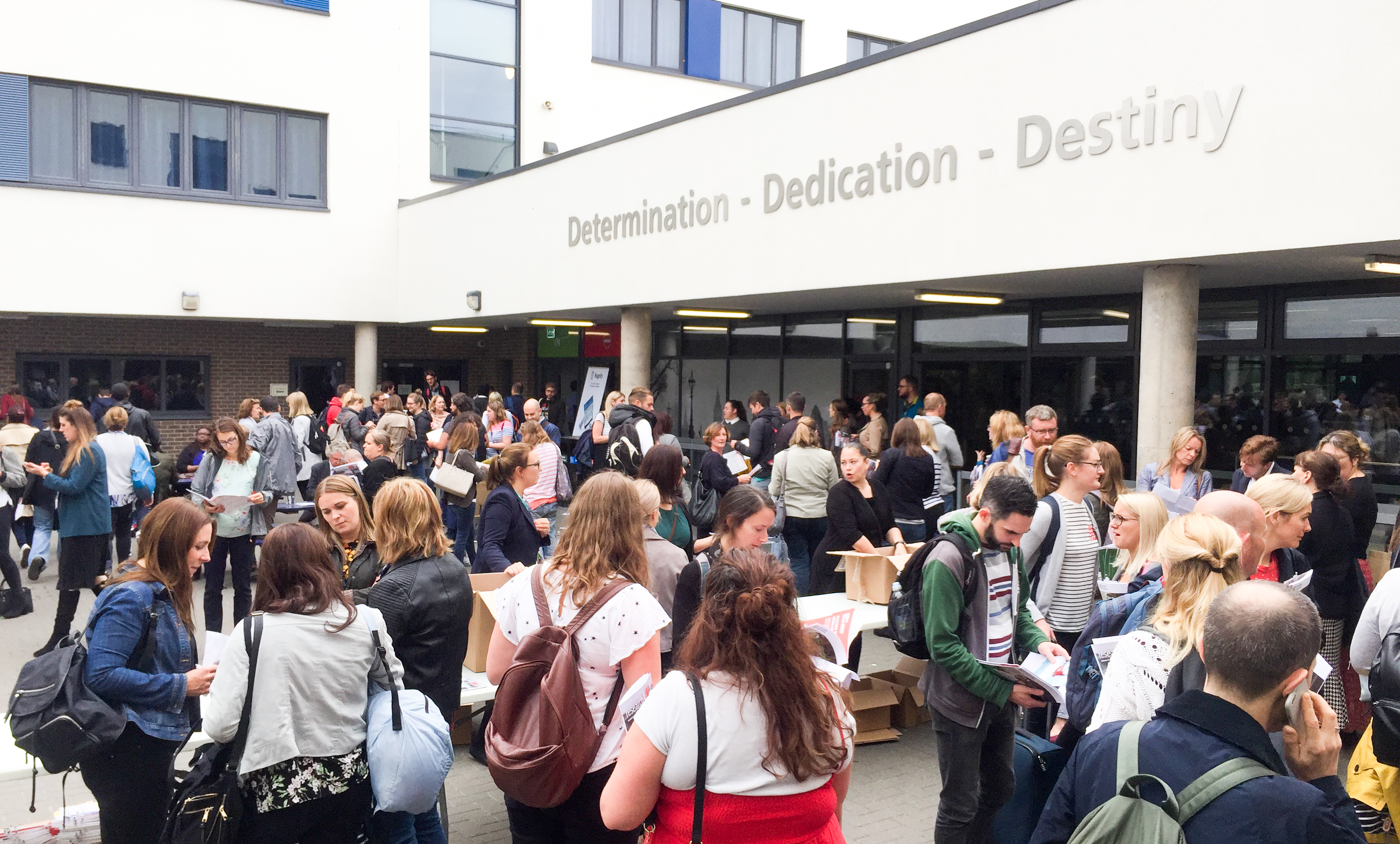
{"id":583,"date":"2018-10-15T09:04:06","date_gmt":"2018-10-15T09:04:06","guid":{"rendered":"http:\/\/blogs.sussex.ac.uk\/psychology\/?p=583"},"modified":"2020-05-28T12:34:22","modified_gmt":"2020-05-28T12:34:22","slug":"grouping-by-attainment-in-schools-can-psychological-interventions-help-turbo-charge-poor-students-performance","status":"publish","type":"post","link":"https:\/\/blogs.sussex.ac.uk\/psychology\/2018\/10\/15\/grouping-by-attainment-in-schools-can-psychological-interventions-help-turbo-charge-poor-students-performance\/","title":{"rendered":"Grouping by attainment in schools: can psychological interventions help turbo-charge poor students\u2019 performance?"},"content":{"rendered":"<p>By Ian Hadden<\/p>\n<p>Last month I attended the impressive \u2013\u00a0and buzzy \u2013 sell-out <a href=\"https:\/\/researched.org.uk\/\">researchED<\/a> 2018 annual conference in London.<\/p>\n<p><a href=\"https:\/\/i2.wp.com\/blogs.sussex.ac.uk\/psychology\/files\/2018\/10\/Unknown.jpeg\"><img data-attachment-id=\"584\" data-permalink=\"https:\/\/blogs.sussex.ac.uk\/psychology\/2018\/10\/15\/grouping-by-attainment-in-schools-can-psychological-interventions-help-turbo-charge-poor-students-performance\/unknown-3\/\" data-orig-file=\"https:\/\/i2.wp.com\/blogs.sussex.ac.uk\/psychology\/files\/2018\/10\/Unknown.jpeg?fit=3263%2C1966&amp;ssl=1\" data-orig-size=\"3263,1966\" data-comments-opened=\"1\" data-image-meta=\"{&quot;aperture&quot;:&quot;2.2&quot;,&quot;credit&quot;:&quot;&quot;,&quot;camera&quot;:&quot;iPhone 6 Plus&quot;,&quot;caption&quot;:&quot;&quot;,&quot;created_timestamp&quot;:&quot;1536399051&quot;,&quot;copyright&quot;:&quot;&quot;,&quot;focal_length&quot;:&quot;4.15&quot;,&quot;iso&quot;:&quot;32&quot;,&quot;shutter_speed&quot;:&quot;0.0027027027027027&quot;,&quot;title&quot;:&quot;&quot;,&quot;orientation&quot;:&quot;0&quot;}\" data-image-title=\"Unknown\" data-image-description=\"\" data-image-caption=\"\" data-medium-file=\"https:\/\/i2.wp.com\/blogs.sussex.ac.uk\/psychology\/files\/2018\/10\/Unknown.jpeg?fit=300%2C181&amp;ssl=1\" data-large-file=\"https:\/\/i2.wp.com\/blogs.sussex.ac.uk\/psychology\/files\/2018\/10\/Unknown.jpeg?fit=550%2C331&amp;ssl=1\" loading=\"lazy\" class=\"aligncenter size-large wp-image-584\" src=\"https:\/\/i2.wp.com\/blogs.sussex.ac.uk\/psychology\/files\/2018\/10\/Unknown.jpeg?resize=550%2C331\" alt=\"\" width=\"550\" height=\"331\" srcset=\"https:\/\/i2.wp.com\/blogs.sussex.ac.uk\/psychology\/files\/2018\/10\/Unknown.jpeg?resize=1024%2C617&amp;ssl=1 1024w, https:\/\/i2.wp.com\/blogs.sussex.ac.uk\/psychology\/files\/2018\/10\/Unknown.jpeg?resize=300%2C181&amp;ssl=1 300w, https:\/\/i2.wp.com\/blogs.sussex.ac.uk\/psychology\/files\/2018\/10\/Unknown.jpeg?resize=768%2C463&amp;ssl=1 768w, https:\/\/i2.wp.com\/blogs.sussex.ac.uk\/psychology\/files\/2018\/10\/Unknown.jpeg?resize=100%2C60&amp;ssl=1 100w, https:\/\/i2.wp.com\/blogs.sussex.ac.uk\/psychology\/files\/2018\/10\/Unknown.jpeg?resize=150%2C90&amp;ssl=1 150w, https:\/\/i2.wp.com\/blogs.sussex.ac.uk\/psychology\/files\/2018\/10\/Unknown.jpeg?resize=200%2C121&amp;ssl=1 200w, https:\/\/i2.wp.com\/blogs.sussex.ac.uk\/psychology\/files\/2018\/10\/Unknown.jpeg?resize=450%2C271&amp;ssl=1 450w, https:\/\/i2.wp.com\/blogs.sussex.ac.uk\/psychology\/files\/2018\/10\/Unknown.jpeg?resize=600%2C362&amp;ssl=1 600w, https:\/\/i2.wp.com\/blogs.sussex.ac.uk\/psychology\/files\/2018\/10\/Unknown.jpeg?resize=900%2C542&amp;ssl=1 900w, https:\/\/i2.wp.com\/blogs.sussex.ac.uk\/psychology\/files\/2018\/10\/Unknown.jpeg?w=1100 1100w, https:\/\/i2.wp.com\/blogs.sussex.ac.uk\/psychology\/files\/2018\/10\/Unknown.jpeg?w=1650 1650w\" sizes=\"(max-width: 550px) 100vw, 550px\" data-recalc-dims=\"1\" \/><\/a><\/p>\n<p>The highlight for me was a fascinating <a href=\"https:\/\/www.ucl.ac.uk\/ioe\/news-events\/news-pub\/sept-18\/setting-pupils-attainment-unlikely-boost-attainment-specific-activity-grouping-might\">piece of research<\/a> presented by Becky Francis and Jeremy Hodgen of the UCL Institute of Education (IOE) on grouping secondary school students into classes (\u2018sets\u2019) by attainment. This is often known as \u2018setting\u2019.<!--more--><\/p>\n<p>They found that a disproportionately high number of poor students were allocated to sets for lower-attainers. So far, so expected. But it was their in-depth analysis of how setting exacerbates the underperformance of poor students that got me thinking about links to my own research in social psychology.<\/p>\n<p>What struck me most was that once a student is in a lower set, it can be really hard to get out. The curriculum is typically not as rich, leading to the first stumbling block \u2013\u00a0how can you move up to a higher set if you haven\u2019t covered its curriculum? To add to this, they found common use of language and setting practices that reinforced the idea that setting reflects <em>static<\/em> ability rather than <em>mutable<\/em> performance (think \u201clow-ability set\u201d). All this means that poor students tend to stick to the lower sets to which they were allocated at the start of secondary school. And since teachers with less subject expertise tend to teach these sets, the socioeconomic gap gets wider as students progress through school.<\/p>\n<p>This lack of mobility must surely give many poorer students a sense that it\u2019s simply beyond their capacity to thrive academically, and this resonates with my own research. We know that a phenomenon known as stereotype threat \u2013\u00a0the fear of conforming to a negative stereotype about oneself \u2013\u00a0can also cause students to feel that they are on a relentless path to academic failure. And there are good reasons to believe that negative stereotypes about the academic ability of poor students are widespread in the UK. Research suggests that stereotype threat might be responsible for perhaps 40% of the underperformance of negatively stereotyped students at school.<\/p>\n<p>Fortunately it seems to be possible to reduce the effects of stereotype threat by helping students feel a greater sense of confidence and agency in their life as a whole. A recent study of mine found that one such intervention, known as <em>values affirmation<\/em>, reduced the gap in maths results between poor students and their better-off peers by almost three quarters.<\/p>\n<p>But what if an intervention helps a student develop such a sense of confidence and agency, only for them to hit the brick wall of being stuck in a \u201clow-ability\u201d set? Could the momentum survive? Well, researchers in the US have found positive effects of values affirmation interventions that lasted up to nine years, but these seem to have persisted precisely because they helped school students break out of a negative academic track.<\/p>\n<p>Where does all this leave us? Well, to me it reinforces the idea that the practical and psychological barriers for poor students are tightly intertwined. The IOE has developed a <a href=\"http:\/\/www.ucl.ac.uk\/ioe\/departments-centres\/centres\/groupingstudents\">\u2018dos and don\u2019ts\u2019 guide of attainment grouping<\/a> guide that addresses the practical challenges of setting. But their recommendations are more easily said than done, and indeed they found much resistance in schools to implementing them. As for addressing the social psychological barriers faced by poor students, research in the UK is in its early stages and I and others are actively trying to understand how and when interventions can help break them down.<\/p>\n<p>Perhaps we need to start looking with more precision at how the practical and the psychological interact. For example there is some limited evidence that <a href=\"https:\/\/educationendowmentfoundation.org.uk\/evidence-summaries\/teaching-learning-toolkit\/within-class-attainment-grouping\/\">within-class grouping<\/a>, a more dynamic version of setting, can raise attainment but that it is more beneficial for higher-performing students. So maybe we could investigate whether combining within-class grouping with a values affirmation intervention can provide the fluidity to turbo-charge poor students\u2019 confidence and consequently their academic performance?<\/p>\n<p>Anyone fancy giving it a go?<\/p>\n<p><em>Ian Hadden is a PhD student under the supervision of\u00a0\u00a0<a href=\"http:\/\/www.sussex.ac.uk\/profiles\/173988\">Dr Matt Easterbrook<\/a> and <a href=\"http:\/\/www.sussex.ac.uk\/profiles\/10678\">Prof Pete Harris<\/a>. He\u00a0is also part of the <a href=\"https:\/\/www.sussex.ac.uk\/psychology\/sarg\/index\">Self Affirmation Research Group (SARG)<\/a>. Other posts by Ian:\u00a0<a href=\"https:\/\/blogs.sussex.ac.uk\/psychology\/2018\/03\/05\/an-appetite-for-bringing-research-into-practice-at-researched\/\">An appetite for bringing research into practice at ResearchED<\/a><\/em><\/p>\n<p>Find out more about our <a href=\"http:\/\/www.sussex.ac.uk\/psychology\/research\/socialandappliedpsychology\">research on Social and Applied Psychology<\/a>.<\/p>\n","protected":false},"excerpt":{"rendered":"<p>By Ian Hadden Last month I attended the impressive \u2013\u00a0and buzzy \u2013 sell-out researchED 2018 annual conference in London. The highlight for me was a fascinating piece of research presented by Becky Francis and Jeremy Hodgen of the UCL Institute<span class=\"ellipsis\">&hellip;<\/span><\/p>\n<div class=\"read-more\"><a href=\"https:\/\/blogs.sussex.ac.uk\/psychology\/2018\/10\/15\/grouping-by-attainment-in-schools-can-psychological-interventions-help-turbo-charge-poor-students-performance\/\">Read more &#8250;<\/a><\/div>\n<p><!-- end of .read-more --><\/p>\n","protected":false},"author":156,"featured_media":0,"comment_status":"open","ping_status":"open","sticky":false,"template":"","format":"standard","meta":{"spay_email":"","jetpack_publicize_message":"","jetpack_is_tweetstorm":false},"categories":[98528,24],"tags":[143,94164,97941,24,98552],"jetpack_featured_media_url":"","jetpack_publicize_connections":[],"jetpack_sharing_enabled":true,"jetpack_shortlink":"https:\/\/wp.me\/pafdEV-9p","jetpack-related-posts":[{"id":683,"url":"https:\/\/blogs.sussex.ac.uk\/psychology\/2019\/02\/18\/breaking-down-the-psychological-barriers-to-success-at-school\/","url_meta":{"origin":583,"position":0},"title":"Breaking down the psychological barriers to success at school","date":"February 18, 2019","format":false,"excerpt":"Looking into how carefully-targeted low-cost interventions can reduce the psychological barriers to success of some groups of school students and help them prepare for a happy and productive life. by Ian Hadden It only takes a quick glance at GCSE results across the country to see that some groups of\u2026","rel":"","context":"In &quot;PhD research&quot;","img":{"alt_text":"","src":"https:\/\/i1.wp.com\/blogs.sussex.ac.uk\/psychology\/files\/2019\/02\/Psychological-barriers.jpeg?resize=350%2C200&ssl=1","width":350,"height":200},"classes":[]},{"id":520,"url":"https:\/\/blogs.sussex.ac.uk\/psychology\/2018\/03\/05\/an-appetite-for-bringing-research-into-practice-at-researched\/","url_meta":{"origin":583,"position":1},"title":"An appetite for bringing research into practice at ResearchED","date":"March 5, 2018","format":false,"excerpt":"By Ian Hadden ResearchED\u00a0is getting big. A 'grassroots movement' started by a former teacher, it aims to bridge the gap between research and practice in education. Since I\u2019m researching how simple, well-timed social psychological interventions can help kids from low-income families thrive at school, I went along to their London\u2026","rel":"","context":"In \"Conference\"","img":{"alt_text":"","src":"https:\/\/i2.wp.com\/blogs.sussex.ac.uk\/psychology\/files\/2018\/03\/Unknown.jpeg?resize=350%2C200","width":350,"height":200},"classes":[]},{"id":810,"url":"https:\/\/blogs.sussex.ac.uk\/psychology\/2019\/07\/16\/psychology-in-the-media-june-2019\/","url_meta":{"origin":583,"position":2},"title":"Psychology in the Media: June 2019","date":"July 16, 2019","format":false,"excerpt":"The month of June started with an article about Ian Hadden's research on the Times Education Supplement: \u201cPositive writing \u201cboosts poorer pupils\u2019 maths scores\u201d. Ian and his PhD supervisor Dr Matt Easterbrook investigated whether self-affirmation writing exercises could improve the performance of low socio-economic status school students. Their study found\u2026","rel":"","context":"In &quot;Psychology in the Media&quot;","img":{"alt_text":"","src":"https:\/\/i2.wp.com\/blogs.sussex.ac.uk\/psychology\/files\/2019\/07\/drinking-wine.jpg?resize=350%2C200&ssl=1","width":350,"height":200},"classes":[]},{"id":52,"url":"https:\/\/blogs.sussex.ac.uk\/psychology\/2015\/09\/28\/psychology-phd-poster-conference-2015\/","url_meta":{"origin":583,"position":3},"title":"Psychology PhD Poster Conference 2015","date":"September 28, 2015","format":false,"excerpt":"At the start of every academic year, PhD students moving from Year 1 to Year 2 of their studies are asked to prepare a poster presentation of their research to date. This year it will be held on Wednesday 30th September from 2.30 to 5pm in the Creativity Zone, a\u2026","rel":"","context":"In \"PhD students\"","img":{"alt_text":"","src":"https:\/\/i0.wp.com\/blogs.sussex.ac.uk\/psychology\/files\/2015\/09\/Screen-Shot-2015-09-28-at-12.10.21.png?resize=350%2C200","width":350,"height":200},"classes":[]},{"id":261,"url":"https:\/\/blogs.sussex.ac.uk\/psychology\/2016\/09\/27\/a-busy-week\/","url_meta":{"origin":583,"position":4},"title":"A busy week","date":"September 27, 2016","format":false,"excerpt":"By Dr Sarah King This is a fun but busy week for the Director of Doctoral Studies (DDS), the job I have recently taken over. I have been meeting all the new PhD students and signing their forms to approve the stats and methods courses they are taking to support\u2026","rel":"","context":"In \"DDS\"","img":{"alt_text":"","src":"","width":0,"height":0},"classes":[]},{"id":201,"url":"https:\/\/blogs.sussex.ac.uk\/psychology\/2016\/05\/16\/feeling-like-an-academic-celebrity-talks-workshops-and-constant-sunshine-for-a-month-in-australia\/","url_meta":{"origin":583,"position":5},"title":"Feeling like an Academic Celebrity: Talks, workshops, and constant sunshine for a month in Australia","date":"May 16, 2016","format":false,"excerpt":"By Yasin Koc There are times I spent seven days a week in my office, working until late hours, trying to meet my self-induced deadlines to write another paper or do some more data analysis. Although I always say I enjoy doing this (as I love my research area), those\u2026","rel":"","context":"In \"Conference\"","img":{"alt_text":"","src":"https:\/\/i1.wp.com\/blogs.sussex.ac.uk\/psychology\/files\/2016\/05\/12801472_10153636779110892_994921069419406732_n-1-240x300.jpg?resize=350%2C200","width":350,"height":200},"classes":[]}],"_links":{"self":[{"href":"https:\/\/blogs.sussex.ac.uk\/psychology\/wp-json\/wp\/v2\/posts\/583"}],"collection":[{"href":"https:\/\/blogs.sussex.ac.uk\/psychology\/wp-json\/wp\/v2\/posts"}],"about":[{"href":"https:\/\/blogs.sussex.ac.uk\/psychology\/wp-json\/wp\/v2\/types\/post"}],"author":[{"embeddable":true,"href":"https:\/\/blogs.sussex.ac.uk\/psychology\/wp-json\/wp\/v2\/users\/156"}],"replies":[{"embeddable":true,"href":"https:\/\/blogs.sussex.ac.uk\/psychology\/wp-json\/wp\/v2\/comments?post=583"}],"version-history":[{"count":5,"href":"https:\/\/blogs.sussex.ac.uk\/psychology\/wp-json\/wp\/v2\/posts\/583\/revisions"}],"predecessor-version":[{"id":970,"href":"https:\/\/blogs.sussex.ac.uk\/psychology\/wp-json\/wp\/v2\/posts\/583\/revisions\/970"}],"wp:attachment":[{"href":"https:\/\/blogs.sussex.ac.uk\/psychology\/wp-json\/wp\/v2\/media?parent=583"}],"wp:term":[{"taxonomy":"category","embeddable":true,"href":"https:\/\/blogs.sussex.ac.uk\/psychology\/wp-json\/wp\/v2\/categories?post=583"},{"taxonomy":"post_tag","embeddable":true,"href":"https:\/\/blogs.sussex.ac.uk\/psychology\/wp-json\/wp\/v2\/tags?post=583"}],"curies":[{"name":"wp","href":"https:\/\/api.w.org\/{rel}","templated":true}]}}