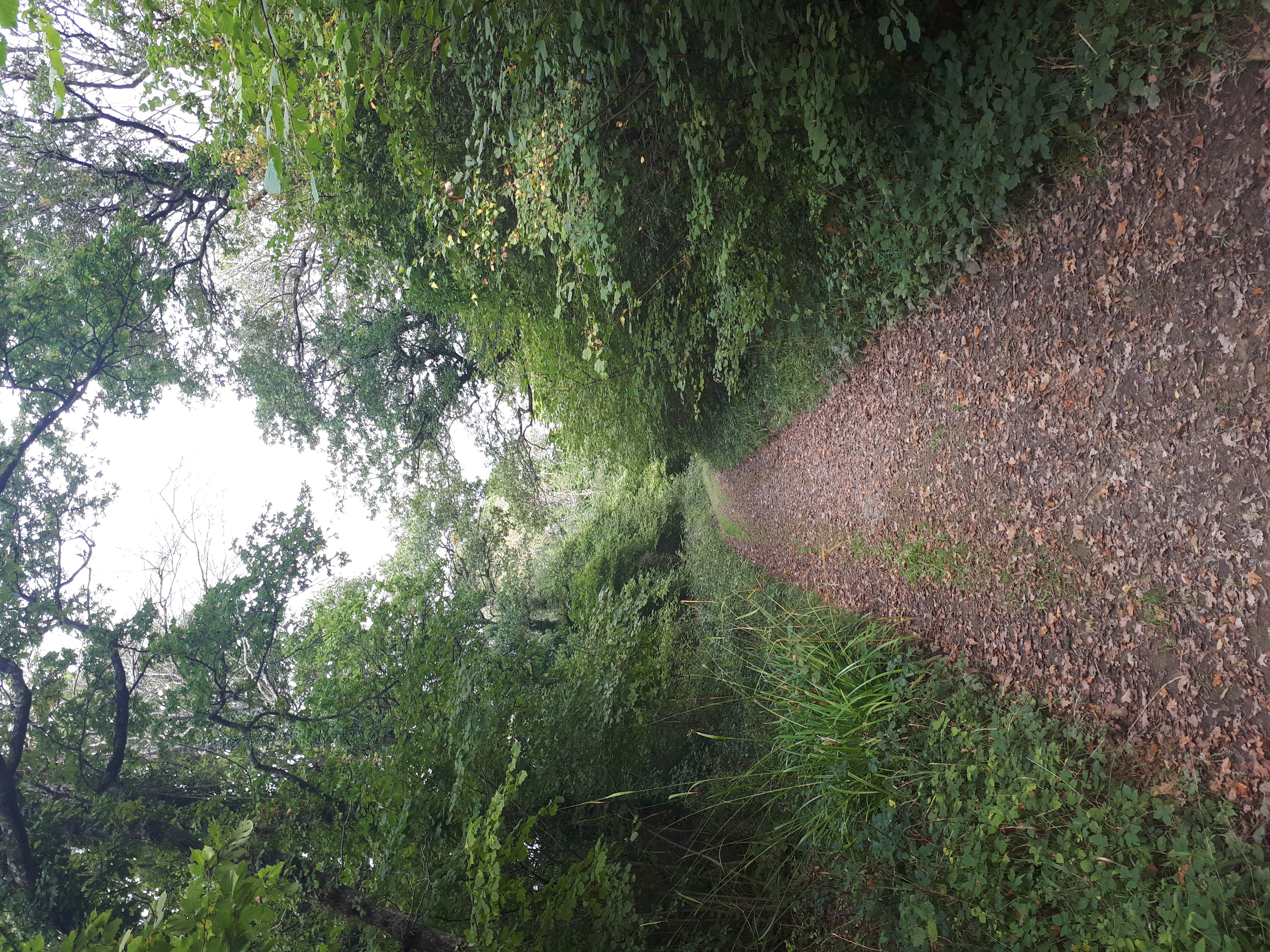
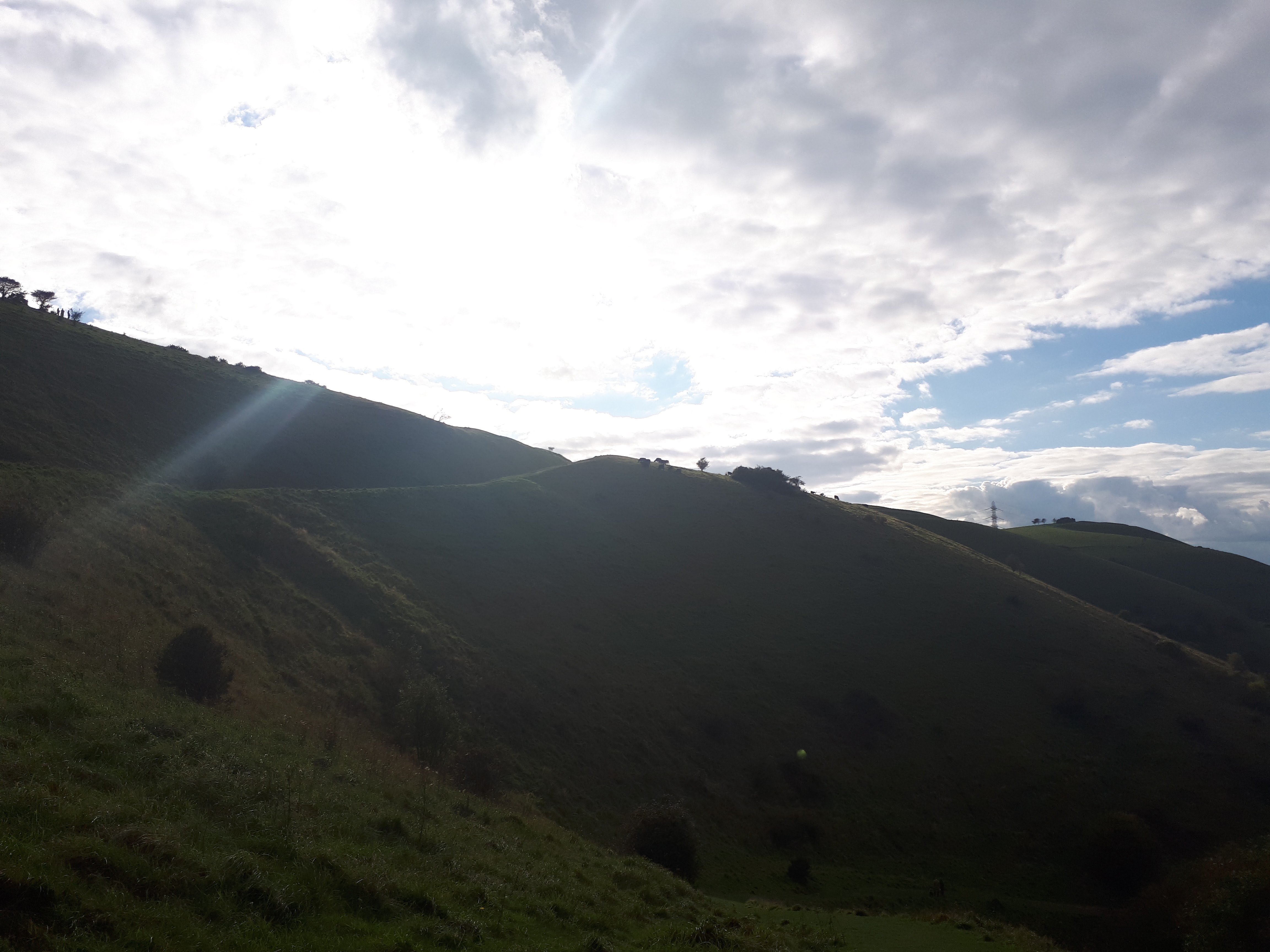
{"id":781,"date":"2019-06-02T21:02:01","date_gmt":"2019-06-02T21:02:01","guid":{"rendered":"http:\/\/blogs.sussex.ac.uk\/psychology\/?p=781"},"modified":"2020-05-28T12:30:53","modified_gmt":"2020-05-28T12:30:53","slug":"green-exercise-and-wellbeing-make-the-most-of-campus","status":"publish","type":"post","link":"https:\/\/blogs.sussex.ac.uk\/psychology\/2019\/06\/02\/green-exercise-and-wellbeing-make-the-most-of-campus\/","title":{"rendered":"Green exercise and wellbeing: make the most of campus!"},"content":{"rendered":"\n<p>By Dr Megan Hurst<\/p>\n\n\n\n<p>As part of the Psychology Student Experience team\u2019s <a href=\"https:\/\/twitter.com\/Sussex_Psych\/status\/1134489656479944704\">wellbeing events<\/a> during the assessment period, we\u2019ve had several nature walks, exploring the <a href=\"https:\/\/www.sussex.ac.uk\/webteam\/gateway\/file.php?name=publication11.pdf&amp;site=79\">many walking routes<\/a> on the beautiful University of Sussex campus.<\/p>\n\n\n\n<p>In case you missed them, here\u2019s a summary by Dr. Megan Hurst\non the benefits of getting some exercise in natural environments during the assessment\nperiod.<\/p>\n\n\n\n<p><strong>Recharge your batteries<\/strong><\/p>\n\n\n\n<p>Green exercise might be particularly helpful if you\u2019re\ncurrently studying and revising hard. This kind of focus is referred to as\n\u2018directed attention\u2019, and it takes cognitive energy to maintain it. Attention restoration\ntheory (<a href=\"https:\/\/books.google.co.uk\/books?id=7l80AAAAIAAJ&amp;lpg=PR7&amp;ots=TpM3OMua_k&amp;dq=kaplan%201989%20attention%20restoration%20theory%20the%20experience%20of%20nature&amp;lr&amp;pg=PR7#v=onepage&amp;q&amp;f=false\">Kaplan\n&amp; Kaplan, 1989<\/a>) suggests that green exercise encourages \u2018soft\nfascination\u2019 \u2013 a form of involuntary attention which is not so draining. Natural\nenvironments with greater biodiversity may be particularly associated with\nthese feelings of restoration (<a href=\"https:\/\/www.sciencedirect.com\/science\/article\/pii\/S0272494416300275\">Marselle\net al., 2016<\/a>).<\/p>\n\n\n\n<p>Boost this benefit: aim to walk in areas with lots of\ndifferent plants (and animals!). You can also purposefully extend your\nattention outside of your body while you are exercising \u2013 what can you see\naround you? You might find the woodland portion of the <a href=\"https:\/\/www.sussex.ac.uk\/webteam\/gateway\/file.php?name=boundary-walk-leaflet.pdf&amp;site=79\">boundary\nwalk<\/a> (near the Falmer Sports Complex) a particularly nice place to do this.<\/p>\n\n\n\n<p><strong>Focus on feeling<\/strong><\/p>\n\n\n\n<p>One of the great things about having a campus in the South Downs is the incredible landscape, which sometimes comes with some impressive hills to climb, or tree roots to clamber over. The challenges posed by the outdoors can help us to focus on our experience within our bodies and how they feel, rather than how they look. Lots of my research investigates how focusing on appearance in exercise settings can have negative consequences for how we feel about ourselves (e.g., <a href=\"https:\/\/www.sciencedirect.com\/science\/article\/pii\/S1740144515300103\">Hurst et al., 2017<\/a>). Avoiding this appearance focus can be easier away from classic exercise environments, like gyms or fitness centres (<a href=\"https:\/\/www.sciencedirect.com\/science\/article\/pii\/S1469029207001070\">Prichard &amp; Tiggemann, 2008<\/a>).<\/p>\n\n\n\n<figure class=\"wp-block-image\"><img data-attachment-id=\"782\" data-permalink=\"https:\/\/blogs.sussex.ac.uk\/psychology\/2019\/06\/02\/green-exercise-and-wellbeing-make-the-most-of-campus\/woodland-in-the-south-downs\/\" data-orig-file=\"https:\/\/i0.wp.com\/blogs.sussex.ac.uk\/psychology\/files\/2019\/05\/Woodland-in-the-South-Downs.jpg?fit=4608%2C3456&amp;ssl=1\" data-orig-size=\"4608,3456\" data-comments-opened=\"1\" data-image-meta=\"{&quot;aperture&quot;:&quot;1.9&quot;,&quot;credit&quot;:&quot;&quot;,&quot;camera&quot;:&quot;SM-A520F&quot;,&quot;caption&quot;:&quot;&quot;,&quot;created_timestamp&quot;:&quot;1507472107&quot;,&quot;copyright&quot;:&quot;&quot;,&quot;focal_length&quot;:&quot;3.6&quot;,&quot;iso&quot;:&quot;40&quot;,&quot;shutter_speed&quot;:&quot;0.0093457943925234&quot;,&quot;title&quot;:&quot;&quot;,&quot;orientation&quot;:&quot;6&quot;}\" data-image-title=\"Woodland in the South Downs\" data-image-description=\"\" data-image-caption=\"\" data-medium-file=\"https:\/\/i0.wp.com\/blogs.sussex.ac.uk\/psychology\/files\/2019\/05\/Woodland-in-the-South-Downs.jpg?fit=300%2C225&amp;ssl=1\" data-large-file=\"https:\/\/i0.wp.com\/blogs.sussex.ac.uk\/psychology\/files\/2019\/05\/Woodland-in-the-South-Downs.jpg?fit=550%2C413&amp;ssl=1\" loading=\"lazy\" width=\"4608\" height=\"3456\" src=\"https:\/\/i1.wp.com\/blogs.sussex.ac.uk\/psychology\/files\/2019\/05\/Woodland-in-the-South-Downs.jpg?fit=550%2C413&amp;ssl=1\" alt=\"\" class=\"wp-image-782\" srcset=\"https:\/\/i0.wp.com\/blogs.sussex.ac.uk\/psychology\/files\/2019\/05\/Woodland-in-the-South-Downs.jpg?w=4608&amp;ssl=1 4608w, https:\/\/i0.wp.com\/blogs.sussex.ac.uk\/psychology\/files\/2019\/05\/Woodland-in-the-South-Downs.jpg?resize=300%2C225&amp;ssl=1 300w, https:\/\/i0.wp.com\/blogs.sussex.ac.uk\/psychology\/files\/2019\/05\/Woodland-in-the-South-Downs.jpg?resize=768%2C576&amp;ssl=1 768w, https:\/\/i0.wp.com\/blogs.sussex.ac.uk\/psychology\/files\/2019\/05\/Woodland-in-the-South-Downs.jpg?resize=1024%2C768&amp;ssl=1 1024w, https:\/\/i0.wp.com\/blogs.sussex.ac.uk\/psychology\/files\/2019\/05\/Woodland-in-the-South-Downs.jpg?resize=100%2C75&amp;ssl=1 100w, https:\/\/i0.wp.com\/blogs.sussex.ac.uk\/psychology\/files\/2019\/05\/Woodland-in-the-South-Downs.jpg?resize=150%2C113&amp;ssl=1 150w, https:\/\/i0.wp.com\/blogs.sussex.ac.uk\/psychology\/files\/2019\/05\/Woodland-in-the-South-Downs.jpg?resize=200%2C150&amp;ssl=1 200w, https:\/\/i0.wp.com\/blogs.sussex.ac.uk\/psychology\/files\/2019\/05\/Woodland-in-the-South-Downs.jpg?resize=450%2C338&amp;ssl=1 450w, https:\/\/i0.wp.com\/blogs.sussex.ac.uk\/psychology\/files\/2019\/05\/Woodland-in-the-South-Downs.jpg?resize=600%2C450&amp;ssl=1 600w, https:\/\/i0.wp.com\/blogs.sussex.ac.uk\/psychology\/files\/2019\/05\/Woodland-in-the-South-Downs.jpg?resize=900%2C675&amp;ssl=1 900w, https:\/\/i0.wp.com\/blogs.sussex.ac.uk\/psychology\/files\/2019\/05\/Woodland-in-the-South-Downs.jpg?w=1100 1100w, https:\/\/i0.wp.com\/blogs.sussex.ac.uk\/psychology\/files\/2019\/05\/Woodland-in-the-South-Downs.jpg?w=1650 1650w\" sizes=\"(max-width: 550px) 100vw, 550px\" \/><figcaption>Woodland in the South Downs<\/figcaption><\/figure>\n\n\n\n<p>Boost this benefit: as you are walking, focus on how\nyour body feels, and what you are experiencing right now. You might notice and\nenjoy the sun on your skin (if you\u2019re lucky!), the burning in your legs or the\nrasp of your breath as you climb a hill. There\u2019s a good one at the north end of\ncampus on the Boundary walk for just this experience!<\/p>\n\n\n\n<p><strong>Master the challenge<\/strong><\/p>\n\n\n\n<p>The ecological dynamics approach to green exercise (<a href=\"https:\/\/www.liebertpub.com\/doi\/abs\/10.1089\/eco.2013.0110\">Brymer et al.,\n2014<\/a>) suggests that exercise in natural environments is good for us because\nof what these environments encourage. Natural surroundings provide more\nopportunities to engage in challenges (like those hills we mentioned earlier!)\nand in simple, enjoyable activities. Interviews with recreational road cyclists\nhighlight the \u2018uncomplicated joy\u2019 experience by tackling physical challenges\nwith nature as a backdrop (<a href=\"https:\/\/www.tandfonline.com\/doi\/full\/10.1080\/2159676X.2017.1360381\">Glackin\n&amp; Beale, 2018<\/a>).<\/p>\n\n\n\n<p>Boost this benefit: Take a moment to appreciate the view, and what you\u2019ve achieved when you reach the top of a hill \u2013 like the beautiful view out over Stanmer Park on the Boundary Walk. Or indulge your inner child by running down the hill in the woods at the northeast end of campus \u2013 wheee!<\/p>\n\n\n\n<figure class=\"wp-block-image\"><img data-attachment-id=\"783\" data-permalink=\"https:\/\/blogs.sussex.ac.uk\/psychology\/2019\/06\/02\/green-exercise-and-wellbeing-make-the-most-of-campus\/fulking-hill-in-the-south-downs\/\" data-orig-file=\"https:\/\/i1.wp.com\/blogs.sussex.ac.uk\/psychology\/files\/2019\/05\/Fulking-Hill-in-the-South-Downs.jpg?fit=4608%2C3456&amp;ssl=1\" data-orig-size=\"4608,3456\" data-comments-opened=\"1\" data-image-meta=\"{&quot;aperture&quot;:&quot;1.9&quot;,&quot;credit&quot;:&quot;&quot;,&quot;camera&quot;:&quot;SM-A520F&quot;,&quot;caption&quot;:&quot;&quot;,&quot;created_timestamp&quot;:&quot;1507478429&quot;,&quot;copyright&quot;:&quot;&quot;,&quot;focal_length&quot;:&quot;3.6&quot;,&quot;iso&quot;:&quot;40&quot;,&quot;shutter_speed&quot;:&quot;0.00040306328093511&quot;,&quot;title&quot;:&quot;&quot;,&quot;orientation&quot;:&quot;1&quot;}\" data-image-title=\"Fulking Hill in the South Downs\" data-image-description=\"\" data-image-caption=\"\" data-medium-file=\"https:\/\/i1.wp.com\/blogs.sussex.ac.uk\/psychology\/files\/2019\/05\/Fulking-Hill-in-the-South-Downs.jpg?fit=300%2C225&amp;ssl=1\" data-large-file=\"https:\/\/i1.wp.com\/blogs.sussex.ac.uk\/psychology\/files\/2019\/05\/Fulking-Hill-in-the-South-Downs.jpg?fit=550%2C413&amp;ssl=1\" loading=\"lazy\" width=\"4608\" height=\"3456\" src=\"https:\/\/i0.wp.com\/blogs.sussex.ac.uk\/psychology\/files\/2019\/05\/Fulking-Hill-in-the-South-Downs.jpg?fit=550%2C413&amp;ssl=1\" alt=\"\" class=\"wp-image-783\" srcset=\"https:\/\/i1.wp.com\/blogs.sussex.ac.uk\/psychology\/files\/2019\/05\/Fulking-Hill-in-the-South-Downs.jpg?w=4608&amp;ssl=1 4608w, https:\/\/i1.wp.com\/blogs.sussex.ac.uk\/psychology\/files\/2019\/05\/Fulking-Hill-in-the-South-Downs.jpg?resize=300%2C225&amp;ssl=1 300w, https:\/\/i1.wp.com\/blogs.sussex.ac.uk\/psychology\/files\/2019\/05\/Fulking-Hill-in-the-South-Downs.jpg?resize=768%2C576&amp;ssl=1 768w, https:\/\/i1.wp.com\/blogs.sussex.ac.uk\/psychology\/files\/2019\/05\/Fulking-Hill-in-the-South-Downs.jpg?resize=1024%2C768&amp;ssl=1 1024w, https:\/\/i1.wp.com\/blogs.sussex.ac.uk\/psychology\/files\/2019\/05\/Fulking-Hill-in-the-South-Downs.jpg?resize=100%2C75&amp;ssl=1 100w, https:\/\/i1.wp.com\/blogs.sussex.ac.uk\/psychology\/files\/2019\/05\/Fulking-Hill-in-the-South-Downs.jpg?resize=150%2C113&amp;ssl=1 150w, https:\/\/i1.wp.com\/blogs.sussex.ac.uk\/psychology\/files\/2019\/05\/Fulking-Hill-in-the-South-Downs.jpg?resize=200%2C150&amp;ssl=1 200w, https:\/\/i1.wp.com\/blogs.sussex.ac.uk\/psychology\/files\/2019\/05\/Fulking-Hill-in-the-South-Downs.jpg?resize=450%2C338&amp;ssl=1 450w, https:\/\/i1.wp.com\/blogs.sussex.ac.uk\/psychology\/files\/2019\/05\/Fulking-Hill-in-the-South-Downs.jpg?resize=600%2C450&amp;ssl=1 600w, https:\/\/i1.wp.com\/blogs.sussex.ac.uk\/psychology\/files\/2019\/05\/Fulking-Hill-in-the-South-Downs.jpg?resize=900%2C675&amp;ssl=1 900w, https:\/\/i1.wp.com\/blogs.sussex.ac.uk\/psychology\/files\/2019\/05\/Fulking-Hill-in-the-South-Downs.jpg?w=1100 1100w, https:\/\/i1.wp.com\/blogs.sussex.ac.uk\/psychology\/files\/2019\/05\/Fulking-Hill-in-the-South-Downs.jpg?w=1650 1650w\" sizes=\"(max-width: 550px) 100vw, 550px\" \/><figcaption>Fulking Hill in the South Downs<\/figcaption><\/figure>\n\n\n\n<p><strong>Finally\u2026<\/strong><\/p>\n\n\n\n<p>Research suggests that just 10 minutes of green (vs. indoor)\nexercise can be beneficial for wellbeing (<a href=\"https:\/\/www.tandfonline.com\/doi\/abs\/10.1080\/02701367.2009.10599600\">Focht,\n2009<\/a>), so it is worth taking even a short break outside while you\u2019re\nrevising in the assessment period, or if you\u2019re one of our PGT students writing\nup your dissertation over the summer.<\/p>\n\n\n\n<p>You can see more information about walking and running\nroutes on campus <a href=\"http:\/\/www.sussex.ac.uk\/sport\/staff\/walking\">here<\/a>.<\/p>\n\n\n\n<p><em><a href=\"http:\/\/www.sussex.ac.uk\/profiles\/199365\">Dr. Megan Hurst<\/a> is a Lecturer in Social Psychology and module leader for the final year option \u201cPsychology of Exercise and Wellbeing\u201d. Outside of work, Megan enjoys walking in the South Downs, and further afield, tackling long distance routes like Hadrian\u2019s Wall Path and classic challenges like the Lyke Wake Walk.<\/em><\/p>\n\n\n\n<p>Find out more about our <a href=\"http:\/\/www.sussex.ac.uk\/psychology\/research\/socialandappliedpsychology\">research on Social and Applied Psychology<\/a>.<\/p>\n","protected":false},"excerpt":{"rendered":"<p>By Dr Megan Hurst As part of the Psychology Student Experience team\u2019s wellbeing events during the assessment period, we\u2019ve had several nature walks, exploring the many walking routes on the beautiful University of Sussex campus. In case you missed them,<span class=\"ellipsis\">&hellip;<\/span><\/p>\n<div class=\"read-more\"><a href=\"https:\/\/blogs.sussex.ac.uk\/psychology\/2019\/06\/02\/green-exercise-and-wellbeing-make-the-most-of-campus\/\">Read more &#8250;<\/a><\/div>\n<p><!-- end of .read-more --><\/p>\n","protected":false},"author":156,"featured_media":0,"comment_status":"open","ping_status":"open","sticky":false,"template":"","format":"standard","meta":{"spay_email":"","jetpack_publicize_message":"","jetpack_is_tweetstorm":false},"categories":[1],"tags":[168158,84190,98552,150339],"jetpack_featured_media_url":"","jetpack_publicize_connections":[],"jetpack_sharing_enabled":true,"jetpack_shortlink":"https:\/\/wp.me\/pafdEV-cB","jetpack-related-posts":[{"id":543,"url":"https:\/\/blogs.sussex.ac.uk\/psychology\/2018\/06\/21\/final-year-retreat-programme-2018-19\/","url_meta":{"origin":781,"position":0},"title":"Final Year \u201cRetreat\u201d Programme 2018-19","date":"June 21, 2018","format":false,"excerpt":"It\u2019s back and it\u2019s bigger and better than ever \u2013 drawing on student feedback from the January and September 2017 events, we\u2019ve put together 3 events over your final year to provide extra support on careers, wellbeing, and the dissertation. Find out more and sign up below!\u00a0 Our Third Year\u2026","rel":"","context":"In &quot;Undergraduate&quot;","img":{"alt_text":"","src":"","width":0,"height":0},"classes":[]},{"id":1050,"url":"https:\/\/blogs.sussex.ac.uk\/psychology\/2020\/10\/06\/the-psychology-of-youth-empowerment-through-music\/","url_meta":{"origin":781,"position":1},"title":"The psychology of youth empowerment through music","date":"October 6, 2020","format":false,"excerpt":"by Maru\u0161a Levstek For the past two years, I have been researching young people\u2019s experiences of inclusive music-making and the psychology behind it. I have worked closely with a variety of inclusive music projects also known as the Our Future Music programme, funded by Youth Music and run as a\u2026","rel":"","context":"In &quot;PhD research&quot;","img":{"alt_text":"","src":"https:\/\/i1.wp.com\/blogs.sussex.ac.uk\/psychology\/files\/2020\/10\/Marusa-photo2.jpg?resize=350%2C200&ssl=1","width":350,"height":200},"classes":[]},{"id":1410,"url":"https:\/\/blogs.sussex.ac.uk\/psychology\/2021\/10\/06\/the-active-essay-writing-initiative\/","url_meta":{"origin":781,"position":2},"title":"The active essay writing initiative","date":"October 6, 2021","format":false,"excerpt":"Earlier this summer, Dr Wendy Garnham was one of the \"torch-bearer\" in the virtual torch relay event organised by AdvanceHE. In the spirit of the Olympic Games, Wendy joined colleagues across the globe to celebrate best practice examples of assessment methods and how they overcame a very challenging year. The\u2026","rel":"","context":"In &quot;Teaching &amp; Learning&quot;","img":{"alt_text":"","src":"","width":0,"height":0},"classes":[]},{"id":947,"url":"https:\/\/blogs.sussex.ac.uk\/psychology\/2020\/05\/27\/be-kind-to-your-mind\/","url_meta":{"origin":781,"position":3},"title":"Be kind to your mind","date":"May 27, 2020","format":false,"excerpt":"By Pattie Gonsalves \u201cBe kind to your mind and your body, especially during these times.\u201d This is one of the encouraging things my yoga teacher says every evening via our Zoom class. While there is a small part of me that feels reassured hearing these words repeated often, it is\u2026","rel":"","context":"In &quot;PhD research&quot;","img":{"alt_text":"","src":"","width":0,"height":0},"classes":[]},{"id":1137,"url":"https:\/\/blogs.sussex.ac.uk\/psychology\/2020\/11\/16\/do-changes-in-emotion-regulation-affect-decision-making-in-people-with-alzheimers-disease\/","url_meta":{"origin":781,"position":4},"title":"Do Changes in Emotion Regulation Affect Decision-Making in People with Alzheimer\u2019s Disease?","date":"November 16, 2020","format":false,"excerpt":"by Dr Rotem Perach, Prof Jennifer Rusted, Prof Pete Harris, Dr Eleanor Miles Ever felt so excited that you found yourself telling your life story to a stranger? Or so anxious about something that you could think about little else? We know that our emotions often affect our decisions, for\u2026","rel":"","context":"In &quot;Faculty research&quot;","img":{"alt_text":"","src":"","width":0,"height":0},"classes":[]},{"id":498,"url":"https:\/\/blogs.sussex.ac.uk\/psychology\/2018\/02\/05\/meet-your-pgr-student-reps-2017-2018\/","url_meta":{"origin":781,"position":5},"title":"Meet your PGR Student Reps (2017-2018)","date":"February 5, 2018","format":false,"excerpt":"Lina\u00a0 I\u2019m currently in the first year of my PhD, working on the brain-body interaction in associative learning and consciousness. My main motivation to become a PGR rep was the importance of community in postgrad life, and ensuring that everyone feels part of a group despite working individually for the\u2026","rel":"","context":"In \"PGR Research Series\"","img":{"alt_text":"","src":"https:\/\/i0.wp.com\/blogs.sussex.ac.uk\/psychology\/files\/2018\/02\/Photo-from-Jolyon-1024x768.jpg?resize=350%2C200","width":350,"height":200},"classes":[]}],"_links":{"self":[{"href":"https:\/\/blogs.sussex.ac.uk\/psychology\/wp-json\/wp\/v2\/posts\/781"}],"collection":[{"href":"https:\/\/blogs.sussex.ac.uk\/psychology\/wp-json\/wp\/v2\/posts"}],"about":[{"href":"https:\/\/blogs.sussex.ac.uk\/psychology\/wp-json\/wp\/v2\/types\/post"}],"author":[{"embeddable":true,"href":"https:\/\/blogs.sussex.ac.uk\/psychology\/wp-json\/wp\/v2\/users\/156"}],"replies":[{"embeddable":true,"href":"https:\/\/blogs.sussex.ac.uk\/psychology\/wp-json\/wp\/v2\/comments?post=781"}],"version-history":[{"count":4,"href":"https:\/\/blogs.sussex.ac.uk\/psychology\/wp-json\/wp\/v2\/posts\/781\/revisions"}],"predecessor-version":[{"id":967,"href":"https:\/\/blogs.sussex.ac.uk\/psychology\/wp-json\/wp\/v2\/posts\/781\/revisions\/967"}],"wp:attachment":[{"href":"https:\/\/blogs.sussex.ac.uk\/psychology\/wp-json\/wp\/v2\/media?parent=781"}],"wp:term":[{"taxonomy":"category","embeddable":true,"href":"https:\/\/blogs.sussex.ac.uk\/psychology\/wp-json\/wp\/v2\/categories?post=781"},{"taxonomy":"post_tag","embeddable":true,"href":"https:\/\/blogs.sussex.ac.uk\/psychology\/wp-json\/wp\/v2\/tags?post=781"}],"curies":[{"name":"wp","href":"https:\/\/api.w.org\/{rel}","templated":true}]}}