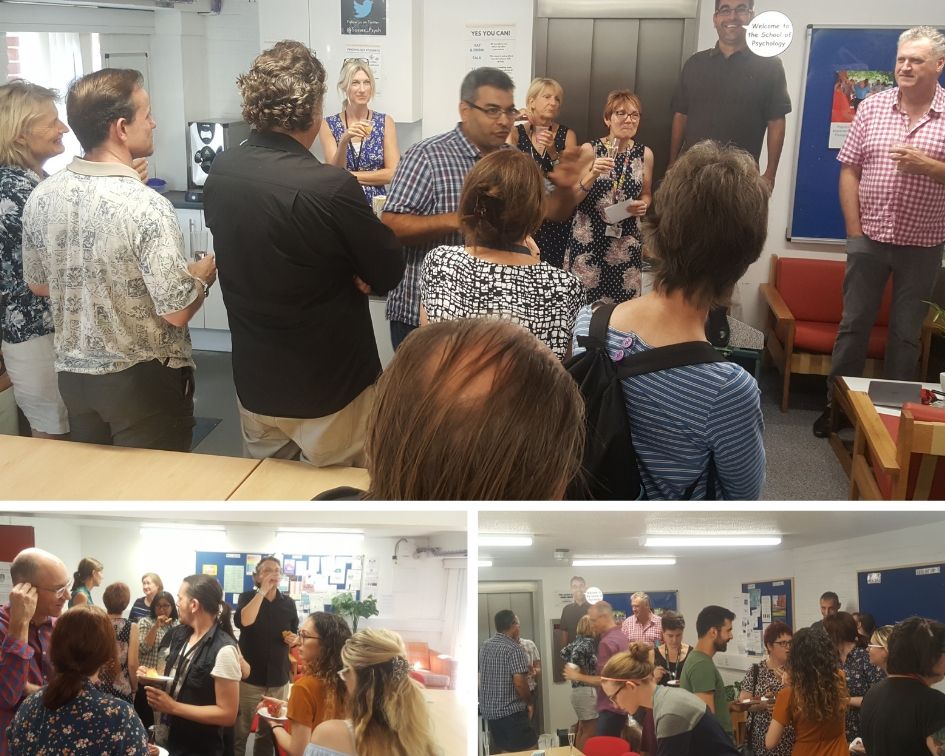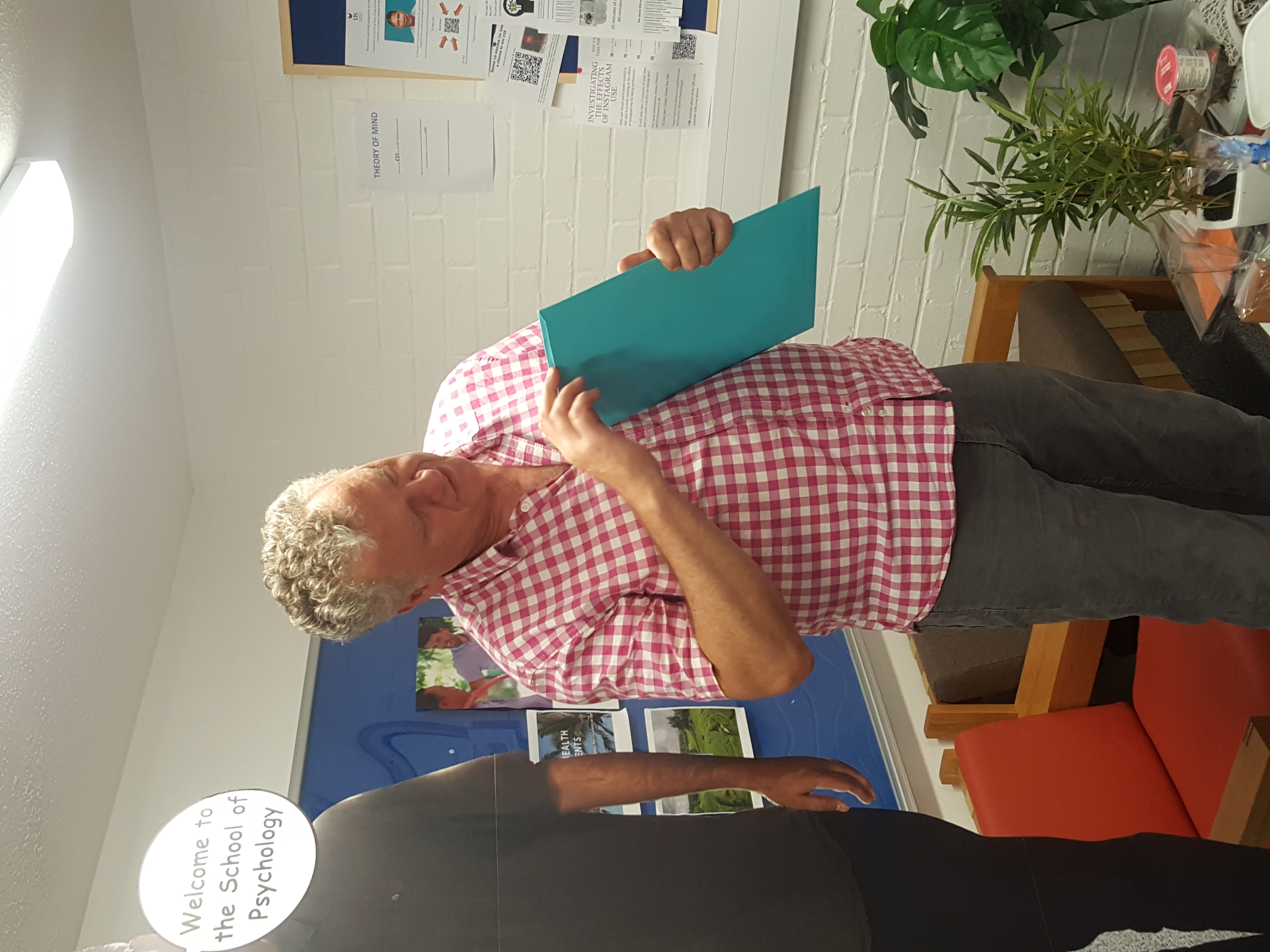
{"id":821,"date":"2019-07-30T09:16:05","date_gmt":"2019-07-30T09:16:05","guid":{"rendered":"http:\/\/blogs.sussex.ac.uk\/psychology\/?p=821"},"modified":"2019-10-23T11:12:14","modified_gmt":"2019-10-23T11:12:14","slug":"time-flies","status":"publish","type":"post","link":"https:\/\/blogs.sussex.ac.uk\/psychology\/2019\/07\/30\/time-flies\/","title":{"rendered":"Time flies&#8230;"},"content":{"rendered":"\n<p>By Tom Ormerod<\/p>\n\n\n\n<p>So, after five years as Head of the School of Psychology, I come to the end of my term.&nbsp; It has (mostly) been a genuine pleasure to hold the role, and there cannot be a better School of Psychology anywhere to lead.&nbsp; I have loved working with colleagues, and feel genuinely proud of our students and the things they and my colleagues have achieved.&nbsp; When I arrived five years ago (from Lancaster, where I was Head of School for six years, via a brief sojourn at Surrey), I was apprehensive about how I would be received. My anxieties were reinforced when a social network analysis of research topics and links within the School revealed four tightly knit clusters with lots of interaction between them, and me as a complete outlier! My fears have proved unfounded: I have never felt like an outsider for a single day, such is the strength of the school community.<\/p>\n\n\n\n<div class=\"wp-block-image\"><figure class=\"aligncenter\"><img data-attachment-id=\"824\" data-permalink=\"https:\/\/blogs.sussex.ac.uk\/psychology\/2019\/07\/30\/time-flies\/tom-card\/\" data-orig-file=\"https:\/\/i1.wp.com\/blogs.sussex.ac.uk\/psychology\/files\/2019\/07\/Tom-card.jpg?fit=3984%2C2988&amp;ssl=1\" data-orig-size=\"3984,2988\" data-comments-opened=\"1\" data-image-meta=\"{&quot;aperture&quot;:&quot;1.9&quot;,&quot;credit&quot;:&quot;&quot;,&quot;camera&quot;:&quot;SM-G920F&quot;,&quot;caption&quot;:&quot;&quot;,&quot;created_timestamp&quot;:&quot;1564409712&quot;,&quot;copyright&quot;:&quot;&quot;,&quot;focal_length&quot;:&quot;4.3&quot;,&quot;iso&quot;:&quot;125&quot;,&quot;shutter_speed&quot;:&quot;0.02&quot;,&quot;title&quot;:&quot;&quot;,&quot;orientation&quot;:&quot;6&quot;}\" data-image-title=\"Tom-card\" data-image-description=\"\" data-image-caption=\"\" data-medium-file=\"https:\/\/i1.wp.com\/blogs.sussex.ac.uk\/psychology\/files\/2019\/07\/Tom-card.jpg?fit=300%2C225&amp;ssl=1\" data-large-file=\"https:\/\/i1.wp.com\/blogs.sussex.ac.uk\/psychology\/files\/2019\/07\/Tom-card.jpg?fit=550%2C413&amp;ssl=1\" loading=\"lazy\" width=\"3984\" height=\"2988\" src=\"https:\/\/i1.wp.com\/blogs.sussex.ac.uk\/psychology\/files\/2019\/07\/Tom-card.jpg?fit=550%2C413&amp;ssl=1\" alt=\"\" class=\"wp-image-824\" srcset=\"https:\/\/i1.wp.com\/blogs.sussex.ac.uk\/psychology\/files\/2019\/07\/Tom-card.jpg?w=3984&amp;ssl=1 3984w, https:\/\/i1.wp.com\/blogs.sussex.ac.uk\/psychology\/files\/2019\/07\/Tom-card.jpg?resize=300%2C225&amp;ssl=1 300w, https:\/\/i1.wp.com\/blogs.sussex.ac.uk\/psychology\/files\/2019\/07\/Tom-card.jpg?resize=768%2C576&amp;ssl=1 768w, https:\/\/i1.wp.com\/blogs.sussex.ac.uk\/psychology\/files\/2019\/07\/Tom-card.jpg?resize=1024%2C768&amp;ssl=1 1024w, https:\/\/i1.wp.com\/blogs.sussex.ac.uk\/psychology\/files\/2019\/07\/Tom-card.jpg?resize=100%2C75&amp;ssl=1 100w, https:\/\/i1.wp.com\/blogs.sussex.ac.uk\/psychology\/files\/2019\/07\/Tom-card.jpg?resize=150%2C113&amp;ssl=1 150w, https:\/\/i1.wp.com\/blogs.sussex.ac.uk\/psychology\/files\/2019\/07\/Tom-card.jpg?resize=200%2C150&amp;ssl=1 200w, https:\/\/i1.wp.com\/blogs.sussex.ac.uk\/psychology\/files\/2019\/07\/Tom-card.jpg?resize=450%2C338&amp;ssl=1 450w, https:\/\/i1.wp.com\/blogs.sussex.ac.uk\/psychology\/files\/2019\/07\/Tom-card.jpg?resize=600%2C450&amp;ssl=1 600w, https:\/\/i1.wp.com\/blogs.sussex.ac.uk\/psychology\/files\/2019\/07\/Tom-card.jpg?resize=900%2C675&amp;ssl=1 900w, https:\/\/i1.wp.com\/blogs.sussex.ac.uk\/psychology\/files\/2019\/07\/Tom-card.jpg?w=1100 1100w, https:\/\/i1.wp.com\/blogs.sussex.ac.uk\/psychology\/files\/2019\/07\/Tom-card.jpg?w=1650 1650w\" sizes=\"(max-width: 550px) 100vw, 550px\" \/><figcaption>Tom opening his card at his leaving do <br>29.07.2019<\/figcaption><\/figure><\/div>\n\n\n\n<p>What\u2019s it like to be a Head of School? It is undeniably busy. In term time, my diary has on average 24 hours of meetings per week, of which at least 12 are scheduled by people from outside the school. As Head of School, I am a member of the University Leadership Team, and this takes up a lot of time and energy. In addition, there are lots of unscheduled things like student and staff complaints to handle, unexpected visitors and dignitaries to greet, people wanting advice about promotions, dead seagulls to remove from the toilets (advice to the incoming Head \u2013 always keep a pair of Marigolds in your office: you have to do the jobs that no one else would want to), etc.. The best bit of the job is the problem-solving. There is nothing quite as satisfying as being able to deal with a problem and have someone leave my office much happier than when they arrived.&nbsp; The worst bit? Apart from the interminable emails, 5% of the people bring 95% of the extra workload, and there\u2019s not a lot one can do about it because it\u2019s just in their nature! But overall, the good bits far outweigh the bad bits. <\/p>\n\n\n\n<p>What has been achieved in the past five years?&nbsp; I took over in August 2014 from Pete Clifton who had done a magnificent job in leading the department of Psychology into becoming an independent School. This was a hard act to follow, but I was incredibly lucky in having a team of directors and subject leads who really have functioned as a team to guide changes in the School. Since 2014, the School has doubled in terms of student numbers and in monetary turnover. We got our Athena Swan bronze, in the process greatly increasing the number of female professors and women in senior roles. Our research income has also doubled, and we continue to produce large numbers of 3* and 4* research outputs, and will be in a great position for REF 2021. Our PhD students and research staff continue to provide a strong research culture within the School. The appointment of a group of teaching fellows (now lecturers\/senior lecturers, since the titular distinction is being removed) has enabled us to cope with increasing student numbers while enhancing the learning experience they receive.&nbsp; Innovations such as the placements scheme, retreats and houses are the envy of the other schools and are largely down to these highly committed colleagues.&nbsp; We have radically reshaped professional services in the school, and have the best group of professional services staff I could possibly imagine, with all of them taking a leading role in enhancing the student and staff experience across the School. I think the thing I am most pleased about is that, despite the growth and concomitant increases in workload, we have maintained a collegiate, caring and professional spirit in the school. I wanted to name-check individuals in this blog for their particularly notable contributions, but I realised that the list would include almost every member of the School! These achievements are a result of the whole School working together professionally and collegiately.<\/p>\n\n\n\n<p>Not everything has worked out as I had hoped, and there is still much to do.&nbsp; Our strategy for growth was based on raising revenue to persuade the University to invest in a refurbishment and additional space for Psychology. Although the need is now recognised by the centre, we are still some way from any action on this front. We also need to do something about our NSS, particularly around assessment and feedback, which despite innovations and enhancements continues to hold us back in the league tables. Robin Banerjee takes over as Head of School at a very challenging time for Higher Education (well, a very challenging time, full stop!).&nbsp; He will need the very high levels of support you have shown me during my tenure. &nbsp;<\/p>\n\n\n\n<div class=\"wp-block-image\"><figure class=\"aligncenter\"><img data-attachment-id=\"823\" data-permalink=\"https:\/\/blogs.sussex.ac.uk\/psychology\/2019\/07\/30\/time-flies\/tom-collage\/\" data-orig-file=\"https:\/\/i0.wp.com\/blogs.sussex.ac.uk\/psychology\/files\/2019\/07\/Tom-Collage.jpg?fit=945%2C756&amp;ssl=1\" data-orig-size=\"945,756\" data-comments-opened=\"1\" data-image-meta=\"{&quot;aperture&quot;:&quot;0&quot;,&quot;credit&quot;:&quot;&quot;,&quot;camera&quot;:&quot;&quot;,&quot;caption&quot;:&quot;&quot;,&quot;created_timestamp&quot;:&quot;0&quot;,&quot;copyright&quot;:&quot;&quot;,&quot;focal_length&quot;:&quot;0&quot;,&quot;iso&quot;:&quot;0&quot;,&quot;shutter_speed&quot;:&quot;0&quot;,&quot;title&quot;:&quot;&quot;,&quot;orientation&quot;:&quot;1&quot;}\" data-image-title=\"Tom-Collage\" data-image-description=\"\" data-image-caption=\"\" data-medium-file=\"https:\/\/i0.wp.com\/blogs.sussex.ac.uk\/psychology\/files\/2019\/07\/Tom-Collage.jpg?fit=300%2C240&amp;ssl=1\" data-large-file=\"https:\/\/i0.wp.com\/blogs.sussex.ac.uk\/psychology\/files\/2019\/07\/Tom-Collage.jpg?fit=550%2C440&amp;ssl=1\" loading=\"lazy\" width=\"550\" height=\"440\" src=\"https:\/\/i0.wp.com\/blogs.sussex.ac.uk\/psychology\/files\/2019\/07\/Tom-Collage.jpg?resize=550%2C440&#038;ssl=1\" alt=\"\" class=\"wp-image-823\" srcset=\"https:\/\/i0.wp.com\/blogs.sussex.ac.uk\/psychology\/files\/2019\/07\/Tom-Collage.jpg?w=945&amp;ssl=1 945w, https:\/\/i0.wp.com\/blogs.sussex.ac.uk\/psychology\/files\/2019\/07\/Tom-Collage.jpg?resize=300%2C240&amp;ssl=1 300w, https:\/\/i0.wp.com\/blogs.sussex.ac.uk\/psychology\/files\/2019\/07\/Tom-Collage.jpg?resize=768%2C614&amp;ssl=1 768w, https:\/\/i0.wp.com\/blogs.sussex.ac.uk\/psychology\/files\/2019\/07\/Tom-Collage.jpg?resize=100%2C80&amp;ssl=1 100w, https:\/\/i0.wp.com\/blogs.sussex.ac.uk\/psychology\/files\/2019\/07\/Tom-Collage.jpg?resize=150%2C120&amp;ssl=1 150w, https:\/\/i0.wp.com\/blogs.sussex.ac.uk\/psychology\/files\/2019\/07\/Tom-Collage.jpg?resize=200%2C160&amp;ssl=1 200w, https:\/\/i0.wp.com\/blogs.sussex.ac.uk\/psychology\/files\/2019\/07\/Tom-Collage.jpg?resize=450%2C360&amp;ssl=1 450w, https:\/\/i0.wp.com\/blogs.sussex.ac.uk\/psychology\/files\/2019\/07\/Tom-Collage.jpg?resize=600%2C480&amp;ssl=1 600w, https:\/\/i0.wp.com\/blogs.sussex.ac.uk\/psychology\/files\/2019\/07\/Tom-Collage.jpg?resize=900%2C720&amp;ssl=1 900w\" sizes=\"(max-width: 550px) 100vw, 550px\" data-recalc-dims=\"1\" \/><figcaption>Wishing Tom good luck for the next stage in his life<\/figcaption><\/figure><\/div>\n\n\n\n<p>What&#8217;s next for me? After my sabbatical I will continue as a Professor of Psychology in the School, doing teaching and research (and admin I guess!). When I first arrived, I held one-to-one meetings with faculty, and in those I realised the huge potential for collaborations with colleagues, but I just haven\u2019t had time to follow them up.&nbsp; So, lock your doors if you don\u2019t want me annoying you with collaborative research and teaching ideas! I\u2019m really looking forward to having time to talk to people, join in with research groups, and generally make a menace of myself! &nbsp;Finally, thank you to everyone who has been so welcoming to this stranger parachuted into the school five years ago. <\/p>\n\n\n\n<p>Best wishes<\/p>\n\n\n\n<p>Tom<\/p>\n","protected":false},"excerpt":{"rendered":"<p>By Tom Ormerod So, after five years as Head of the School of Psychology, I come to the end of my term.&nbsp; It has (mostly) been a genuine pleasure to hold the role, and there cannot be a better School<span class=\"ellipsis\">&hellip;<\/span><\/p>\n<div class=\"read-more\"><a href=\"https:\/\/blogs.sussex.ac.uk\/psychology\/2019\/07\/30\/time-flies\/\">Read more &#8250;<\/a><\/div>\n<p><!-- end of .read-more --><\/p>\n","protected":false},"author":156,"featured_media":0,"comment_status":"open","ping_status":"open","sticky":false,"template":"","format":"standard","meta":{"spay_email":"","jetpack_publicize_message":"","jetpack_is_tweetstorm":false},"categories":[168135],"tags":[98535,168139],"jetpack_featured_media_url":"","jetpack_publicize_connections":[],"jetpack_sharing_enabled":true,"jetpack_shortlink":"https:\/\/wp.me\/pafdEV-df","jetpack-related-posts":[{"id":842,"url":"https:\/\/blogs.sussex.ac.uk\/psychology\/2019\/10\/23\/professor-rupert-browns-retirement\/","url_meta":{"origin":821,"position":0},"title":"Professor Rupert Brown's Retirement","date":"October 23, 2019","format":false,"excerpt":"Professor Rupert Brown This coming Thursday we are celebrating the career of Professor Rupert Brown with a special colloquium. Rupert joined the recently unified department of Psychology\u00a0at Sussex\u00a0in 2004 and has since been an essential figure for the School both in terms of his academic work\u00a0as well as his involvement\u2026","rel":"","context":"In &quot;History of Psychology at Sussex&quot;","img":{"alt_text":"","src":"https:\/\/i0.wp.com\/blogs.sussex.ac.uk\/psychology\/files\/2019\/10\/RJBphoto.jpg?resize=350%2C200&ssl=1","width":350,"height":200},"classes":[]},{"id":831,"url":"https:\/\/blogs.sussex.ac.uk\/psychology\/2019\/08\/27\/psychology-summer-intern\/","url_meta":{"origin":821,"position":1},"title":"My thoughts after my first month as an intern at the School of Psychology","date":"August 27, 2019","format":false,"excerpt":"By Chloe Ilsley So I\u2019ve completed my first month of being an intern for the School of Psychology and wow, it\u2019s gone by so quickly but first, let me explain... The university has a scheme called \u2018FGS Summer internships\u2019 which provides 2nd year First Generation Scholar students with internships in\u2026","rel":"","context":"In &quot;Undergraduate&quot;","img":{"alt_text":"","src":"https:\/\/i2.wp.com\/blogs.sussex.ac.uk\/psychology\/files\/2019\/08\/Chloe-Ilsley.jpg?resize=350%2C200&ssl=1","width":350,"height":200},"classes":[]},{"id":1383,"url":"https:\/\/blogs.sussex.ac.uk\/psychology\/2021\/09\/21\/meet-professor-nicola-yuill\/","url_meta":{"origin":821,"position":2},"title":"Meet Professor Nicola Yuill","date":"September 21, 2021","format":false,"excerpt":"Prof Nicola Yuill personifies the interdisciplinary spirit that has always been at the core of Sussex. Whether as a student or as a lecturer, she has been part of all the Psychology departments that historically spread across three different Schools at Sussex.\u00a0Her current research\u00a0is the result of this background, with\u2026","rel":"","context":"In &quot;History of Psychology at Sussex&quot;","img":{"alt_text":"","src":"https:\/\/i0.wp.com\/blogs.sussex.ac.uk\/psychology\/files\/2021\/07\/Nicola-Yuill.jpg?resize=350%2C200&ssl=1","width":350,"height":200},"classes":[]},{"id":348,"url":"https:\/\/blogs.sussex.ac.uk\/psychology\/2017\/03\/01\/a-student-voice\/","url_meta":{"origin":821,"position":3},"title":"A Student Voice","date":"March 1, 2017","format":false,"excerpt":"Watch the second episode of the psychology vlog to find out how Psychology faculty listen to the Student Voice.\u00a0Prof Robin Banerjee (Deputy Head of School), \u00a0Alison Pike (Director of Teaching and Learning), and Dr Richard De Visser (Director of Student Experience)\u00a0talk about\u00a0module and course evaluations, the role of student reps,\u2026","rel":"","context":"In &quot;Undergraduate&quot;","img":{"alt_text":"","src":"https:\/\/i1.wp.com\/img.youtube.com\/vi\/FypbPqjqbus\/0.jpg?resize=350%2C200","width":350,"height":200},"classes":[]},{"id":1410,"url":"https:\/\/blogs.sussex.ac.uk\/psychology\/2021\/10\/06\/the-active-essay-writing-initiative\/","url_meta":{"origin":821,"position":4},"title":"The active essay writing initiative","date":"October 6, 2021","format":false,"excerpt":"Earlier this summer, Dr Wendy Garnham was one of the \"torch-bearer\" in the virtual torch relay event organised by AdvanceHE. In the spirit of the Olympic Games, Wendy joined colleagues across the globe to celebrate best practice examples of assessment methods and how they overcame a very challenging year. The\u2026","rel":"","context":"In &quot;Teaching &amp; Learning&quot;","img":{"alt_text":"","src":"","width":0,"height":0},"classes":[]},{"id":1352,"url":"https:\/\/blogs.sussex.ac.uk\/psychology\/2021\/07\/05\/greener-conferences\/","url_meta":{"origin":821,"position":5},"title":"Greener conferences","date":"July 5, 2021","format":false,"excerpt":"By Dr Charlotte Rae Conference season is upon us, and this year lots of us will be attending virtual meetings instead of travelling to conferences in person. Although many of us are missing seeing our colleagues in person, online conferences can have a number of benefits, from inclusivity and better\u2026","rel":"","context":"In &quot;Green Tips&quot;","img":{"alt_text":"","src":"https:\/\/i0.wp.com\/blogs.sussex.ac.uk\/psychology\/files\/2021\/06\/conference-carbon-emisions-graph.png?resize=350%2C200&ssl=1","width":350,"height":200},"classes":[]}],"_links":{"self":[{"href":"https:\/\/blogs.sussex.ac.uk\/psychology\/wp-json\/wp\/v2\/posts\/821"}],"collection":[{"href":"https:\/\/blogs.sussex.ac.uk\/psychology\/wp-json\/wp\/v2\/posts"}],"about":[{"href":"https:\/\/blogs.sussex.ac.uk\/psychology\/wp-json\/wp\/v2\/types\/post"}],"author":[{"embeddable":true,"href":"https:\/\/blogs.sussex.ac.uk\/psychology\/wp-json\/wp\/v2\/users\/156"}],"replies":[{"embeddable":true,"href":"https:\/\/blogs.sussex.ac.uk\/psychology\/wp-json\/wp\/v2\/comments?post=821"}],"version-history":[{"count":4,"href":"https:\/\/blogs.sussex.ac.uk\/psychology\/wp-json\/wp\/v2\/posts\/821\/revisions"}],"predecessor-version":[{"id":849,"href":"https:\/\/blogs.sussex.ac.uk\/psychology\/wp-json\/wp\/v2\/posts\/821\/revisions\/849"}],"wp:attachment":[{"href":"https:\/\/blogs.sussex.ac.uk\/psychology\/wp-json\/wp\/v2\/media?parent=821"}],"wp:term":[{"taxonomy":"category","embeddable":true,"href":"https:\/\/blogs.sussex.ac.uk\/psychology\/wp-json\/wp\/v2\/categories?post=821"},{"taxonomy":"post_tag","embeddable":true,"href":"https:\/\/blogs.sussex.ac.uk\/psychology\/wp-json\/wp\/v2\/tags?post=821"}],"curies":[{"name":"wp","href":"https:\/\/api.w.org\/{rel}","templated":true}]}}