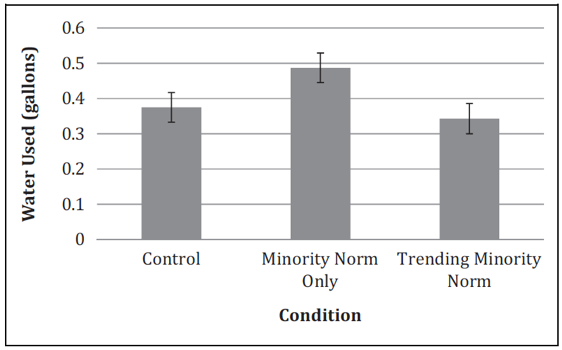
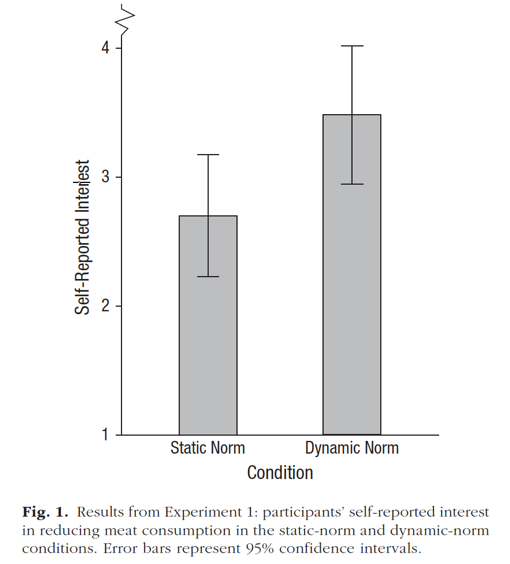
{"id":921,"date":"2020-04-22T17:04:04","date_gmt":"2020-04-22T17:04:04","guid":{"rendered":"http:\/\/blogs.sussex.ac.uk\/psychology\/?p=921"},"modified":"2020-04-24T10:11:36","modified_gmt":"2020-04-24T10:11:36","slug":"how-can-sustainable-behaviours-be-encouraged","status":"publish","type":"post","link":"https:\/\/blogs.sussex.ac.uk\/psychology\/2020\/04\/22\/how-can-sustainable-behaviours-be-encouraged\/","title":{"rendered":"How can sustainable behaviours be encouraged?"},"content":{"rendered":"\n<p>By Alaa Aldoh<\/p>\n\n\n\n<p>Climate change is a pressing global issue with devastating\neffects on human life, animals, and the environment. On average, every year in\nthe last 5 years has been the warmest year on record as a result of global\nwarming. Greenhouse gas emissions have also driven other changes to the climate\nsuch as concentrated rain periods, droughts, and even colder weather than\nusual.<\/p>\n\n\n\n<p>Despite overwhelming consensus among scientists about the reality of anthropogenic climate change (i.e., change arising from human activity), citizens and politicians remain reluctant to take the action needed to address it (<a href=\"https:\/\/sussex-primo.hosted.exlibrisgroup.com\/primo-explore\/fulldisplay?docid=TN_wj10.1002%2Fejsp.2058&amp;context=PC&amp;vid=44SUS_VU1&amp;lang=en_US&amp;search_scope=PC_ONLY&amp;adaptor=primo_central_multiple_fe&amp;tab=default&amp;query=any,contains,Fielding,%20Hornsey,%20&amp;%20Swim,%202014&amp;offset=0\">Fielding, Hornsey, &amp; Swim, 2014<\/a>). My research has been focused on sustainable eating behaviours which be used as a tool for reducing greenhouse gas emissions. Livestock alone contributes to 14.5% of total human-caused greenhouse gas emissions, which is equivalent to emissions caused by transportation including all cars, trucks, planes, and ships on the planet combined (<a href=\"http:\/\/www.fao.org\/3\/a-i3437e.pdf\">Gerber et al., 2013<\/a>). Research has shown that switching to eco-friendly eating decisions such as opting for chicken, fish, or vegetables rather than red meat, could reduce the costs of climate change mitigation by as much as 50% by 2050 (<a href=\"https:\/\/sussex-primo.hosted.exlibrisgroup.com\/primo-explore\/fulldisplay?docid=TN_medline26673412&amp;context=PC&amp;vid=44SUS_VU1&amp;lang=en_US&amp;search_scope=EVERYTHING&amp;adaptor=primo_central_multiple_fe&amp;tab=default&amp;query=any,contains,de%20Boer,%20de%20Witt,%20&amp;%20Aiking,%202016&amp;offset=0\">de Boer, de Witt, &amp; Aiking, 2016<\/a>). The challenge lies in the ability to inform and persuade individuals to make more sustainable eating choices. Climate change, like other social problems, is complex and multifaceted. However, nearly every problem involves psychology.<\/p>\n\n\n\n<p>There is a growing body of psychological research exploring ways to increase engagement in sustainable eating behaviours. One such way to address this issue utilizes social norms. Social norms have been successfully used as an effective tool for behaviour change when the behaviour in question is performed by a majority. However, when communicating an undesired behaviour performed by the majority, this often backfires, and actually increases individuals\u2019 engagement in unwanted behaviour. So, what can we do when the majority of one\u2019s group is actually performing the undesired behaviour?<\/p>\n\n\n\n<p>In the past few years, two groups of researchers at separate universities explored ways in which presenting information about minority norms can positively affect people\u2019s sustainable behaviours&nbsp; (<a href=\"https:\/\/sussex-primo.hosted.exlibrisgroup.com\/primo-explore\/fulldisplay?docid=TN_sage_s10_1177_1948550617734615&amp;context=PC&amp;vid=44SUS_VU1&amp;lang=en_US&amp;search_scope=PC_ONLY&amp;adaptor=primo_central_multiple_fe&amp;tab=default&amp;query=any,contains,Mortensen,%20Chad,%202019&amp;offset=0\">Mortensen et al., 2019<\/a>; <a href=\"https:\/\/sussex-primo.hosted.exlibrisgroup.com\/primo-explore\/fulldisplay?docid=TN_sage_s10_1177_0956797617719950&amp;context=PC&amp;vid=44SUS_VU1&amp;lang=en_US&amp;search_scope=PC_ONLY&amp;adaptor=primo_central_multiple_fe&amp;tab=default&amp;query=any,contains,Sparkman%20&amp;%20Walton,%202017&amp;offset=0\">Sparkman &amp; Walton, 2017<\/a>). They found that conveying information about how the minority norm is <em>changing<\/em> has the potential to influence people and increase their engagement in desired behaviours only performed by the minority. They referred to these changing norms as dynamic\/trending norms (examples from <a href=\"https:\/\/sussex-primo.hosted.exlibrisgroup.com\/primo-explore\/fulldisplay?docid=TN_sage_s10_1177_1948550617734615&amp;context=PC&amp;vid=44SUS_VU1&amp;lang=en_US&amp;search_scope=PC_ONLY&amp;adaptor=primo_central_multiple_fe&amp;tab=default&amp;query=any,contains,Mortensen,%20Chad,%202019&amp;offset=0\">Mortensen et al., 2019<\/a>):<\/p>\n\n\n\n<h4><strong>Minority norm only<\/strong><\/h4>\n\n\n\n<p>Research from (previous year) has\nfound that 48% of (University name) students engage in one or more of the\nfollowing water conservation behaviours:<\/p>\n\n\n\n<ul><li>Turning off the water while soaping their hands during hand-washing<\/li><li>Using low-flow shower heads<\/li><li>Watering lawns and plants in the early morning or evening.<\/li><\/ul>\n\n\n\n<h4><strong>Trending minority norm<\/strong><\/h4>\n\n\n\n<p>Research from (previous year) has\nfound that 48% of (University name) students engage in one or more of the\nfollowing water conservation behaviours:<\/p>\n\n\n\n<ul><li>Turning off the water while soaping their hands\nduring hand-washing<\/li><li>Using low-flow shower heads<\/li><li>Watering lawns and plants in the early morning\nor evening.<\/li><\/ul>\n\n\n\n<p>This has increased from 37% in (2 years previous).<\/p>\n\n\n\n<p><a href=\"https:\/\/sussex-primo.hosted.exlibrisgroup.com\/primo-explore\/fulldisplay?docid=TN_sage_s10_1177_1948550617734615&amp;context=PC&amp;vid=44SUS_VU1&amp;lang=en_US&amp;search_scope=PC_ONLY&amp;adaptor=primo_central_multiple_fe&amp;tab=default&amp;query=any,contains,Mortensen,%20Chad,%202019&amp;offset=0\">Mortensen et al., (2019)<\/a> found that when they presented a trending minority norm about water conservation behaviours, participants were much more likely to conserve water themselves in a subsequent task than participants who were presented a minority norm only. <\/p>\n\n\n\n<figure class=\"wp-block-image size-large\"><img data-attachment-id=\"922\" data-permalink=\"https:\/\/blogs.sussex.ac.uk\/psychology\/2020\/04\/22\/how-can-sustainable-behaviours-be-encouraged\/mortensen-et-al-2019-graph\/\" data-orig-file=\"https:\/\/i1.wp.com\/blogs.sussex.ac.uk\/psychology\/files\/2020\/04\/Mortensen-et-al-2019-graph.png?fit=562%2C350&amp;ssl=1\" data-orig-size=\"562,350\" data-comments-opened=\"1\" data-image-meta=\"{&quot;aperture&quot;:&quot;0&quot;,&quot;credit&quot;:&quot;&quot;,&quot;camera&quot;:&quot;&quot;,&quot;caption&quot;:&quot;&quot;,&quot;created_timestamp&quot;:&quot;0&quot;,&quot;copyright&quot;:&quot;&quot;,&quot;focal_length&quot;:&quot;0&quot;,&quot;iso&quot;:&quot;0&quot;,&quot;shutter_speed&quot;:&quot;0&quot;,&quot;title&quot;:&quot;&quot;,&quot;orientation&quot;:&quot;0&quot;}\" data-image-title=\"Mortensen-et-al-2019-graph\" data-image-description=\"\" data-image-caption=\"\" data-medium-file=\"https:\/\/i1.wp.com\/blogs.sussex.ac.uk\/psychology\/files\/2020\/04\/Mortensen-et-al-2019-graph.png?fit=300%2C187&amp;ssl=1\" data-large-file=\"https:\/\/i1.wp.com\/blogs.sussex.ac.uk\/psychology\/files\/2020\/04\/Mortensen-et-al-2019-graph.png?fit=550%2C343&amp;ssl=1\" loading=\"lazy\" width=\"550\" height=\"343\" src=\"https:\/\/i1.wp.com\/blogs.sussex.ac.uk\/psychology\/files\/2020\/04\/Mortensen-et-al-2019-graph.png?resize=550%2C343&#038;ssl=1\" alt=\"\" class=\"wp-image-922\" srcset=\"https:\/\/i1.wp.com\/blogs.sussex.ac.uk\/psychology\/files\/2020\/04\/Mortensen-et-al-2019-graph.png?w=562&amp;ssl=1 562w, https:\/\/i1.wp.com\/blogs.sussex.ac.uk\/psychology\/files\/2020\/04\/Mortensen-et-al-2019-graph.png?resize=300%2C187&amp;ssl=1 300w, https:\/\/i1.wp.com\/blogs.sussex.ac.uk\/psychology\/files\/2020\/04\/Mortensen-et-al-2019-graph.png?resize=100%2C62&amp;ssl=1 100w, https:\/\/i1.wp.com\/blogs.sussex.ac.uk\/psychology\/files\/2020\/04\/Mortensen-et-al-2019-graph.png?resize=150%2C93&amp;ssl=1 150w, https:\/\/i1.wp.com\/blogs.sussex.ac.uk\/psychology\/files\/2020\/04\/Mortensen-et-al-2019-graph.png?resize=200%2C125&amp;ssl=1 200w, https:\/\/i1.wp.com\/blogs.sussex.ac.uk\/psychology\/files\/2020\/04\/Mortensen-et-al-2019-graph.png?resize=450%2C280&amp;ssl=1 450w\" sizes=\"(max-width: 550px) 100vw, 550px\" data-recalc-dims=\"1\" \/><figcaption>Mortensen et at. (2019)<\/figcaption><\/figure>\n\n\n\n<p> <a href=\"https:\/\/sussex-primo.hosted.exlibrisgroup.com\/primo-explore\/fulldisplay?docid=TN_sage_s10_1177_0956797617719950&amp;context=PC&amp;vid=44SUS_VU1&amp;lang=en_US&amp;search_scope=PC_ONLY&amp;adaptor=primo_central_multiple_fe&amp;tab=default&amp;query=any,contains,Sparkman%20&amp;%20Walton,%202017&amp;offset=0\">Sparkman and Walton\u2019s (2017)<\/a> findings mirrored those findings in the domain of meat consumption. They ran a series of studies exploring the effects of portraying a \u201cdynamic\u201d minority norm (i.e. one that is changing) compared to a static minority norm (i.e. one that is fixed). Their results showed a consistent pattern where participants reading information about how the norm is changing reported higher interest in reducing their own meat consumption.  <\/p>\n\n\n\n<figure class=\"wp-block-image size-large\"><img data-attachment-id=\"924\" data-permalink=\"https:\/\/blogs.sussex.ac.uk\/psychology\/2020\/04\/22\/how-can-sustainable-behaviours-be-encouraged\/sparkman-and-walton-2017-graph-2\/\" data-orig-file=\"https:\/\/i1.wp.com\/blogs.sussex.ac.uk\/psychology\/files\/2020\/04\/Sparkman-and-Walton-2017-graph.png?fit=510%2C564&amp;ssl=1\" data-orig-size=\"510,564\" data-comments-opened=\"1\" data-image-meta=\"{&quot;aperture&quot;:&quot;0&quot;,&quot;credit&quot;:&quot;&quot;,&quot;camera&quot;:&quot;&quot;,&quot;caption&quot;:&quot;&quot;,&quot;created_timestamp&quot;:&quot;0&quot;,&quot;copyright&quot;:&quot;&quot;,&quot;focal_length&quot;:&quot;0&quot;,&quot;iso&quot;:&quot;0&quot;,&quot;shutter_speed&quot;:&quot;0&quot;,&quot;title&quot;:&quot;&quot;,&quot;orientation&quot;:&quot;0&quot;}\" data-image-title=\"Sparkman-and-Walton-2017-graph\" data-image-description=\"\" data-image-caption=\"\" data-medium-file=\"https:\/\/i1.wp.com\/blogs.sussex.ac.uk\/psychology\/files\/2020\/04\/Sparkman-and-Walton-2017-graph.png?fit=271%2C300&amp;ssl=1\" data-large-file=\"https:\/\/i1.wp.com\/blogs.sussex.ac.uk\/psychology\/files\/2020\/04\/Sparkman-and-Walton-2017-graph.png?fit=510%2C564&amp;ssl=1\" loading=\"lazy\" width=\"510\" height=\"564\" src=\"https:\/\/i1.wp.com\/blogs.sussex.ac.uk\/psychology\/files\/2020\/04\/Sparkman-and-Walton-2017-graph.png?resize=510%2C564&#038;ssl=1\" alt=\"\" class=\"wp-image-924\" srcset=\"https:\/\/i1.wp.com\/blogs.sussex.ac.uk\/psychology\/files\/2020\/04\/Sparkman-and-Walton-2017-graph.png?w=510&amp;ssl=1 510w, https:\/\/i1.wp.com\/blogs.sussex.ac.uk\/psychology\/files\/2020\/04\/Sparkman-and-Walton-2017-graph.png?resize=271%2C300&amp;ssl=1 271w, https:\/\/i1.wp.com\/blogs.sussex.ac.uk\/psychology\/files\/2020\/04\/Sparkman-and-Walton-2017-graph.png?resize=100%2C111&amp;ssl=1 100w, https:\/\/i1.wp.com\/blogs.sussex.ac.uk\/psychology\/files\/2020\/04\/Sparkman-and-Walton-2017-graph.png?resize=150%2C166&amp;ssl=1 150w, https:\/\/i1.wp.com\/blogs.sussex.ac.uk\/psychology\/files\/2020\/04\/Sparkman-and-Walton-2017-graph.png?resize=200%2C221&amp;ssl=1 200w, https:\/\/i1.wp.com\/blogs.sussex.ac.uk\/psychology\/files\/2020\/04\/Sparkman-and-Walton-2017-graph.png?resize=300%2C332&amp;ssl=1 300w, https:\/\/i1.wp.com\/blogs.sussex.ac.uk\/psychology\/files\/2020\/04\/Sparkman-and-Walton-2017-graph.png?resize=450%2C498&amp;ssl=1 450w\" sizes=\"(max-width: 510px) 100vw, 510px\" data-recalc-dims=\"1\" \/><figcaption>Sparkman and Walton (2017)<\/figcaption><\/figure>\n\n\n\n<p>Both groups of researchers paved the way for a very interesting line of research looking at how positive minority behaviours can be encouraged and can be used as a lever to promote sustainable behaviours and fight climate change. As exciting as this sounds, there are many questions yet to be answered! What are the best ways to phrase normative information? What scalable norm interventions can be used to promote sustainable behaviours? What are the conditions of the effectiveness of dynamic\/trending norms? Do dynamic\/trending norms have a similar pattern of effects across different cultures? I have set out to answer some of these questions, and others to understand how conveying normative information about people\u2019s sustainable behaviours can change others. <\/p>\n\n\n\n<p>Be part of the change for a healthier Earth and Happy Earth Day! <\/p>\n\n\n\n<p>For more info about diet and climate change: <a href=\"https:\/\/www.youtube.com\/watch?v=nUnJQWO4YJY\">https:\/\/www.youtube.com\/watch?v=nUnJQWO4YJY<\/a><\/p>\n\n\n\n<p><\/p>\n\n\n\n<p><a href=\"https:\/\/profiles.sussex.ac.uk\/p390363-alaa-aldoh\/about\"><em>Alaa<\/em><\/a><em><a href=\"https:\/\/profiles.sussex.ac.uk\/p390363-alaa-aldoh\/about\"> Aldoh<\/a> is a PhD student under the supervision of <a href=\"https:\/\/profiles.sussex.ac.uk\/p110855-paul-sparks\">Dr Paul Sparks<\/a> in the <a href=\"http:\/\/www.sussex.ac.uk\/psychology\/research\/socialandappliedpsychology\">Social Psychology group<\/a>. Her research studies how social psychology can influence people&#8217;s sustainable behaviours.<\/em><\/p>\n","protected":false},"excerpt":{"rendered":"<p>By Alaa Aldoh Climate change is a pressing global issue with devastating effects on human life, animals, and the environment. On average, every year in the last 5 years has been the warmest year on record as a result of<span class=\"ellipsis\">&hellip;<\/span><\/p>\n<div class=\"read-more\"><a href=\"https:\/\/blogs.sussex.ac.uk\/psychology\/2020\/04\/22\/how-can-sustainable-behaviours-be-encouraged\/\">Read more &#8250;<\/a><\/div>\n<p><!-- end of .read-more --><\/p>\n","protected":false},"author":156,"featured_media":0,"comment_status":"open","ping_status":"open","sticky":false,"template":"","format":"standard","meta":{"spay_email":"","jetpack_publicize_message":"","jetpack_is_tweetstorm":false},"categories":[98528],"tags":[10837,84190,97941,168156,98552,43416,168154],"jetpack_featured_media_url":"","jetpack_publicize_connections":[],"jetpack_sharing_enabled":true,"jetpack_shortlink":"https:\/\/wp.me\/pafdEV-eR","jetpack-related-posts":[{"id":166,"url":"https:\/\/blogs.sussex.ac.uk\/psychology\/2016\/03\/14\/drought-in-california-when-climate-change-affects-the-usa\/","url_meta":{"origin":921,"position":0},"title":"Drought in California: When climate change affects the USA","date":"March 14, 2016","format":false,"excerpt":"By Sarah Becker \u00a0 As part of one of my PhD research studies I conducted a 10 week interview-based study in California to talk to people about their experience of the ongoing drought and how they thought it related to anthropogenic climate change. (Throughout this article when I refer to\u2026","rel":"","context":"In &quot;PhD research&quot;","img":{"alt_text":"","src":"https:\/\/i1.wp.com\/blogs.sussex.ac.uk\/psychology\/files\/2016\/03\/IMG_6426-e1457713041836-225x300.jpg?resize=350%2C200","width":350,"height":200},"classes":[]},{"id":1434,"url":"https:\/\/blogs.sussex.ac.uk\/psychology\/2021\/11\/10\/what-is-cop26\/","url_meta":{"origin":921,"position":1},"title":"What is COP26?","date":"November 10, 2021","format":false,"excerpt":"COP26 is the 26th meeting of the UN Climate Change Conference of the Parties, taking place in Glasgow from 31 October to 12 November. COP26 will bring together 197 countries to agree how the world will tackle climate change and limit global warming to no more than 1.5C. This is\u2026","rel":"","context":"In &quot;Green Tips&quot;","img":{"alt_text":"","src":"","width":0,"height":0},"classes":[]},{"id":2053,"url":"https:\/\/blogs.sussex.ac.uk\/psychology\/2025\/03\/12\/the-real-nbs-project-working-with-communities-in-eastern-africa-to-address-land-degradation-and-strengthen-climate-resilience\/","url_meta":{"origin":921,"position":2},"title":"The REAL NbS Project: Working with communities in eastern Africa to address land degradation and strengthen climate resilience","date":"March 12, 2025","format":false,"excerpt":"The first blog in our series on global research is a conversation with Anna Rabinovich, a researcher at the University of Sussex who is making a significant impact internationally. A professor in social psychology and sustainability, Anna leads the REAL NbS project; an initiative that aims to find equitable Nature-based\u2026","rel":"","context":"Similar post","img":{"alt_text":"","src":"https:\/\/i1.wp.com\/blogs.sussex.ac.uk\/psychology\/files\/2025\/03\/African-Researchers-Yihunbelay-Kelvin-Amsalu-Bayu-resp_-2.jpg?resize=350%2C200&ssl=1","width":350,"height":200},"classes":[]},{"id":889,"url":"https:\/\/blogs.sussex.ac.uk\/psychology\/2020\/01\/22\/we-love-veggies\/","url_meta":{"origin":921,"position":3},"title":"We love veggies!","date":"January 22, 2020","format":false,"excerpt":"It is increasingly recognised that meat-based diets have a substantial environmental impact: from deforestation for grazing land, to methane produced by livestock, to increased water requirements. All of this adds up to a very significant carbon footprint, with UN-backed\u00a0Intergovernmental Panel on Climate Change (IPCC) reports\u00a0stating that we need to make\u2026","rel":"","context":"In &quot;Green Tips&quot;","img":{"alt_text":"","src":"https:\/\/i0.wp.com\/blogs.sussex.ac.uk\/psychology\/files\/2020\/01\/Shakshuka.png?resize=350%2C200&ssl=1","width":350,"height":200},"classes":[]},{"id":418,"url":"https:\/\/blogs.sussex.ac.uk\/psychology\/2017\/08\/01\/emergent-social-identities-in-a-flood-implications-for-community-psychosocial-resilience\/","url_meta":{"origin":921,"position":4},"title":"Emergent social identities in a flood: Implications for community psychosocial resilience","date":"August 1, 2017","format":false,"excerpt":"By Evangelos Ntontis. Recently, the small village of Coverack in Cornwall was hit by a\u00a0flash flood\u00a0which resulted in damaged properties and possessions, closed roads, disruption, and required the rescue of several people. This was not a one-off event. Flooding is a major risk for the UK. Currently there are around\u2026","rel":"","context":"In &quot;PhD research&quot;","img":{"alt_text":"","src":"https:\/\/i2.wp.com\/blogs.sussex.ac.uk\/psychology\/files\/2017\/08\/flood-1024x768.jpg?resize=350%2C200","width":350,"height":200},"classes":[]},{"id":498,"url":"https:\/\/blogs.sussex.ac.uk\/psychology\/2018\/02\/05\/meet-your-pgr-student-reps-2017-2018\/","url_meta":{"origin":921,"position":5},"title":"Meet your PGR Student Reps (2017-2018)","date":"February 5, 2018","format":false,"excerpt":"Lina\u00a0 I\u2019m currently in the first year of my PhD, working on the brain-body interaction in associative learning and consciousness. My main motivation to become a PGR rep was the importance of community in postgrad life, and ensuring that everyone feels part of a group despite working individually for the\u2026","rel":"","context":"In \"PGR Research Series\"","img":{"alt_text":"","src":"https:\/\/i0.wp.com\/blogs.sussex.ac.uk\/psychology\/files\/2018\/02\/Photo-from-Jolyon-1024x768.jpg?resize=350%2C200","width":350,"height":200},"classes":[]}],"_links":{"self":[{"href":"https:\/\/blogs.sussex.ac.uk\/psychology\/wp-json\/wp\/v2\/posts\/921"}],"collection":[{"href":"https:\/\/blogs.sussex.ac.uk\/psychology\/wp-json\/wp\/v2\/posts"}],"about":[{"href":"https:\/\/blogs.sussex.ac.uk\/psychology\/wp-json\/wp\/v2\/types\/post"}],"author":[{"embeddable":true,"href":"https:\/\/blogs.sussex.ac.uk\/psychology\/wp-json\/wp\/v2\/users\/156"}],"replies":[{"embeddable":true,"href":"https:\/\/blogs.sussex.ac.uk\/psychology\/wp-json\/wp\/v2\/comments?post=921"}],"version-history":[{"count":4,"href":"https:\/\/blogs.sussex.ac.uk\/psychology\/wp-json\/wp\/v2\/posts\/921\/revisions"}],"predecessor-version":[{"id":928,"href":"https:\/\/blogs.sussex.ac.uk\/psychology\/wp-json\/wp\/v2\/posts\/921\/revisions\/928"}],"wp:attachment":[{"href":"https:\/\/blogs.sussex.ac.uk\/psychology\/wp-json\/wp\/v2\/media?parent=921"}],"wp:term":[{"taxonomy":"category","embeddable":true,"href":"https:\/\/blogs.sussex.ac.uk\/psychology\/wp-json\/wp\/v2\/categories?post=921"},{"taxonomy":"post_tag","embeddable":true,"href":"https:\/\/blogs.sussex.ac.uk\/psychology\/wp-json\/wp\/v2\/tags?post=921"}],"curies":[{"name":"wp","href":"https:\/\/api.w.org\/{rel}","templated":true}]}}