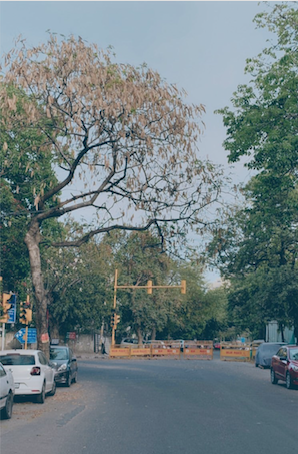
{"id":947,"date":"2020-05-27T11:10:53","date_gmt":"2020-05-27T11:10:53","guid":{"rendered":"http:\/\/blogs.sussex.ac.uk\/psychology\/?p=947"},"modified":"2020-05-27T11:10:55","modified_gmt":"2020-05-27T11:10:55","slug":"be-kind-to-your-mind","status":"publish","type":"post","link":"https:\/\/blogs.sussex.ac.uk\/psychology\/2020\/05\/27\/be-kind-to-your-mind\/","title":{"rendered":"Be kind to your mind"},"content":{"rendered":"\n<p>By Pattie Gonsalves<\/p>\n\n\n\n<p>\u201cBe kind to your mind and your body, especially during these times.\u201d This is one of the encouraging things my yoga teacher says every evening via our Zoom class. While there is a small part of me that feels reassured hearing these words repeated often, it is also with feelings of guilt and heaviness that I cannot shake. <\/p>\n\n\n\n<div class=\"wp-block-image\"><figure class=\"alignleft size-large\"><img data-attachment-id=\"953\" data-permalink=\"https:\/\/blogs.sussex.ac.uk\/psychology\/2020\/05\/27\/be-kind-to-your-mind\/new-delhi-during-lockdon\/\" data-orig-file=\"https:\/\/i0.wp.com\/blogs.sussex.ac.uk\/psychology\/files\/2020\/05\/New-Delhi-during-lockdon.png?fit=298%2C454&amp;ssl=1\" data-orig-size=\"298,454\" data-comments-opened=\"1\" data-image-meta=\"{&quot;aperture&quot;:&quot;0&quot;,&quot;credit&quot;:&quot;&quot;,&quot;camera&quot;:&quot;&quot;,&quot;caption&quot;:&quot;&quot;,&quot;created_timestamp&quot;:&quot;0&quot;,&quot;copyright&quot;:&quot;&quot;,&quot;focal_length&quot;:&quot;0&quot;,&quot;iso&quot;:&quot;0&quot;,&quot;shutter_speed&quot;:&quot;0&quot;,&quot;title&quot;:&quot;&quot;,&quot;orientation&quot;:&quot;0&quot;}\" data-image-title=\"New-Delhi-during-lockdon\" data-image-description=\"\" data-image-caption=\"\" data-medium-file=\"https:\/\/i0.wp.com\/blogs.sussex.ac.uk\/psychology\/files\/2020\/05\/New-Delhi-during-lockdon.png?fit=197%2C300&amp;ssl=1\" data-large-file=\"https:\/\/i0.wp.com\/blogs.sussex.ac.uk\/psychology\/files\/2020\/05\/New-Delhi-during-lockdon.png?fit=298%2C454&amp;ssl=1\" loading=\"lazy\" width=\"298\" height=\"454\" src=\"https:\/\/i0.wp.com\/blogs.sussex.ac.uk\/psychology\/files\/2020\/05\/New-Delhi-during-lockdon.png?resize=298%2C454&#038;ssl=1\" alt=\"\" class=\"wp-image-953\" srcset=\"https:\/\/i0.wp.com\/blogs.sussex.ac.uk\/psychology\/files\/2020\/05\/New-Delhi-during-lockdon.png?w=298&amp;ssl=1 298w, https:\/\/i0.wp.com\/blogs.sussex.ac.uk\/psychology\/files\/2020\/05\/New-Delhi-during-lockdon.png?resize=197%2C300&amp;ssl=1 197w, https:\/\/i0.wp.com\/blogs.sussex.ac.uk\/psychology\/files\/2020\/05\/New-Delhi-during-lockdon.png?resize=100%2C152&amp;ssl=1 100w, https:\/\/i0.wp.com\/blogs.sussex.ac.uk\/psychology\/files\/2020\/05\/New-Delhi-during-lockdon.png?resize=150%2C229&amp;ssl=1 150w, https:\/\/i0.wp.com\/blogs.sussex.ac.uk\/psychology\/files\/2020\/05\/New-Delhi-during-lockdon.png?resize=200%2C305&amp;ssl=1 200w\" sizes=\"(max-width: 298px) 100vw, 298px\" data-recalc-dims=\"1\" \/><figcaption>New Delhi during COVID-19 lockdown<\/figcaption><\/figure><\/div>\n\n\n\n<p>I arrived back to New Delhi in mid-March, after spending six weeks in Sussex where I am currently a distance PhD student. That was one week before the nation-wide lockdown was introduced in India, and one day before the international borders were closed (which I did not know when I changed my ticket to arrive back to India a few days earlier than planned!). It was a 40-hour journey instead of the usual 8-9 hours, with a long unexpected delay mid-way. \u00a0I waited and slept in the airport wait areas, washed my hands obsessively every time I touched anything, worried constantly about the surface of the coffee table where I was working, and paced endlessly up and down the corridors of the eerily empty airport that is usually bustling with people and activity. I made it back to life in New Delhi that was \u201cnormal\u201d for just a few days, as normal as self-quarantining can be I guess, until the national curfews were announced and normal life as I knew it changed. <\/p>\n\n\n\n<p>Much like the rest of the world, India too has witnessed unprecedented and extraordinary times in the last three months. The situation has exposed, both, our individual struggle to cope and find resilience, and our shared struggle against what feels like an insurmountable set of structural inequalities and injustices. In India the COVID-19 situation has had a disproportionately adverse effect especially on those who are poor and vulnerable, in other words, a vast majority of Indians. The situation most Indians found themselves in overnight was unthinkable. So many were, and still are, separated from families, young children, elderly parents and loved ones who are in different states of the country. Even international media has been flooded with stories of thousands of Indian migrant workers walking, sometimes, hundreds of miles, to get home, with many dying or injured along the way, traveling with no food or provisions. Many have lost their entire income overnight and have no social security or welfare schemes to rely on, and will be plunged into destitution, if they are not already, as a result of the lockdown. India\u2019s situation is a glaring example of a country where hasty policy decisions because of the potential health crisis have had unprecedented and potentially irreversible effects on the economic and social sectors. The last three months in India have been characterized by stress, anxiety and fear over the virus itself, the uncertainty of food security, recommencement of one\u2019s employment or business, ability to access health care if you are sick, or access to travel back home to your family. Many have said, accurately, that poverty and starvation will kill countless more Indians long before any virus will.<\/p>\n\n\n\n<p>Rajiv (name changed), a construction worker who migrated to Delhi for work, lives just next door to me in a house that is semi-demolished, without a proper roof and with limited electricity. He is there alone and does not have a phone and cannot read or write. He is making do with the erratic food distribution provided by the state government, and through food support I and other neighbours provide. The lockdown prevented him and many others in his predicament from even leaving the buildings they were in; with no clear understanding for the past three months about when his job will recommence. Rajiv, however, considers himself lucky as he has a roof and access to some food. <\/p>\n\n\n\n<p>This has been a time where I have been forced to introspect, and reflect on the situation of both, &nbsp;what is happening in my mind, and also especially what is happening around me, situations I cannot fully comprehend or make sense of. When thinking about the plight of millions in my city and country, Rajiv next door, and my own worries or anxieties during this time, I think that the very least we can do as a community is try to exercise empathy and compassion towards each of these situations and people. We must extend a helping hand and listening ear to others wherever we can, but also, pause for a moment to reflect on the impacts that the situation unfolding around us has on our wellbeing too. <\/p>\n\n\n\n<p><em><a href=\"https:\/\/profiles.sussex.ac.uk\/p482079-pattie-gonsalves\">Pattie Gonsalves<\/a> is doing a PhD under the supervision of <a href=\"https:\/\/profiles.sussex.ac.uk\/p455961-daniel-michelson\">Dr Daniel Michelson<\/a>. She is also a Project Director at <a href=\"http:\/\/www.sangath.in\/\">Sangath (India) <\/a>with the PRIDE research programme, and leads <a href=\"http:\/\/itsoktotalk.in\/\">It\u2019s Ok To Talk<\/a>, a national anti-stigma campaign for young people\u2019s mental health in India.<\/em><\/p>\n\n\n\n<p>Find out more about our research on <a href=\"http:\/\/www.sussex.ac.uk\/psychology\/research\/developmentalandclinicalpsychology\">Developmental and Clinical Psychology<\/a><\/p>\n","protected":false},"excerpt":{"rendered":"<p>By Pattie Gonsalves \u201cBe kind to your mind and your body, especially during these times.\u201d This is one of the encouraging things my yoga teacher says every evening via our Zoom class. While there is a small part of me<span class=\"ellipsis\">&hellip;<\/span><\/p>\n<div class=\"read-more\"><a href=\"https:\/\/blogs.sussex.ac.uk\/psychology\/2020\/05\/27\/be-kind-to-your-mind\/\">Read more &#8250;<\/a><\/div>\n<p><!-- end of .read-more --><\/p>\n","protected":false},"author":156,"featured_media":0,"comment_status":"open","ping_status":"open","sticky":false,"template":"","format":"standard","meta":{"spay_email":"","jetpack_publicize_message":"","jetpack_is_tweetstorm":false},"categories":[98528],"tags":[147993,168161,98516,98546,150339],"jetpack_featured_media_url":"","jetpack_publicize_connections":[],"jetpack_sharing_enabled":true,"jetpack_shortlink":"https:\/\/wp.me\/pafdEV-fh","jetpack-related-posts":[{"id":1080,"url":"https:\/\/blogs.sussex.ac.uk\/psychology\/2020\/10\/30\/do-you-know-what-im-thinking-a-journey-from-mozambique-to-sussex\/","url_meta":{"origin":947,"position":0},"title":"Do you know what I'm thinking? - a Journey from Mozambique to Sussex","date":"October 30, 2020","format":false,"excerpt":"Paloma Manguele is a PhD student in the Attention Lab. She studies mind wandering, a concept she is cautious to translate into her first language, Portuguese. \u201cI guess the word could be \u2018divaga\u00e7ao\u2019 \u2013 digression \u2013 but not exactly,\u201d she explains. There are not many studies about mind wandering in\u2026","rel":"","context":"In &quot;PhD research&quot;","img":{"alt_text":"","src":"https:\/\/i0.wp.com\/blogs.sussex.ac.uk\/psychology\/files\/2020\/10\/Paloma-Manguele-EEG-2.jpg?resize=350%2C200&ssl=1","width":350,"height":200},"classes":[]},{"id":537,"url":"https:\/\/blogs.sussex.ac.uk\/psychology\/2018\/06\/11\/depression-and-cognitive-ageing\/","url_meta":{"origin":947,"position":1},"title":"Depression and Cognitive Ageing","date":"June 11, 2018","format":false,"excerpt":"By Amber John Depression is a common mental health problem which is experienced by people of all ages. It is estimated that each year around 1 in 5 people in the UK will experience depressive symptoms. Depression encompasses lots of different kinds of symptoms which can range from mild to\u2026","rel":"","context":"In &quot;PhD research&quot;","img":{"alt_text":"","src":"https:\/\/i1.wp.com\/blogs.sussex.ac.uk\/psychology\/files\/2018\/06\/Screen-Shot-2018-06-08-at-09.38.12-657x1024.png?resize=350%2C200","width":350,"height":200},"classes":[]},{"id":939,"url":"https:\/\/blogs.sussex.ac.uk\/psychology\/2020\/05\/04\/looking-back-the-role-of-the-general-election-in-satisfaction-with-uk-response-to-covid-19\/","url_meta":{"origin":947,"position":2},"title":"Looking Back: The Role of the General Election in Satisfaction with UK Response to COVID-19","date":"May 4, 2020","format":false,"excerpt":"By Carina\u00a0Hoerst Recently, a group of people with controversial stances protested against lockdown restrictions in the US \u2013 a particularly concerning move since the protest action was carried out against the ban of public assembly and could increase the infection rate of COVID-19. More Republicans agree that Donald Trump was\u2026","rel":"","context":"In &quot;PhD research&quot;","img":{"alt_text":"","src":"","width":0,"height":0},"classes":[]},{"id":1358,"url":"https:\/\/blogs.sussex.ac.uk\/psychology\/2021\/07\/13\/working-as-a-research-fellow-in-parliament\/","url_meta":{"origin":947,"position":3},"title":"Working as a Research Fellow in Parliament","date":"July 13, 2021","format":false,"excerpt":"Our PhD student Alison Lacey was on a 13-week placement at the\u00a0Parliamentary Office of Science and Technology\u00a0(POST). POST offers Research Fellowships to approximately 30 PhD students a year from a range of science disciplines, and Alison's was funded by the British Psychological Society. As part of her fellowship, Alison was\u2026","rel":"","context":"In &quot;PhD research&quot;","img":{"alt_text":"","src":"https:\/\/i1.wp.com\/blogs.sussex.ac.uk\/psychology\/files\/2021\/07\/Houses-of-Parliament.jpg?resize=350%2C200&ssl=1","width":350,"height":200},"classes":[]},{"id":1420,"url":"https:\/\/blogs.sussex.ac.uk\/psychology\/2021\/09\/01\/primary-school-attendance-problems-in-the-context-of-covid-19\/","url_meta":{"origin":947,"position":4},"title":"Primary school attendance problems in the context of Covid-19","date":"September 1, 2021","format":false,"excerpt":"By Bront\u00eb McDonald Bront\u00eb's poster won the first award at the Festival of Doctoral Research in July 2021 The Covid-19 pandemic has significantly disrupted the educational lives of children across the world. In the UK, the government attempted to curb the spread of the virus by closing schools for extended\u2026","rel":"","context":"In &quot;PhD research&quot;","img":{"alt_text":"","src":"https:\/\/i0.wp.com\/blogs.sussex.ac.uk\/psychology\/files\/2021\/08\/School-attendance-problems-during-covid19-poster.png?resize=350%2C200&ssl=1","width":350,"height":200},"classes":[]},{"id":1330,"url":"https:\/\/blogs.sussex.ac.uk\/psychology\/2021\/06\/21\/virtual-group-music-making-during-lockdowns\/","url_meta":{"origin":947,"position":5},"title":"Virtual group music-making during lockdowns","date":"June 21, 2021","format":false,"excerpt":"By Maru\u0161a Levstek When the pandemic hit in late 2019 and the whole world had to practically retract to their homes, everyone was talking about furlough, lockdown, and home-schooling. However, there was barely any thought about the extra-curricular activities that used to be an incredibly big part of many young\u2026","rel":"","context":"In &quot;PhD research&quot;","img":{"alt_text":"","src":"https:\/\/i0.wp.com\/blogs.sussex.ac.uk\/psychology\/files\/2021\/06\/virtual-music-making.jpg?resize=350%2C200&ssl=1","width":350,"height":200},"classes":[]}],"_links":{"self":[{"href":"https:\/\/blogs.sussex.ac.uk\/psychology\/wp-json\/wp\/v2\/posts\/947"}],"collection":[{"href":"https:\/\/blogs.sussex.ac.uk\/psychology\/wp-json\/wp\/v2\/posts"}],"about":[{"href":"https:\/\/blogs.sussex.ac.uk\/psychology\/wp-json\/wp\/v2\/types\/post"}],"author":[{"embeddable":true,"href":"https:\/\/blogs.sussex.ac.uk\/psychology\/wp-json\/wp\/v2\/users\/156"}],"replies":[{"embeddable":true,"href":"https:\/\/blogs.sussex.ac.uk\/psychology\/wp-json\/wp\/v2\/comments?post=947"}],"version-history":[{"count":7,"href":"https:\/\/blogs.sussex.ac.uk\/psychology\/wp-json\/wp\/v2\/posts\/947\/revisions"}],"predecessor-version":[{"id":956,"href":"https:\/\/blogs.sussex.ac.uk\/psychology\/wp-json\/wp\/v2\/posts\/947\/revisions\/956"}],"wp:attachment":[{"href":"https:\/\/blogs.sussex.ac.uk\/psychology\/wp-json\/wp\/v2\/media?parent=947"}],"wp:term":[{"taxonomy":"category","embeddable":true,"href":"https:\/\/blogs.sussex.ac.uk\/psychology\/wp-json\/wp\/v2\/categories?post=947"},{"taxonomy":"post_tag","embeddable":true,"href":"https:\/\/blogs.sussex.ac.uk\/psychology\/wp-json\/wp\/v2\/tags?post=947"}],"curies":[{"name":"wp","href":"https:\/\/api.w.org\/{rel}","templated":true}]}}