Safina Bull, University of Exeter, BA Liberal Arts 2022
The paradox of belonging to two places, but at the same time not belonging to either, is something that many people face in a migratory context. Negotiating one’s entangled, intersecting identities is a complex process of defining, consciously and unconsciously, who you are and who you are not. My research with second-generation Nepali youth in the UK illustrates well such entangled identities, and of how people negotiate multiple belonging. Focussing on young Nepalis from Gurkha Army families in the UK, I find that the ways in which Nepalis have been incorporated in the Gurkha Army (as part of the Gurkha infantry or outside of it), and their social and economic capital has a clear impact on how their children born and raised in the UK experience their belonging to Nepal and the UK.
Nepal is a multi-ethnic state composed of 100 different ethnic groups and that has adopted in law (until 1963) the Hindu-based caste-system which has shaped social inequalities and has left a lasting impression on Nepali society. The recruitment to the Gurkha Army from the British Army has followed a caste selective pattern since the 19th century, and the soldiers have traditionally been recruited from a handful of ethnic groups. Many of the recruits were men from poor ethnic groups who were used as cheap mercenaries. This caste-based recruitment pattern influenced the settlement in the post-Nepalese postcolonial diaspora in the UK, where these ‘ethnic minorities’ have become 9 times more represented than in their natal Nepal (Gellner, 2019). It is important to note that ‘caste’ is based on different ethnic groups in Nepal and the word for both is the same (‘jat/janajati), however, caste is stratified from ‘higher’ to lower’ or ‘pure’ and ‘impure’ people, whereas I use ethnicity to speak about the general Nepali population.
Despite the involvement of Gurkha soldiers in the British Army they have been systematically segregated from mainstream British society. The army’s restriction of the integration of the Gurkha infantry reduced the ability of these soldiers to gain the social capital of language and understanding of the nuances of British society, significantly reducing their opportunities for integration and social mobility in the UK. Due to the lack of social capital, many of the first-generation stuck to the ‘safe space’ of people ‘like them’. These spaces enabled the first-generation to maintain values and customs, based on memory and sustained links with their community of origins in Nepal and to pass them on to their children, who not only receive but also transform this cultural capital according to their own transnational activities between Nepal and the UK.
My research shows that the first-generation Nepalis’ opportunities for upward social mobility and integration in British society was importantly shaped by their opportunity to accrue social capital and become proficient in English while servicing in the UK. The stories of from second-generation Radhika and Maya’s (names changed) parents’ stories are illustrative in this respect. Whilst speaking to Radhika and Maya, I found out that they both knew each other but do not keep in contact much anymore.
Although this is about the second-generational experiences and their struggles or ability to ‘balance’ their multiple identities, the focus on their perceptions of their first-generation parents is important as they equip the second-generation with means to successfully balance their identities. However, this knowledge and support is directly related to the first generations’ class belonging within the UK society, and as we see in the case of the Gurkha experience, is based on caste. Maya’s father, who is still employed by the British Army, initially joined the British Gurkha Army in the ‘niche’ division of admin. This division was not integrated into the Gurkha communities of infantry. Rather his role involved interacting with ‘officers in the higher ranks’. There was also a generational history as his dad had served in the Gurkha Army, allowing him to access a higher level of education in Nepal than most people from his ‘gaun’ [village]. This allowed for his career progression within the British Army division, and therefore moved to the UK earlier than other Nepali Gurkha soldiers. He had the finances to invest in Maya’s education and she was able to attend private schools in the UK. Maya’s father was able to learn English and acquire a familiarity with British society, which enabled him to progress within the British Army and not to be confined to only interacting with other Nepalis.
Maya’s descriptions of her father’s career offer insights into her family’s transnational identity through their ability to break cultural boundaries by means of their social capital. Maya highlights the “selective acculturation” whereby the second-generation is rooted within their parent’s ethnic identity through language and values, whilst “cushion[ing] the move of both generations” into the ‘British’ ways, most common “among middle-class immigrants” (Levitt & Waters, 2002: 17). Furthermore, Maya’s father’s social and economic capital has allowed for the creation of a new ‘imagined’ belonging of Maya’s parents within the UK and a movement into the British class-system. Maya highlights this social and economic mobility through the fact that her parents “look posh” as they started dressing in “red chinos” when she began private school, which highlights her mother’s ability to decipher the appropriate dress code required to match their social mobility. Maya and her parent’s understanding of the nuances of ‘belonging’ to middle-class British society through clothing provides insights into the parents’ acculturation and integration into the country of destination.
Radhika’s family had a very different experience, and it is clear by the way in which Radhika speaks about her family. She has less pride about her family and their experiences in the UK, and criticises them – especially in comparison to the way in which Maya spoke. Her father’s involvement in the Gurkha Army followed the ‘usual’ pattern of infantry mercenaries as he was from a ‘poor’ “gaun [village]”. In Radhika’s words he was faced with either “do nothing and be nothing” or to join the army. Owing to Radhika’s father’s position within the army, and thus his lack of English proficiency and social knowledge of the UK, they stuck to the ‘safety net’ of a predominantly Nepali community in Swindon when moving in 2006 after they were granted permanent residency and retirement for his service in the army – as with majority of the Nepalis in the UK. Radhika states that her parents “wouldn’t really socialise with English people outside of work context” and they would speak English only in case of necessity. Due to their lack of social capital and language knowledge, their opportunities for upward social mobility in the UK have been limited. In contrast to Maya’s father, Radhika’s father is retired from the army and is a security guard, “the common jobs of Nepali dads” and her mother is a cleaner, “another very common Nepali job”. Parts of the first-generation Nepali diaspora, as described by Radhika, engages in boundary work by operating in primarily Nepali spaces where they can speak the language and maintain their culture and customs. However, according to Radhika, this has hindered their integration and belonging in wider British society. Had they made an active effort, they could have been “modern” like Maya’s parents, acknowledging the fact they “live in Britain”, and not confined themselves to the Nepali cultural bubble, argued Radhika. I found that contrasting these two experiences were most interesting as Radhika used Maya’s upbringing as a comparison to what her family was not, as Maya’s ‘mobile’ parents lived in non-Nepali areas with more “pressure to kind of integrate with everybody else” (Radhika). This also provides a subtle commentary of what her parents could have been if it had not been for the ‘social bubble’ of the Nepali communities.
Maya’s case illustrates how the first generation ‘successful’ integration in the recipient society might enable the second generation’s ability to navigate multiple identities successfully. Maya explicitly talked about her strong emotional attachment to Nepal through her “proud history”, which is transmitted by her parents. She interacts with the Nepali side of her identity through the ‘balancing-act’ whereby she can “pick and choose” what elements of her cultures that believes make up her identity. This does not necessarily mean there are forms of strong material connections with Nepal (e.g. sending remittances or regular visits). Maya says that the most significant part of her ‘British’ identity was being born in the UK and having a British passport. But her British identity was also formed by going to a private British school, being surrounded by a diverse group of people, taking a gap year before going to university, and having a friendship group which does not only consist of Nepalis. These experiences gave her the freedom to form her ‘separate’ identities and values. Yet, Maya’s allegiance to Nepal illustrates the importance interaction with her parents in maintaining traditions, foods, and music.
Whilst Maya’s parents have retained many of the cultural or social traits of their ethnic group, they have adapted their values through ‘selective acculturation’ where some norms of the community are retained and there is a “lack of intergenerational conflict”, and therefore “cushions the move of both generations” into the British ways (Levitt & Waters, 2002, p 17). The social and financial capital of her family are influential in enabling them to break the boundaries of caste maintenance through the creation of a transnational identity, which contributes to a supportive atmosphere for the development of Maya’s transnational identity.
On the contrary, Radhika’s example illustrates that, because of her father’s caste and especially the fact that he had limited opportunities to acquire higher education (like Maya’s father), he went into the army as infantry like most Nepalis. The segregation from divisions within the army did not give him the opportunity to move away from his comfort zone, nor learn English or about British society. Therefore, he never gained any social capital nor the cultural capital from education and interaction with other British soldiers. Owing to this and his subsequent class belonging in the UK, Radhika’s parents do not possess the means to help guide her conflicting identities without judgement, as they have never been anything other than Nepali. Unlike with Maya’s experience, in the long-term Radhika’s situation can – from the way she spoke about her parents – cause intergenerational conflict and ultimately create a distance between the parents and children.


![Bole Michael, Addis Ababa. Credit: Jasmine Halki [original]; Licensed under CC BY 2.0](https://www.displacementeconomies.org/wp-content/uploads/2023/01/Bole-Michael-Addis-Ababa.jpg)

The UK’s hypocritical and heartless approach to displacement and migration
Sunit Bagree is Communications Manager for Protracted Displacement Economies (PDE), a project funded by UK Research and Innovation through the Global Challenges Research Fund (grant reference number ES/T004509/1). This is a joint PDE-Sussex Centre for Migration Research blog post.
Referring to small boats crossing the Channel, the UK Home Secretary, Suella Braverman, has claimed that she is intent on “stopping the invasion on our southern coast.” This is the type of language traditionally employed by the far-right. It is worth noting that Braverman made this comment just the day after an extremist threw petrol bombs at an immigration centre in Dover.
The Home Secretary ignores several basic facts. First, research suggests that the majority of people crossing the Channel in small boats are likely to be refugees. Second, provided they make their presence known to authorities, asylum seekers who arrive via unofficial routes are protected under international refugee law. Those who are not asylum seekers still have rights under international human rights law. Third, out of 31 European countries, 18 had more asylum applications per capita last year than the UK. And it is not like Europe is particularly generous: 83% of the world’s refugees are hosted in the Global South.
What is particularly ironic is that British foreign policy can drive armed conflict and, as a result, forced displacement. Recent examples include the UK’s arming of the Saudi Arabian-led coalition responsible for devastating attacks in Yemen and its co-financing of liquid natural gas projects that are fuelling violence in Mozambique’s Cabo Delgado region.
This is not the first time that senior British ministers have used xenophobic, dehumanising language. For example, in July 2015, David Cameron, then Prime Minister, spoke of “a swarm of people coming across the Mediterranean.” Less than a fortnight later, the then Foreign Secretary, Philip Hammond, used the term ‘marauding’ in relation to African migrants in Calais hoping to come to the UK.
I was associated with a letter published in the Guardian in response to Hammond’s comments. The letter argued: ‘It is not “marauding” African migrants, but the UK and other wealthy nations that are threatening living standards and causing poverty for people in Africa and across the world’. While acknowledging that most of the migrants arriving in Europe (and many of those trapped in Calais) were people fleeing war and persecution, the letter deliberately refers to those who were simply fleeing poverty. In doing so, it touches on some – and only some – of the economic and climate injustices perpetrated by the UK.
But UK policy on displacement and migration does not have to be hypocritical or heartless. It is entirely possible for domestic and foreign affairs to be conducted in ways that are far more ethical. Moreover, while there are certainly differences between the UK and countries in the Global South affected by protracted displacement, our research indicates that there are also some clear parallels. For example, all countries need to move beyond a simplistic approach to economics.
Take unpaid care work. Our surveys demonstrate that, on average, people in countries affected by protracted displacement spend seven hours a day on caring for those they live with. In the UK, there are around 13 million people caring for an ill, older or disabled family member or friend. Yet, around the globe, unpaid care work does not achieve the recognition it deserves in economic accounting and policymaking. Carers, who are disproportionately women, often struggle as a result.
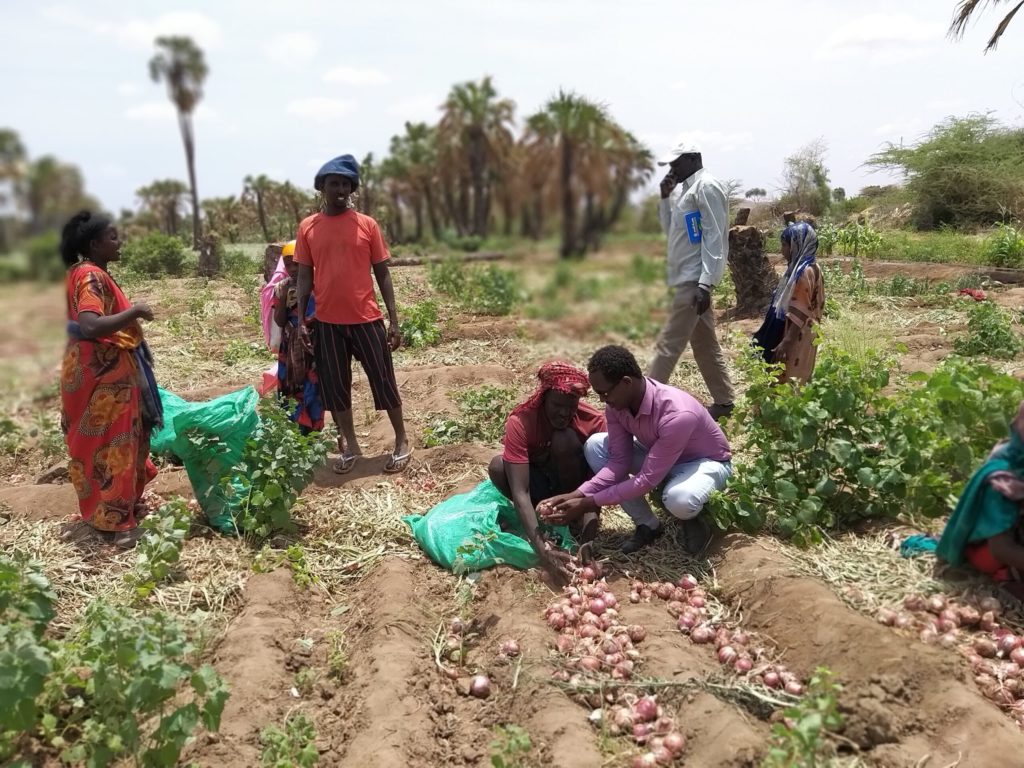
Or take mutual aid. On average, 30% of people in countries affected by protracted displacement give or receive financial support and 40% give or receive non-financial support. Indeed, over half of all respondents in our research locations in Africa and Asia have more than one neighbour from whom they can ask for help. In the UK, there are an estimated 4,300 mutual aid groups, with 3 million volunteers helping people in their local community. Yet economic policymakers around the world largely fail to understand mutual aid and create a supportive environment for mutual aid groups.
No one is to ‘blame’ for being a refugee – those who have not had to flee from persecution should understand that they are simply fortunate. Creating sufficient safe, legal routes for asylum seekers to come to the UK (and other Global North countries) would decimate the business model of the organised criminal gangs that traffic vulnerable people.
And all (or virtually all) of us are migrants or the descendants of migrants. Instead of throwing around ridiculous insults, Braverman and the rest of the UK government should reflect on our common humanity, and work to realise the potential of all people in line with the UK’s international obligations and pledges.