


In this final blog in a 4-part series on Elite Cartels in Tasmania, Robyn A. Lewis1 and Michael Johnston2 draw on experiences elsewhere to suggest potential anti-corruption reforms.
Elite3 Cartels (ECs) operate subtly – often legally and opaquely – contributing to Tasmania’s long, slow decline in economic vitality, politics, civil society, and the environment.
From a corruption standpoint, ECs’ unaccountable networks exclude citizens from life-affecting decisions, via behind-the-scenes collusion, bypassing or distorting public consultation, pursuing narrow governance agendas enabled by weak oversight – a quiet capture of democracy.
The result is effectively a corruption tax, lowering incomes, increasing debt, inhibiting growth and innovation, constraining investment, and driving skilled youth outmigration.
Tasmania offers a cautionary tale regarding one-size-fits-all concepts, metrics and reforms for curbing corruption. ECs’ business-as-usual may not appear corrupt but a stable alignment of politics and private enterprise. But ECs sustain dominance at great community cost, including public disaffection and distrust.
Addressing Corruption and Governance
Some Tasmanian corruption is illegal. One remedy is a powerful, well-resourced, completely independent anti-corruption agency (ACA) like Hong Kong’s or NSW’s ICAC. If cost or other challenges seem excessive, Tasmania might recruit NSW ICAC on a subcontracting or consulting basis4.
That ACA should be empowered to initiate and investigate cases, prosecute wrongdoings, provide anti-corruption advice and education, including businesses – which is of increasing importance given the devolution of public-sector functions to private companies and consultants – and allow safe public reporting and feedback. We suggest it not have retrospective powers but be future-focussed, rebuilding good governance and avoiding pitfalls experienced elsewhere. An Inquiry would form a good foundation.
Proper resourcing of Tasmania’s Auditor-General and Ombudsman are also necessary, as are legislated transparency reforms, utilised in Mexico where openness helps counter corruption (Verni, 2025). These must include lobbying oversight.
But because ECs operate sub-surface and often legally, detection, law enforcement and transparency are insufficient. Indeed, if those are the only reforms, ECs’ infrequent bribery scandals may convince some that corruption is negligible, allowing persistent quiet capture. Deeper structural, cultural and institutional weaknesses need addressing, for example public service underfunding, skills erosion, career pathways and training (so corporate memory is built and retained).
Tasmania needs more inclusive and participatory governance to check ECs’ dominance. Political and economic systems must become more fair, open, and competitive. Integrity and public interest must be at the forefront of all government decisions. Electoral and party-finance reforms should maximize transparency and limit donations. Champions of change and journalists should be supported and protected.
Yet even multi-party outcomes may not bring needed improvements, and risk perpetuating elite dealmaking. Therefore, meaningful, structured participation in party decision-making is as critical as transparent governance, a robust ACA and a clear, shared vision. Tasmanians must see that their opinions and political choices matter – not that whoever they choose, the result is the same. Like other democracies grappling with institutional decay, Tasmania must rebuild fundamental social and political trust.
Economic openness is also essential. Competitors to incumbent ECs – particularly experienced investors with the requisite resources, market channels and sustainability expertise, and who can challenge and encourage new dynamism in the Tasmanian economy – must be welcomed.
Transformation: Pathways and Benchmarks
Tasmania’s current situation is unsustainable, both locally and nationally. Tasmania is at an economic, social and environmental tipping point. The costs of inaction and continued divisiveness are enormous; some potentially irreversible. Recognising this problem is paramount; successful amelioration requires cross-party commitment (e.g. Laing, 2024).
Conventional reforms are necessary but insufficient. Tasmania needs institutional and cultural transformation, dismantling patronage and secrecy, and promoting integrity, policy deliberation, strategy and future capacity over control, spin and short-termism.
These are not new or unique problems. The Federal Inquiry into the Tasmanian economy (Nixon, 1997) stated Tasmania’s challenges include “extinguishing … wasteful parochialism and polarisation” and overcoming “inertia against taking … actions (by an) entrenched culture … more interested in protecting its patch”. These symptoms of EC corruption persist today, worsened by increased secrecy and reduced media competition.
Recommendations of greater openness are helpful – but, considering the deeply-embedded nature of ECs, how do we know whether measures are implemented, and working? National corruption indices reveal little about deeper processes or trends, nor state-level dynamics. To track progress toward openness and inclusion, Tasmania needs verifiable indicators reflecting the ways ECs operate and any trends toward improvement. There is no corruption index for Tasmania and the last corruption survey conducted by the Integrity Commission was in 2017 (Jamrozik).
Sectoral analyses in areas like infrastructure, natural resources, health, and education can be particularly useful in revealing failures and offering structural reform opportunities (Pyman and Heywood, 2024). ECs dominate individual sectors in different ways; thus, reforms must be targeted, actionable, manageable and measurable. While EC deal-making is often obscure, there are precedents for promising reforms (Pyman, 2021). There is immediate ‘fiscal space’ in Tasmania’s budget process which could be addressed using existing financial data.
A Sectoral Example: Infrastructure
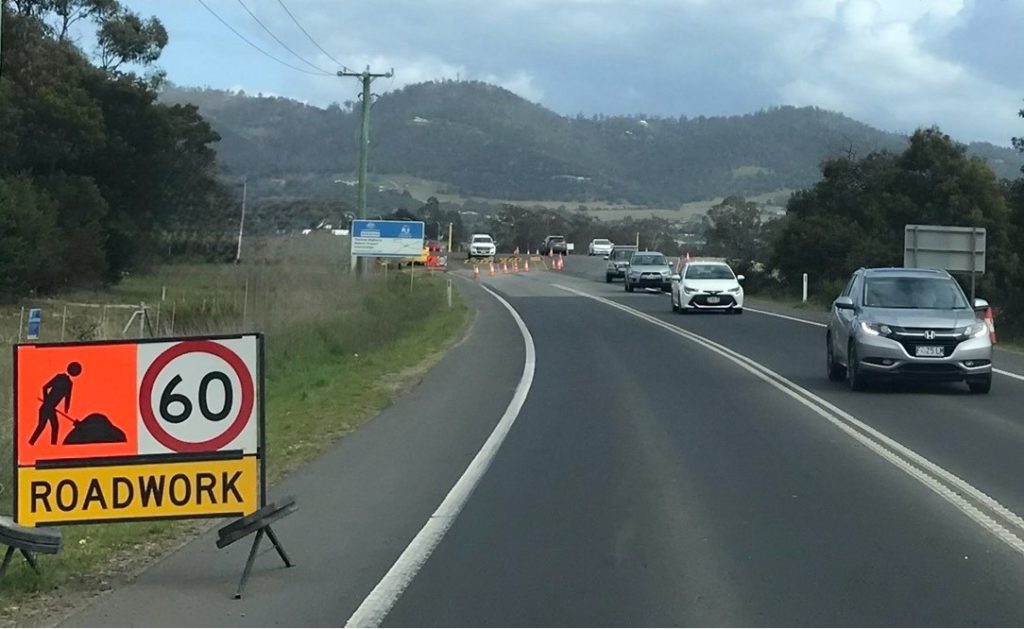
The infrastructure sector is globally vulnerable to corruption due to its scale and large payoffs (Matthews, 2016). Tasmania allocates a significant percentage of spending to infrastructure, with a ten-year ‘pipeline’.
Risks arise at every stage: project selection, design, contracting, procurement and delivery (IBAC, 2024; Pyman, 2021). Inadequate oversight and the influence of entrenched bidders perpetuate vulnerabilities.
Observable indicators can be designed to assess reforms’ effectiveness. Red flags might, for example, include rubber stamp approvals, costs significantly exceeding national standards, or repeated benefits to favoured areas.
Similar proxy indicators could be developed for other sectors.
There is no ‘silver bullet’ nor cargo-cult ‘silver bird’
Reform is complex, requiring sustained effort, likely generating resistance and potentially triggering defensive consolidation. Some challenges, especially environmental, are wicked, lacking simple solutions.
Reforms must move beyond compliance checklists and revamped ethics guidelines. At both state and local levels, appointments – including Boards – must be merit-based. Fair-play rules – hearings, consultation, transparency – must be seen to be enforced. To resist EC capture, Parliamentary committees require strengthening, and regulatory autonomy assured. Citizens, NGOs, and the media must highlight the ECs behind business-as-usual, and their costs to Tasmania’s public services, environment and brand. Public interest must be paramount.
There are also wider implications if rules are selectively applied or circumvented and citizens see connections overriding fairness and merit: trust in specific projects and broader governance is degraded.
Strengthening Governance Strengthens Tasmania
Checking EC power has more than budgetary and investment rewards, including political legitimacy for effective leaders, economic advantages for successful contractors, professional standing for capable managers, improved planning and greater public voice. In place of abstract calls for good government, our proposed reforms emphasize measurable public benefits.
Willpower, persistence and adaptation are required. Outcomes must be demonstrable and communicated. Building NSW’s anti-corruption strength took decades – another reason Tasmania should leverage NSW’s experience, combined with deep sectoral knowledge plus local understanding of how Tasmanians view their state and lives.
Acknowledging the Issue is Essential
Above all, Tasmanians must understand what ECs are and do. The fundamental issue facing Tasmania is corruption and associated failures in due process, not NIMBYism, over-regulation or pathological dissent. If Tasmania were a country, its score on the Corruption Perceptions Index would likely place it alongside Malta, Bulgaria or Jordan (Laing, 2020). UN anti-corruption assistance would be justifiable.
The question is: do Tasmanians want to restore public integrity and trust, reduce their ‘corruption tax’, reinvest wasted billions into public services and facilities, and return to surplus – or not?
It can be done. Like Estonia (OECD, 2024), Tasmania could become an unexpected reform leader by choosing to dismantle Elite Cartel corruption and restore democratic integrity now.
References:
IBAC Victoria (2024) Corruption and misconduct risks in the construction and manufacturing sector, IBAC. Available at: https://www.ibac.vic.gov.au/corruption-and-misconduct-risks-in-construction-and-manufacturing (Accessed: 21 June 2025).
Jamrozik, P. (2017) ‘Integrity Commission – Community Perceptions Survey 2017 – Research Report’, Research Report, p. 29. Available at: https://integrity.tas.gov.au/__data/assets/pdf_file/0010/728596/integrity-Commission-community-perceptions-survey-2017-report.PDF
Laing, A. (2020) How Corruption Works in the Public Sector—One Easy Lesson, PFM. Available at: https://blog-pfm.imf.org/en/pfmblog/2020/03/how-corruption-works-in-the-public-sectorone-easy-lesson (Accessed: 13 July 2025).
Laing, A. (2024) Curbing Corruption Through the Budget Process. Academic. Dublin, Ireland: Dublin City University, p. 61. Available at: http://rgdoi.net/10.13140/RG.2.2.25577.31844 (Accessed: 21 June 2025).
Matthews, P. (2016) Why is the construction industry so corrupt and what can we do about it?, World Economic Forum. Available at: https://www.weforum.org/stories/2016/02/why-is-the-construction-industry-so-corrupt-and-what-can-we-do-about-it/ (Accessed: June 21, 2025).
OECD (2024) Anti-Corruption and Integrity Outlook 2024 – Country Notes: Estonia, OECD. Available at: https://www.oecd.org/en/publications/anti-corruption-and-integrity-outlook-2024-country-notes_684a5510-en/estonia_a1df0c2f-en.html (Accessed: 14 July 2025).
Pyman, M. (2021) “Curbing corruption in Construction, Public Works, and Infrastructure.” CurbingCorruption.com. Available at: https://curbingcorruption.com/wp-content/uploads/2021/06/210618-Curbing-Corruption-in-Construction.pdf.
Pyman, M. and Heywood, P.M. (2024) Sector-Based Action Against Corruption: A Guide for Organisations and Professionals. Cham: Springer Nature Switzerland (Political Corruption and Governance). Available at: https://doi.org/10.1007/978-3-031-59336-9.
Nixon, P. (1997) The Nixon Report: Tasmania into the 21st century. Report to the Prime Minister of Australia and the Premier of Tasmania. Government. Hobart, Tasmania: Commonwealth of Australia, p. 346. Available at: https://catalogue.nla.gov.au/catalog/1597669 (Accessed: 9 July 2025).
Verni, Z. (2025) Lessons from Mexico’s Public Information Reforms | The Regulatory Review, The Regulatory Review. Available at: https://www.theregreview.org/2025/06/19/verni-lessons-from-mexicos-public-information-reforms/ (Accessed: 21 June 2025).
1 Robyn Lewis is an MA student in Corruption and Governance, Centre for the Study of Corruption, University of Sussex, UK.
2 Michael Johnston is the Charles A. Dana Professor of Political Science Emeritus at Colgate University, in Hamilton, New York, USA. They are currently co-authoring a chapter for the Edward Elgar Research Handbook on Corruption and the Environment (2026), on environmental corruption in Tasmania.
3 We define elite in this context as “groups of individuals who hold disproportionate amount of wealth and/or power, who participate in, or have influence or access to, decision processes affecting the public”
4 As provided by NSW ICAC in the Pacific region and their regional outreach within Australia.
Leave a Reply