South Africa’s shale gas potential

Blanche Ting

South Africa is currently undergoing various changes to its energy supply, from introducing renewable energy, a potential nuclear build, two new coal plants, and the possibilities of shale gas exploration.  As the country is a net importer of gas from its neighbouring Mozambique and Namibia, efforts are increasing to secure oil and gas domestically.  Momentum for hydraulic shale gas fracking has been growing since the country was cited to have one of the top ten technically recoverable shale gas resources in the world, with estimates at 390 trillion cubic feet (tcf) (EIA, 2013). The location for potential shale gas is located in a semi-desert region called the Karoo, spanning approximately two-thirds of the country.  A few sites in the Karoo had been drilled before in 1965-1975 with the state-owned company called Soekor. Although gas reserves were detected, the technology for deep exploration was not yet available, and it was only in 2008 when commercial interests had started.  As of 2013, there were five companies that signed a Technical Cooperation Permit (TCP) with the government. These were Royal Dutch Shell (with the biggest land mass), followed by Sasol/Chesapeak/Statoil joint venture, Anglo Coal, Falcon oil and gas, and Sunset Energy of Australia (EIA, 2013). Read more ›

Follow Sussex Energy Group Facebooktwitterlinkedin
Tagged with: , , , , , , , , ,
Posted in All Posts

Jonathon Porritt on Hinkley C: The beginning of the end

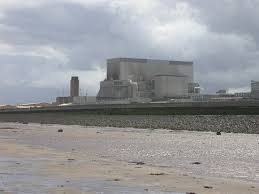
Jonathon Porritt posted an important blog post on Monday, about the ongoing troubles at Hinkley C in Somerset.

As Porritt points out, the project still faces vast hurdles including securing a final investment decision from minority partners, obtaining a £10bn loan guarantee from the treasury, and finalising negotiations over a subsidy contract with the UK Gov.

Citing a blog post by Sussex Energy Group’s Phil Johnstone, Porritt refers to the immense efforts that the UK government has gone to in its attempts to make nuclear work in the 21st century. This includes creating one of the best institutional contexts in the world, ‘streamlining’ planning, as well as establishing Contracts for Difference for nuclear power. However, despite these actions to ‘facilitate’ new nuclear, the Hinkley C project may be close to abandonment.

A useful list of some of the reasons to think this is provided, emphasising some of the internal problems of nuclear energy in the 21st century. This includes Chinese investors getting “more leery about the EPR reactor design”, “the French Government [becoming] more and more outspoken about its reluctance to go on bailing out either EdF or Areva”, and “Areva now being in such a bad state (with a €4.8bn loss in 2014)” that it looks as if it “…might have to withdraw as a co-investor in the Hinkley project”. This is before the legal challenges of Austria and a German Energy Cooperative and the potential delays caused by these are considered.

Another important point alluded to in Porritt’s post is the interesting silence of nuclear advocacy in recent times: we do not hear anything about Hinkley from the government anymore for example. Elsewhere, some of the most vociferous advocates of new nuclear such as George Monbiot, Mark Lynas and James Lovelock have also had little to say on the subject. Recently it was reported that former chief scientist David King – who had previously decreed that nuclear was a “scientific necessity” rather than a technological choice – accepted that a low carbon and sustainable future is achievable without nuclear power. All of this certainly adds up to a feeling that when it comes to nuclear power policy, the winds of change may be beginning to blow…

http://www.jonathonporritt.com/blog/hinkley-point-beginning-end

Follow Sussex Energy Group Facebooktwitterlinkedin
Posted in All Posts, Summaries and Links

Can we devolve electricity generation in the UK?

Last week, a report publishing research conducted by a consortium of 9 UK universities, and co-authored by CIED researcher, Dr Victoria Johnson argued that up to 50 per cent of electricity demand in the UK could be met by distributed and low carbon sources by 2050.

Distributing Power: A transition to a civic energy future” published by the EPSRC-funded Realising Transition Pathways Research Consortium assesses the technological feasibility of a move from the current traditional business models of the ‘Big Six’ energy providers to a model where greater ownership is met by the civic energy sector. It also goes further by questioning what types of governance, ownership and control a distributed future would need.

Despite an unfavourable policy environment, there is growing interest in the potential of distributed energy systems from a range of stakeholders: the devolved governments, municipalities, and communities. Although market penetration remains low, the number of decentralised generation schemes is growing. But activity is neither coherent nor well-co-ordinated.

In the her blog post, for policy@Manchester, Victoria describes some of the key findings from Distributing Power and highlights that a major driver for this transition would be a step change in the role of the civic energy sector (communities, co-operatives, local authorities, town and parish councils, social housing providers) through participation in, and ownership of, electricity generation schemes.

She concludes that while ‘Distributing Power’ assesses the impact of one distributed generation future, there are others, which might have a greater role for solar, onshore wind, or other generation mixes. However, the report offers general insights into the barriers and the technological transformation that would be required for a move to a highly distributed energy future.


VikiJohnsonweb (3)Victoria Johnson joined the Centre on Innovation and Energy Demand, at Sussex Energy Group in September 2014 from the Low Carbon Research Institute of Wales, based at the Welsh School of Architecture, Cardiff University where her work focussed historical transitions in the UK energy sector and institutional transformation necessary for distributed low-carbon electricity generation in the UK.

Between 2007 and 2012 Victoria led the research programme on climate change and energy policy at leading independent think tank, NEF (New Economics Foundation). She holds a PhD in Atmospheric Physics from Imperial College, a MSc (awarded with distinction) in Climate Change and a BSc in Environmental Sciences, both from the University of East Anglia.

Victoria is also Research Associate at the Sustainable Consumption Institute (SCI), University of Manchester. She is an experienced interdisciplinary and widely published researcher in the fields of climate change and energy policy at the domestic and international level. To date, she has led or contributed over 35 policy-relevant publications in these fields. Her principal research interests relate to the mechanisms and societal implications of socio-technical transitions across a range of spatial scales with a particular reference to power, agency, social justice and international development. Based at the SCI, she is primarily comparing patterns of diffusion of low-energy technologies (district heating, light-rail networks, and Passivhaus) in the UK with other European countries.

Follow Sussex Energy Group Facebooktwitterlinkedin
Tagged with: , , , , , , ,
Posted in All Posts, policy

Small modular reactors – the future of nuclear power?

In recent months, as the large Hinkley Point nuclear project has hit a succession of problems (see the recent blog by Phil) there has been increasing attention to the prospects of small nuclear reactors, most often small modular reactors (SMRs).  These are seen as either a complement to or, increasingly, a substitute for, very large units like Hinkley. Disquiet over the high cost and delays to Hinkley – some of it from within the nuclear community – as well as signs of a faltering global nuclear renaissance  – have led to questioning whether the long-established conventional wisdom that bigger units are cheaper than small reactors is any longer true.

The UK’s National Nuclear Laboratory  (NNL) has produced a ‘feasibility’ study which argues that SMRs might eventually prove cheaper than Hinkley-sized units, and the House of Commons Select Committee on Energy and Climate Change has urged Government to spend public money to develop a demonstration small reactor in the UK.  The Committee suggests, implausibly as we shall see later, that ‘SMRs…are a viable proposition for future deployment in the UK in the next decade.’

Over the last forty years, the size of nuclear reactors has consistently risen, so that the main designs now being offered by vendors are well over 1000 MW – the apogee being the French company Areva’s 1650 MW EPRs being built at Hinkley.  Nuclear engineers have always argued that bigger means cheaper per unit of installed capacity, and per unit of power produced.  This seems to make sense – there are irreducible overheads for nuclear plants plus classic engineering economies of size.  Thus if volume doubles, the quantity of materials needed is considerably less than double.  This does not mean that newer, larger units are cheaper than the older smaller ones, as other forces have caused reactor costs to rise over time and across the board.  So a consequence of generic cost increases and ever-larger unit sizes means that the investment costs of new plants are very high – Hinkley is expected to cost £16 billion before financing charges (and £24.5 bn. after taking them into account, and before any revenue is earned).

These large and financially hard-to-digest costs added to large commercial and political risks have helped reinvigorate an older hope in the nuclear community that small (less than 300MW) units might prove viable.  The idea here is that factory assembly and mass production economies could overcome the cost disadvantage of small unit size.  Or even if this is hard to envisage, then at least the up-front financial commitments are lower, so the financing issue might be less onerous.

The increasing enthusiasm for the ‘rescaling’ of nuclear power in the nuclear community may signify recognition of of a wider energy transition underway towards more decentralized forms of provision more generally. As Cooper points out, advocates of SMRs suggest that reduced power demand due to the recession and increasing drives to energy efficiency makes SMRs appealing.  Their lower total capital commitments, reduced construction times, and smaller unit size seem to make them more flexible and thus better suited to current trends in many energy systems. Thus SMRs are sometimes seen as playing a potential role in adapting to the possible contexts of future electricity markets where nuclear will have to be more accommodating of intermittent renewables.

So what are prospects, both in the UK and more widely?  None of the designs, including the most credible, which are based on scaled-down versions of currently deployed PWR technology, is yet ready: NNL speaks of ‘detailed technical challenges’ not yet resolved.  It is therefore no surprise that no-one has yet built a single SMR let alone the up-front commitment to large unit numbers that would be needed to make the economic case remotely credible.  And the safety licensing process that will need to follow design completion would, according to the Chief UK nuclear inspector, take up to 6 years in the UK.  The Select Committee’s 10-year vision already begins to look wildly optimistic, especially since it is already nine years since the UK Government gave an enthusiastic go-ahead for much more mature nuclear technologies than any of the SMRs – and no financial deal has yet been reached.  SMRs are a classic case of supply-push technology development – no potential user of SMRs, mostly electric utilities, has expressed any serious interest in them.

Nevertheless commitments to low carbon technology options in the UK and elsewhere mean that Governments, including the UK’s, are willing to intervene in markets and require deployment of technologies with substantially higher costs than would be chosen commercially.  So could SMRs, even on a rather longer time-scale than a decade, become deployed in the UK and elsewhere?

First, do we have any idea what SMRs would cost?  The answer is clear: we have virtually none.  NNL canvassed the main potential vendors of SMRs for their views and, somewhat unsurprisingly, they all (as eventually did NNL) suggested that under conditions that have to be seen as extraordinarily optimistic, SMRs might eventually prove cheaper, per unit capacity and power production, than large reactors.  Historically, vendor estimates of nuclear costs have proved almost grotesquely optimistic and there is no reason to believe, given the obvious self-interest of vendors in promoting their potential products that this has changed.  Given the uncertainties involved, the conclusion is that costs are essentially unknowable at present, but that there are powerful reasons to suppose that they will prove much higher than the industry now promotes.

This uncertainty makes doing a world ‘market survey’ very difficult, but NNL nevertheless conducts one.  In two scenarios, ‘niche’ and ‘parity’ (of cost) it concludes that the world market would be in 2035 only just over 5 GW in ‘niche’ but 65-85GW in ‘parity’.  It then suggests a potential UK market of between 7GW and 21GW in 2035, the latter number being frankly not credible under any conceivable circumstances.  These hoped-for UK markets are also linked to the idea that the UK could become a major technological player in SMR technology, a view that seems tinged almost with fantasy, given that all significant SMR development to date has been outside the UK:.  In the USA for example the Obama administration has pledged a further $217 million to the SMR company NuScale, following substantial earlier Federal funding for two SMR designs. Over a much longer period than a decade, some SMRs might nevertheless be deployed, in the UK and elsewhere.  Whether the subsidies necessary for this would be a good use of public or consumers’ money in terms of carbon emission reductions must however be open to major doubt.

A photograph of Gordon MacKerron and Phillip Johnstone of the Sussex Energy Group

Professor Gordon MacKerron, Professor of Science and Technology Policy, SPRU, Co-Director of Sussex Energy Group.


Dr Philip Johnstone is a Research Fellow at the Science Policy Research Unit and a member of The Sussex Energy Group


Follow Sussex Energy Group Facebooktwitterlinkedin
Posted in All Posts

South Africa’s electricity crisis and the future of supply

During his State of the Nation address last week South Africa’s President Jacob Zuma promised to do “everything we can” to resolve the country’s energy challenge, including: to develop a large nuclear fleet; construct yet more coal-fired power plants; import hydro from the Democratic Republic of Congo; import gas from neighbouring countries; develop the country’s shale gas reserves; continue to develop a privately generated renewable energy sector; and undertake demand side management measures such as solar hot water heaters, and roof top solar PV. An impressive shopping list indeed, particularly given that coal-dependent South Africa is currently facing its worst electricity crisis in 40 years. With load shedding taking place most days, the country has been relying heavily on expensive diesel peaking plants to make up the short fall.

Load shedding, or planned outages which have been taking place regularly across the country since mid-2014 are now predicted to last until 2018. In addition to arguments over what the country’s electricity demand should be, national debates rage over which options are the quickest to construct, the most affordable, the most technically feasible. The country’s 20-year national electricity master plan, the ‘integrated resource plan’ for electricity first approved in 2011, has been under revision since late 2013. Decision-making over the ideal electricity mix often reflects deeper struggles over what gets supported by the state, who gets to build it and who gets to benefit.

The electricity crisis has contributed to lowering growth rates, discouraged private investment, exacerbated the country’s large current account deficit and pushed the cost of electricity way beyond the reach of the poorest households who are connected to the grid. Approximately 25 per cent of the population, 12.3 million people, lack access to electricity in a country where 40 per cent of the electricity is consumed by the country’s energy-intensive industrial users. The country’s historical dependence on cheap coal was, under apartheid coupled with cheap labour to generate cheap electricity for the primary benefit of export oriented industry and wealthy households. The monopoly utility Eskom which to date generates 90 per cent of the country’s coal-fired electricity, is cash strapped and crisis ridden. Since 2005 Eskom has been struggling to build an additional 17000 MW of generation capacity by 2018 whilst facing a funding crisis. Electricity tariffs have tripled in real terms since 2005 and will increase by a further 12.8% from April 2015. By January 2015, one third of Eskom’s installed capacity, approximately 15,000 MW was down and the country’s reserve margin on a knife edge.

The causes of the country’s current supply side crisis are complex and deep seated. They include: decades of mismanagement; a failure by government to approve the construction of new capacity in the early 1990s and disagreement over who should do this; inadequate maintenance of the utility’s older power stations; the recent collapse of the coal silo for the Majuba Power Station in November 2014; rising coal costs; increased international demands for the country’s coal; and climate change mitigation commitments pledged in 2009. A further R23 billion has been promised by government but this won’t last long, not least because the country has long exhausted its diesel budget for the financial year.

Big coal…

Delays in the construction of the 4,800 MW Medupi coal-fired power plant, the largest coal-fired power plant on the continent have exacerbated the crisis. A controversial World Bank loan for Medupi was approved in 2010, but the plant is now three years behind schedule and subject to significant cost overruns, technical glitches and labour unrest. By January 2015 Eskom had failed to meet all previous deadlines to synchronise Medupi’s first 794 MW unit with the grid, which was originally to have been carried out in 2011. Another power station of similar size and also delayed, Kusile, is anticipated to be one year behind Medupi.

An excellent report by the Energy Research Centre of the University of Cape Town details the significant planned expansion of South Africa’s coal mines, power plants and related infrastructure for both export and domestic purposes. Among other findings the report uncovers glaring inconsistencies between the country’s coal road map, a process driven and funded by the coal mining industry, and national climate change mitigation commitments. Similarly it finds that planned investment in export infrastructure for coal is potentially incompatible with required global reductions in fossil fuel combustion. In a potential illustration of ‘unburnable carbon’ this either risks new coal developments becoming stranded assets in the medium-to-long term, or the country becoming locked into a high-carbon emissions trajectory that prevents it from meeting its own mitigation imperatives.

…big networks, big nuclear

Reflecting what academic Anton Eberhard has referred to as a national paradigm of “big coal, big nuclear, big networks”, President Zuma reiterated the promise to construct a 9,600 MW nuclear fleet. It is estimated that this will cost the country R1 trillion ($85 billion) with a target to connect this fleet to the grid by 2023. The government has courted representatives from the ‘big five’ nuclear generating countries, China, France, Russia, the US and South Korea with whom it claims to have signed inter-governmental agreements . But according to Earthlife Africa, Russia is now being favoured based on an agreement designed to sidestep the constitutional requirement for open and competitive tendering. This would give Russia power of veto and prevent South Africa from entering into a contract with any other nuclear vendor.

For some environmentalists, nuclear energy has become the preferred option as a techno-fix to prevent runaway climate change. But I have never managed to find a satisfactory response to fundamental questions of finance, governance and accountability such as: who will build it, how much will it cost, who will pay for it, who will take liability for accidents, how will the R&D be shared, where will the waste be stored and how do you avoid the corruption and cost and time overruns that often go hand in hand with large infrastructure projects? Rather than a simple case of coal v nuclear, to which pro-nuclear arguments are often reduced, there are other issues at stake here relating to democratic decision-making in energy, bargaining power within contractual agreements, allocation of risk and how limited public subsidy for energy development should be distributed. See Philip Johnstone’s blog in relation to the UK’s Hinkley C for some more thoughts on this.

Renewable

More positively, in the last three years South Africa has become one of the leading destinations for renewable energy investment. According to UNEP/BNEF investment went from a few hundred million dollars in 2011 to $5.7 billion in 2012 and $4.8 billion in 2013, of which $1.9 billion for wind and $3 billion for solar. This investment is largely due to the take off of the country’s Renewable Energy Independent Power Producers’ Programme (RE IPPPP), launched in August 2011. RE IPPPP is a tender system based on competitive bidding which means that potential project developers bid for a renewable energy contract below a certain cap and must meet potentially progressive socio-economic criteria in order to qualify. Successful projects sell electricity to Eskom’s grid under a 20 year local currency denominated, government-backed power purchase agreement (PPA). Just under 4,000 MW have thus far been approved and by December 2014, 21 projects had been connected.

As a colleague and I discussed in a working paper last year, while the programme has brought a diversity of new players and investment to the country, the ownership of this new sector could become dominated by international companies rather than national players who are struggling to retain a share in the market. Moreover fundamental tensions have been identified between the demands of finance and investment for ‘bankability’ and the progressive socio-economic criteria of the programme that include minimum requirements for community ownership, job creation and participation of historically disadvantaged individuals.

So technology choice is about a lot more than just technology. There is no panacea, and without discussing the other various options Zuma has so confidently promised the country (I ran out of blog space), it is clear that disagreement, uncertainty and speculation over the country’s electricity are reflected in competing political and economic interests at the national level and beyond.LucyBaker Sussex

Lucy Baker is a Research Associate in the School of Global Studies at the University of Sussex, currently working on an ESRC-funded project, Rising Powers and the low-carbon transition in Southern Africa.  She has a PhD in The political economy of socio-technical transitions in South Africa’s electricity sector, from the University of East Anglia. Her areas of expertise include: the political economy of energy; renewable energy development in low and middle income countries and climate change governance and finance. She has worked on issues of  development, environment and human rights for fifteen years, in academia and NGOs.

Follow Sussex Energy Group Facebooktwitterlinkedin
Tagged with: , , , , , , , , ,
Posted in All Posts

Follow Sussex Energy Group on Twitter

Disclaimer

The views and opinions expressed here are solely those of the individual authors and do not represent Sussex Energy Group.

Subscribe to Blog via Email

Enter your email address to subscribe to this blog and receive notifications of new posts by email.

Join 113 other subscribers.

Archives

Subscribe to Sussex Energy Group's quarterly newsletter