Manuel Alejandro Núñez Ochoa. Migration Studies MA alumnus (University of Sussex) and former Associate Resettlement and Complementary Pathways Officer.
The Colombian response to Venezuelan forced migration has undergone significant changes since the administration of Gustavo Petro took office in 2022. As the first left-wing president of Colombia, his views on immigration resemble the early 2000s discourses of leftist governments in the region, questioning the restrictive immigration policies of migrant recipient countries, especially those of the United States since the first Donald Trump administration. Petro does so by presenting his approach as bringing a human, ethical and moral response towards migration.
Petro’s liberal migration discourse, based on the promotion of migrants’ rights, the non-criminalisation of migrants, anti-racism, and freedom of movement, supports his domestic electoral goals by connecting with his supporters. At the same time, it enables Petro to position himself as a credible left-wing leader in the region. However, there is a gap between his liberal rhetoric and the weak and restrictive response of his administration towards the Venezuelan forced migration in Colombia.
The liberal discourse onmigration of Gustavo Petro
As Freire and Castillo have noted, a president’s agenda largely determines the migration policy in most South American countries. Since taking office, Gustavo Petro has been very vocal regarding the protection of Colombian migrants in Europe and the US; he has promoted a welcoming response to Palestinians since the war in Gaza intensified; and he has been critical of the US administration’s repressive measures against migrants.
Colombian flag. Flavia Carpio for Unsplash
For instance, in a talk at the IVForo Abierto de Ciencias de América Latina y el Caribe (CILAC) in December 2024, President Petro condemned King Charles III and the UK labour government for imposing visa restrictions on Colombians following a rise in asylum requests from Colombians, accusing them of reverting to a mindset reminiscent of enslavers and considering Colombians as “inferior”. Responding to the imposition of visa restrictions to Colombian citizens arriving to the UK, Petro threatened to implement visas for British citizens arriving in Colombia. In the same context, Petro also advocated for free global mobility, trying to engage with his constituents.
Furthermore, the Colombian government has stated that it will host Palestinian refugee children injured in the conflict in Gaza to receive medical care in Colombia. This mirrors the initiatives taken by Venezuela, Brazil, Argentina and Uruguay in 2015 to accept Syrian refugees. Since January 2025, after the US president Donald Trump ordered the deportations of undocumented migrants in the US, the Colombian president has demanded that migrants have to be treated with dignity and respect. He has advocated for the human rights of Latin American migrants and for the non-criminalisation of migrants in the US. In addition, the Colombian president has called for Central American and South American countries to demand the respect of human rights and the non-criminalisation of deported migrants from the US. Furthermore, he criticised the detention of migrants by the US administration in El Salvador, arguing migrants are not criminals, nor slaves, and that Latin America must respect their dignity. Moreover, in an X post published in February 2025, the Colombian president praised how the 190 undocumented Venezuelans who were deported from the US were not handcuffed on the flight and treated with dignity.
Gustavo Petro has also criticised the criminalisation of Venezuelan migrants by the US government. The Colombian president expressed criticism towards the United States government for its allegations regarding Venezuelans being affiliated with a criminal gang. Conversely, Petro condemned the Salvadorian president Nayib Bukele accusing him of criminalising Venezuelan children and demanding the release of Colombians detained in El Salvador.
The current Colombian administration’s response towards the Venezuelan migration
President Petro’s use of liberal rhetoric on migration aims, first, to achieve popular support for his political reforms. Second, it seeks to position his government internationally. The relationship with the United States significantly shapes migration policy outcomes that align with the presidential ideology. Consequently, Petro’s administration can leverage its foreign policy strategy, particularly in its stance against the new U.S. president, Donald Trump, by employing liberal rhetoric toward migration.
However, his domestic political agenda is driven by the promotion of a peace deal with the Colombian Ejercito de Liberacion Nacional (ELN) guerrilla, which requires the support from the Venezuelan government. At the same time, his foreign policy rejects the USA’ economic sanctions against Venezuela. Unlike his predecessors, Petro’s administration has taken a restrictive approach towards Venezuelan forced migration. This aims to facilitate achieving peace with the ELN guerrilla and to establish himself as a left-wing leader in the region. As a result, his response to Venezuelan migration is relatively timid, sometimes even aligning with Nicolás Maduro’s administration in Venezuela by downplaying the reality of forced migration from Venezuela.
Since coming to office, Gustavo Petro has not extended the complementary protection for Venezuelans, known as the Temporary Protection Permit (PPT). Instead, he has implemented an ad hoc measure by creating a special two years, non-renewable visa (Visa V)to regularise Venezuelan migrants who entered the country undocumented before December 4th, 2024. There are multiple obstacles to obtain a Visa V, however. The first relates to cost, as the visa application incurs a fee of around £26,45. Given that the average monthly income of a Venezuelan migrant in Colombia is approximately £65.60, migrants are effectively requested to allocate nearly 40% of their monthly income to cover the visa application fee. In border regions, where migrants encounter higher unemployment rates and greater job informality compared to larger cities like Bogotá, affording the visa fee becomes nearly impossible. Secondly, many visa applications have been rejected due to additional documents required by the Ministry for Foreign Affairs of Colombia during the applications – e.g. education documents apostille and a passport, the cost of which is prohibitive for many applicants (a Venezuelan passport application costs on average £126, plus a £90 fee charged at the consulate). At the same time, the Ministry for Foreign Affairs of Colombia requests documents that are declined for issuance by the Colombian Migratory authority, the Special Administrative Unit of Colombian Migration. Finally, the Ministry for Foreign Affairs of Colombia has the discretionary power to deny the visa application if it considers the applicant to be a potential threat to the country.
For those Venezuelans who entered Colombia after December 4th, 2024, there are no regularisation options and Venezuelan nationals travelling to Colombia by air must comply with strict entry requirements established by the Colombian Migratory Authority. Moreover, the other complementary protection measure issued by the Colombian government for Venezuelan migrants who are parents or legal guardians of Venezuelan children, of children who have obtained a Temporary Protection Permit before December 31, 2023, lacks the regulation of the law to be implemented. Furthermore, the Petro government has not managed to address the significant backlog of asylum requests and has still a low rate of refugee recognition. According to the Ministry for Foreign Affairs of Colombia, between 2017 and 2023, Colombia received more than 55,000 asylum applications, but only 1,475 requests were approved. Of the total requests approved, 1,357 applications were from Venezuelans.
In contrast to the welcoming discourse promoted by the Gustavo Petro administration towards Palestinians, the current Colombian administration has refused to receive Venezuelan migrants and asylum seekers who can be deported from the US. Moreover, the president claimed that he would run a program promoting the voluntary return of Venezuelans, which is in opposition to recommendations by the UNHCR and human rights organisations that highlight the risks of returning Venezuelans to their country of origins. Additionally, the Colombian Migratory Authority has arbitrarily denied more than 400 Temporary Protection Permits (Permiso por Proteccion Temporal, PPT) to Venezuelan residents without providing an opportunity for appeal. After the denial, Venezuelans are at risk of being deported and are not allowed to remain in the country for more than 30 days. In some cases, the Colombian Migratory Authority argues that having an administrative fine, e.g. a traffic fine, is a legitimate reason for denying a PPT.
To further curb Venezuelan immigration in Colombia, the Petro administration has increased migration control operations – that Venezuelan refugee-led organisations have described as “raids” – from 37,000 in 2021 to 218,000 in 2022, driven by public stigmatisation of Venezuelan migrants as criminals. These operations in Bogotá were conducted by the Colombian Migratory Authority, the National Police, and the Mayor’s Office, targeting Venezuelan migrants to verify their documents and criminal records and to enforce criminal law. However, according to testimonies from refugee-led organisations and from a Bogota Mayor’s office official, these operations did not follow due process. Many migrants who were detained and subjected to these checks were unable to access their human rights protections. Although these operations were overseen by the Ombudsman’s Office of Colombia and civic rights organisations to protect migrants’ rights, those organisations were not present in the actual operations. Furthermore, underage Venezuelan migrants were also detained during these operations. The Colombian Institute of Family Welfare (ICBF), the country’s child protection institution, was not informed or involved in the migration controls, despite legal requirements for their participation.
Conclusions
The president of Colombia Gustavo Petro has instrumentalised the political discourse of non-criminalisation of migrants to promote his domestic and foreign policy goals. He is aligning himself with his electorate using an anti-American, pro-migration and pro-Colombian rhetoric. At the same time, his pro-migration rhetoric enables him to develop his foreign policy agenda, opposing the US and establishing a left-leaning regional agenda in line with his political objectives. However, the Petro administration has increasingly adopted restrictive and in some case repressive measures towards Venezuelan migrants in the country, allowing the president to gain support and popularity domestically and pursuing his domestic policy agenda. Therefore, a gap between the political rhetoric and the practical responses towards Venezuelans has emerged as the goals and ideology of the Colombian president in his domestic and foreign policy goals drive the response to Venezuelan migrants in Colombia.
Throughout his fellowship, Mr. Calang actively collaborated with scholars at the Sussex Centre for Migration Research (SCMR), benefiting from a vibrant academic exchange. Under the guidance of his host adviser, Dr Sarah Scuzzarello, he participated in regular seminars and contributed with insightful perspectives to ongoing discussions. His time at Sussex was dedicated to advancing the three empirical chapters of his dissertation, which now stand as well-developed drafts. Reflecting on his experience, Mr. Calang described the fellowship as a vital experience in his academic journey.
This opportunity has been incredibly enriching, both as a PhD student and as a researcher immersed in the complexities of migration studies. Engaging with leading scholars, refining my theoretical approach, and working within such a dynamic academic environment have significantly strengthened my dissertation on migration. Beyond academia, this experience has broadened my global outlook, emphasizing the value of global collaboration.
His dissertation, which examines the intersectionality in the lives of Filipino migrant workers in Bangkok, took significant strides forward during his time at Sussex. With a strong focus on the development of key chapters, he leveraged the fellowship to refine his research arguments.
As he continues his doctoral journey, Mr. Calang’s experience at Sussex stands as a testament to the power of academic mobility in shaping research and fostering cross-cultural intellectual exchange. “My time at Sussex was more than a research visit—it was a period of intellectual growth, self-discovery, and meaningful academic engagement,” he shared.
This post was originally posted on the Phd Program in Multicultural Studies, Mahidol University’s Facebook page
Nuno Ferreira, Professor of Law at the University of Sussex; Maria Federica Moscati, Reader in Law and Society at the University of Sussex; and Senthorun Raj, Reader in Human Rights Law at Manchester Metropolitan University
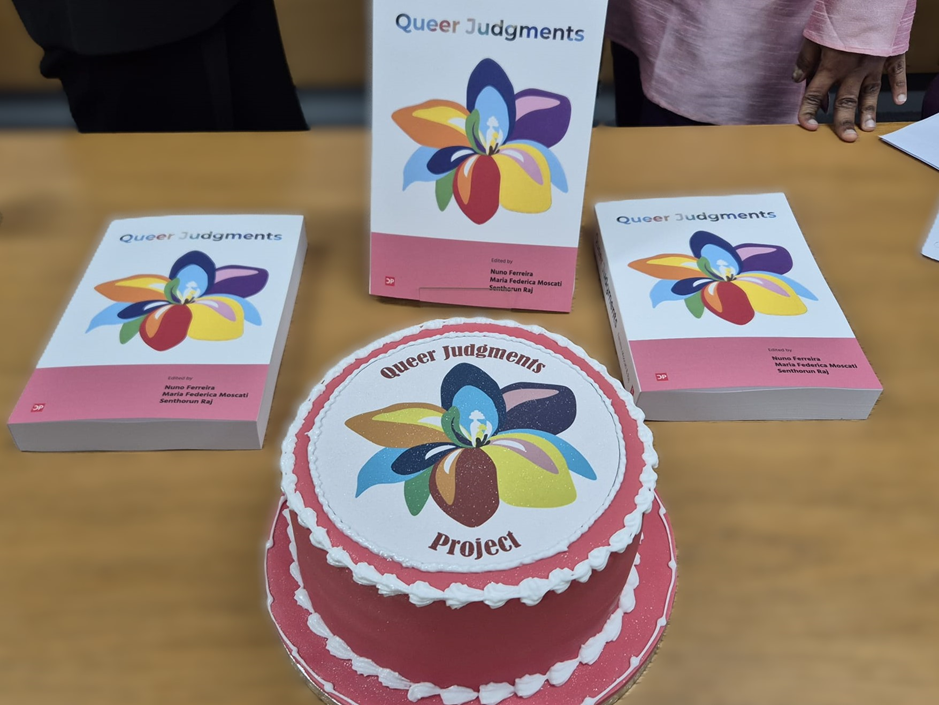
What if we queered judgments affecting queer migrants and refugees? Using a queer lens to analyse law and policy is a social justice crucial endeavour, and widely recognised by scholars and practitioners alike as an important intellectual and policy exercise. The Queer Judgments Project (QJP) is contributing to this movement by re-imagining, re-writing, and re-inventing, from queer and other complementing perspectives, judgments that have considered sexual orientation, gender identity and expression, or sex characteristics (SOGIESC) issues. QJP evolved from disparate conversations we have had about how legal judgments related to SOGIESC could have been written in more appropriate terms in light of the legal framework at the time. We wanted to cultivate a project that brought together friends, colleagues, and activists who were interested in improving and challenging the law and its application to make life better for lesbian, gay, bisexual, transgender, intersex, queer and other (LGBTIQ+) people and communities.
The QJP edited collection has been published by Counterpress in January 2025, is downloadable on a ‘pay as you feel’ basis, and is the first output of the project. With an international reach and multi-disciplinary scope, this edited collection invites you to a queer dance through 26 judgments and commentaries. The book covers various legal fields: from crime and sodomy cases to privacy and discrimination cases, from family and parenthood cases to health and reproduction cases, and ending on asylum and migration cases.
Part 5 of the book is precisely on asylum and migration cases and contains three contributions. The first one is authored by Alex Powell and it relates to the 2010 UK Supreme Court’s decision in HJ(Iran) & HT(Cameroon) v Secretary of State for the Home Department. The case concerned two gay men seeking asylum in the UK, and the main point revolved around whether authorities could legitimately expect asylum claimants seeking protection on grounds of their sexual orientation to return to their countries of origin and conceal their sexual orientation to avoid the risk of persecution. Although this judgment has been considered a significant victory for such claimants for reducing the scope of such discretion reasoning, Powell argues for a queer counter-judgment that completely precludes any expectation of discretion and puts forward an alternative that is less homonormative, homonationalist, and restrictive of sexual diversity.
This contribution is followed by that of Carmelo Danisi and Nuno Ferreira, who explore the 2013 CJEU judgment in X, Y and Z v. Minister voor Immigratie en Asiel. The case related to three gay men—from Sierra Leone, Uganda and Senegal—who saw their asylum claims refused by the Dutch authorities. The authors offer a re-written judgment that is informed by a queer reading of the legislation and fundamental rights in question, as well as a human rights-based approach to refugee law, thus not only precluding any expectation of discretion, but also adopting a less restrictive approach to determine that claimants belong to a particular social group, and considering that criminalisation of same-sex sexual acts should be presumed to be persecution.
Finally, Alina Tryfonidou reimagined the 2018 CJEU judgment in the Coman case. In this case, the Court considered the situation of a same-sex male couple who had made use of EU free movement of persons, and wished to see their marriage recognised in Romania—the home country of one of the members of the couple. Although the Court produced a decision that was positive for the applicants by recognising that their right to free movement under EU law required the recognition of their marriage in Romania, Tryfonidou proposes a re-written judgment that adds to the original by also considering a fundamental rights line of argumentation and queering the terminology and overall approach of the Court.
The QJP legacy
Contributions in this QJP book combine queer approaches with feminist, trans, critical race, decolonial, heritage, reproductive, decarceration, disability and ecological approaches. Our hope is that the contributions on asylum and migration discussed above, along all others in this book, will inspire others to consider queer angles to their own work, and nurture combinations of theoretical frameworks that join efforts in broader social justice issues and movements.
We also hope that this volume will work as a stepping stone for other volumes and initiatives, perhaps focused on specific jurisdictions, regions, themes, identities, characteristics, and so on. Undoubtedly, there are many more judgments related to asylum and migration that warrant re-writing, from queer and other perspectives.
We are now working on a range of other outputs that fulfil the aims of the project, including a special journal issue and a range of creative outputs. If you’d like to get involved with the project in any capacity, feel free to get in touch – join our queer dance!
If you have any question about the project, please feel free to reach out to the authors.
Esteban Octavio Scuzarello, is a doctoral researcher at the European University Institute, Italy. His work focuses on forced displacement in South America.
The 1970s and 1980s are remembered as turbulent years in Latin America, marked by coup d’états, political persecution, genocides, cyclical economic crises, climate disasters—the list goes on. Today, the word permacrisis is commonly used to describe global affairs. One could easily argue that Latin America was in a state of permacrisis during the 1970s and 1980s, even if the term was not around at the time.
Photo: Katie Moum for Unsplash
One of the many consequences of this permacrisis was the displacement of millions of people, particularly in Central America, where political, economic, and even climate-related instability was especially severe. According to UNHCR, “2 million people were forced to abandon their homes and became refugees or internally displaced persons” in Central America in the early 1980s—over 2% of the region’s total population.
Latin American states quickly realized that many of these displaced individuals did not fulfill the criteria to be considered refugees under the Geneva Convention, which defines a refugee as someone fleeing persecution on the grounds of “race, religion, nationality, membership of a particular social group, or political opinion” (Art. 1.a), nor did they fit the criteria to be considered a political asylee (a different legal figure in the Inter-American system). As a result, 2 million people were effectively excluded from the possibility of receiving international protection.
Yet, as the Chinese proverb goes, “a crisis is an opportunity riding a dangerous wind.” Sometimes, windows of opportunity arise (whether by chance or through deliberate human action) and challenges lead to change. Faced with this unprecedented mass displacement, many of the countries from the region convened in 1984 at what became known as the Cartagena Conference to discuss possible solutions. After intense debate, the participating states agreed on a new, broader definition of a refugee, including: “Persons who have fled their country because their lives, safety, or freedom have been threatened by generalized violence, foreign aggression, internal conflicts, massive violations of human rights, or other circumstances that have seriously disturbed public order.”
By expanding the definition of a refugee, the Cartagena Convention established a legal framework that more accurately reflected the realities of displaced Latin Americans. It recognized that individuals might flee not only due to a well-founded fear of persecution (such as for their political beliefs) but also because of broader systemic issues, such as widespread social upheaval. The Convention quickly became a paramount document on refugee protection (Jubilut et al., 2019), leading all South American countries to incorporate its definition into their national legislation.
Cartagena+40
Why is it worth discussing the Cartagena experience 40 years later? Simply put, because its institutional legacy remains very much alive, continuing to shape migration policies in the region (and, hopefully, around the world). I argue that this is true for at least three key reasons.
First, because its immediate impact goes far beyond the Member States of the Cartagena Conference. Today, the Cartagena definition of refugees is the most common and widespread legal definition of refugees in Latin America. Not only did countries that actively participated in the Conference adopt this definition, but it also had a cascading effect across other countries, and it is now present in almost all refugee laws of Latin American states (Acosta, 2018). This might sound trivial, but in fact, it has significant implications: to the extent that the refugee definition remains broad, more people in need of international protection will be able to exercise their right to be protected. More importantly, this was not achieved in a period of economic stability (actually, quite the contrary) yet Latin American countries managed to advance a more encompassing and generous definition, expanding solidarity.
Second, Cartagena was, and still is, important because it set a place for discussing refugee issues. In a region where regional organizations are famous for being created when politically needed and then slowly fading into irrelevance, Cartagena still informs present debates because it successfully established a forum for discussions about refugees. As a result, every ten years, Latin American states gather to further discuss different migratory issues in negotiations famously called Cartagena+10 (1994), Cartagena+20 (2004), Cartagena+30 (2014), and Cartagena+40 (2024).
Not all of these meetings were equally successful or as relevant as the first Cartagena meeting in 1984, but all of them helped cement a practice of open discussion, dialogue, policy coordination, and solidarity. After every negotiation, participating states agreed on a declaration and action plan that would provide guidance for the following ten years, signaling existing challenges, opportunities, and areas for improvement. For instance, during the most recent negotiations, which took place last year and were led by Chile with technical support from UNHCR, Latin American states agreed on a comprehensive action plan that meaningfully addressed four core elements: the need for having an intersectional approach; fostering discussions on how climate change and natural disasters impact (and increase) human mobility; highlighting the necessity of having refugee systems in which civil society, academia, private corporations, and international development banks play a role in coping with and mitigating the effects of human mobility; and, lastly, establishing a permanent mechanism to monitor the progress of both the Action Plan and the Global Refugee Compact.
It is true that some of us were expecting more ambitious goals. For instance, I believe that the region should have made further progress in expanding the refugee definition to explicitly include climate refugees under the concept of “circumstances which have seriously disturbed public order.” However, even if progress is not happening at the desired speed, the region is moving in the right direction. The recent the resolution on human mobility and climate change of the Inter-American Commission on Human Rights, along with the ruling by the Constitutional Court of Colombia recognizing that people can be forcibly displaced by environmental catastrophes, are encouraging.
Finally, the Cartagena experience matters because it shifted the focus of refugee governance from a securitized and restrictive regional perspective to a framework based on solidarity, burden-sharing, and cooperation. This is significant because it demonstrates to the world that refugee-related issues are not inherently a threat or a source of danger. Seeking asylum is a fundamental right, and, if managed carefully, it can also present opportunities for the host society.
When Latin America drafted the Cartagena Definition, it was primarily a region of origin for migrants and asylum seekers. Now, 40 years later, it has become not only a place of origin but also of transit and destination. The region’s refugee profile has changed dramatically in these four decades, to the extent that it now accounts for one in every three new asylum applications worldwide. Despite this transformation, Latin America has continued to build a discourse on human mobility that is, comparatively speaking, more promising and human rights-oriented than in other regions. This progress has not come without setbacks (one can easily recall the how the arrival of Venezuelan migrants to Chile were accompanied by increasing acts of xenophobia or how restricted has the Dominican Republic government become against Haitian people). However, Latin America has still managed to construct institutional mechanisms that prioritize the human rights aspects of migration. Given the times we are living in, this is no small achievement.
The Latin American experience, shaped by economic crises, large-scale shifts, and persistent instability, has much to teach the rest of the world: when crises arise, so do opportunities. More often than we realize, it is a matter of political will.
Sources:
Acosta, D. (2018). The National versus the Foreigner in South America. Cambridge University Press.
Jubilut, L., Espinoza, M. V., & Mezzanotti, G. (2019). The Cartagena declaration at 35 and refugee protection in Latin America. E-International Relations.
Ellen Hughes is a third-year undergraduate student studying Anthropology and International Development at the University of Sussex.
The Kafala system, a sponsorship-based labour structure prevailing in multiple Middle Eastern countries, has long been criticized as a tool for exploitation, with Qatar exemplifying one of its most extreme forms. As preparations for the 2022 World Cup unfolded, migrant workers faced deteriorating conditions, while the international community only offered fleeting attention to rampant human rights abuses. Promised reforms were inadequate, leaving workers with little protection or recourse.
Derived from the Arabic word “kafula,” meaning “to take care of” or “to guarantee,” the Kafala system binds workers (makfūl) to their sponsors (kafeel). In theory, employers provide accommodation, meals, and pay under temporary visas, but in practice, this relationship often fosters dependency and exploitation.
On paper, the kafala system is a well thought out plan that allows several key issues to be addressed simultaneously. Its use of temporary work visas provides control surrounding over-migration and higher economic flexibility, as the onus moves away from the government and onto the sponsor. If there is no work available, there are no sponsorships or visas available. Privatizing visas not only decreases waiting times for approval but also prevents migrants from overstaying their board as employers will not want to pay them not to do work.
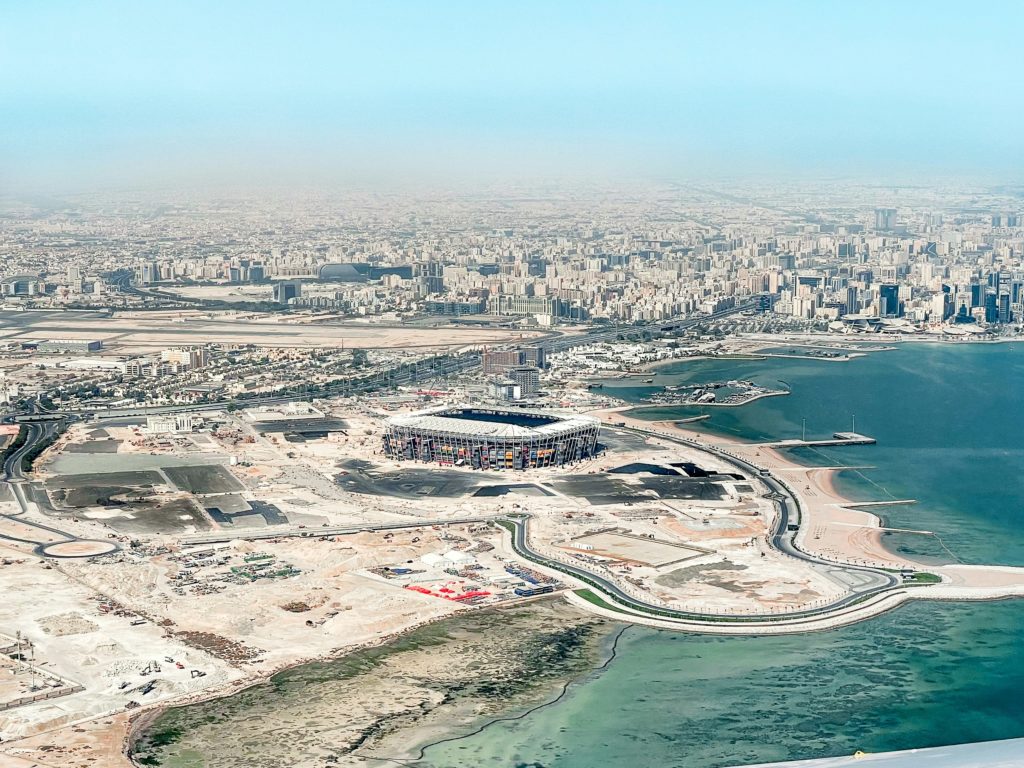
Qatar was named the location of the 2022 World Cup in December of 2010, becoming the first country in the Middle East to be named a host. Qatar spared no cost, spending upwards of $220 billion on revitalising the city, building several stadiums, a new metro system, and renovating multiple hotels and the Airport. Due to the extreme lengths Qatar went to in preparation for the World Cup, the kafala system was more prevalent than ever, with 90% of the Qatari workforce comprising of migrant labourers.
Immediately, human rights organisations began to shed light on the mistreatment that migrant workers were receiving to have the country ready to host in time. International objection could be seen from celebrities like Joe Lycett and Dua Lipa, who spoke out about their discouragement and lack of involvement towards the World Cup. Regardless of the global opinion, FIFA continued to wash their hands of the role it played in the exploitation of the workers. Theo Zwanziger, an executive of FIFA, said “What do you expect of a football organisation? FIFA is not the lawmaker in Qatar”. FIFA brought in a revenue of 7.5 billion USD and Qatar grossed 1.56 billion USD. This made the 2022 World Cup- as said by Minky Worden, “the highest grossing World Cup for FIFA and the deadliest event in the history of world sport.” By 2018, over 1200 deaths had been associated with the construction of the stadiums, although this number is likely far higher.
The Cost of the World Cup: Worker Exploitation
Workers were required to use private agencies to connect with sponsors in Qatar, with fees reaching as high as US$4,300. This forced many hopeful migrants to take out loans, with the belief that they would quickly repay the debt once they started their jobs. After leaving their families behind, workers were often placed in overcrowded accommodations, in which they would share a room with up to eight other individuals. Although regulations set welfare standards that limit occupancy to four individuals per room, these rules were rarely enforced.
The most prevalent form of exploitation within the Kafala system stems from the deceitfulness surrounding workers’ pay. Potential labour migrants often invest in the kafala system with the promise to make significantly more than what they would make in their origin country. However, once workers arrive at their host country, they often receive less than half of what they were initially promised and may not receive their pay for several months. This leaves workers in a far worse scenario in which they cannot send any money to their families back home or pay back the initial loan taken out to pay the agency.
Many labour migrants were unable to leave the stadium they were constructing as their employers refused to complete their resident ID; a form that only the sponsor can complete. If caught, these workers would have been fined or imprisoned, thus isolating them from a life outside the stadium. Moreover, workers must have an “exit permit” in order to go home or to another job site, which must also be approved by their sponsor. In many cases, workers were threatened to not be granted permission to go home and may not see their family until their contract is up. The kafeel will often take their passports on arrival to prevent them from fleeing, further immobilising them.
Finally, the criminalisation of “absconding” legally reinforces forced labour as workers are threatened with jail time, deportation, or heavy fines if they try to flee their sponsor before their contract is over.
The Human Toll of Construction – Surendra’s Story
Surendra Tamang was one of the many men who believed the World Cup being in Qatar was a dream come true. In 2015, Surendra took out a loan to pay an agency and signed a contract for six years at a construction site of one of the stadiums. He aimed to send money back home and have enough saved to buy himself a ticket to one of the matches in the stadium he built. However, Surendra never made it to the match and was instead sent home with gastritis in October of 2021. When he arrived home, the hospital deemed both of his kidneys to be failing due to the long hours in extreme heat. Likely to be on dialysis for the remainder of his life, Surendra was one of the many individuals whose lives were catastrophically ruined in the lead up to the World Cup. Surendra endured years of headaches, nose bleeds, fainting spells, vomiting and cramping as he worked every day in temperatures as high as 44.4°C. Despite the Qatari government requiring that the workers were on break around midday, it is cases like these that make you question whether the employers truly followed through with it or not and whether it did any good considering the humidity reached 70%, even in the early hours of the day.
An intersectional lens help us better understand which groups are most vulnerable within the Kafala system, and the ways in which they are subject to exploitation. In the context of constructing for the world cup, male workers were predominately targeted; leaving female workers to occupy domestic roles where they faced the highest levels of sexual abuse. Reports indicate a staggering 600% increase in potential sex trafficking victims arriving from Africa to the Gulf states. Furthermore, there is a large racial bias rooted within the system in which the hierarchy sees workers coming from African and Asian countries as those disproportionality assigned to ‘4-D jobs’ (dirty, demanding, dangerous and difficult). This racialized hierarchy fosters a sense of “otherness, generating a certain level of detachment between the kafeel and makfūl, ultimately reinforcing the workers expendability and exacerbating their exploitation.
Illusionary Reforms
In light of the criticism Qatar had faced in the lead up to the World Cup, the Government implemented several reforms in order to protect the labour migrants and tackle the corruption surrounding the Kafala system. However, these amendments feature many flaws, and as the media exposure surrounding the World Cup dims, workers are left to face the exploitation of the kafala system alone.
The kafala system, overseen by internal ministries rather than labour ministries, removed any workers’ rights to unionise or present litigations about their working environments. Thenceforth, workers were essentially in the possession of the sponsor rather than the Government, leaving them largely unprotected and in a grey area in regard to legislation between the origin and host state.
In 2018, as an attempt to give back marginal power to the workers, Qatar was the first country to abolish the aforementioned “exit permit”. Although this seems promising, many employers still confiscate passports upon the workers’ arrival. With little reinforcement on the government’s behalf, many migrants were continuously threatened with the punishment of absconding, undermining the reform. Furthermore, the workers were required to give their employer 72 hours of notice to leave Qatar, a process unlikely to reassure those who are being sexually or physically abused and fear backlash.
In 2020, a minimum wage was introduced in Qatar for all workers, regardless of their nationality. The minimum wage was increased from 750 QAR (US$250) to 1,000 QAR (US$274). In addition, if employers were not providing accommodation or meals, the minimum wage must be 1800 QAR (US$494). Most workers sign up for the kafala system hoping to send remittances home and provide for their family from abroad. Migrant-Rights.org finds this amount too low to achieve this goal, including stating that workers cannot live a good quality standard of life, or make any savings for future retirement. It is not sustainable. Workers continued to get delayed payments and once again, due to a lack of reinforcement from the Qatari government, the minimum wage was not followed.
Lastly, in 2022 Qatar allowed workers to change jobs at any point throughout their contract. The government moved the onus of the repayments from the workers onto the two employers. If a worker wishes to change jobs during the probationary period (which is legally not allowed to exceed six months), their new employer must reimburse the old employer the wage of the employee for the remaining probational months. However, this reform created new barriers, as employers often refuse to hire workers with pending fees, forcing workers to either remain with their original employer or go home. If in the case an employer did accept the worker, they may refuse salary until their “debt” is paid off, continuing the financial exploitation present between the kafeel and makfūl.
Qatar has employed the kafala system since the 1950’s, but the 2022 World Cup severely exacerbated the exploitative nature to unprecedented levels. The desire for a spectacle allowed safety and labour procedures to be overlooked, and with tight deadlines taking priority over basic human rights. FIFA’s indifference and the fleeting attention of the global community allowed these abuses to persist. Now as the excitement of the World Cup fades, will the world honour the workers whose sacrifices made it a reality, or will their struggles be forgotten? The responsibility sadly rests on us to ensure their voices are heard and to demand meaningful accountability.
This blog has been submitted as part of course work for the module Mobilities and Global Inequalities.
Does an academic, theoretically framed, multidisciplinary research project have anything to contribute to migration policy and practice in the context of discrimination and violence based on sexual orientation, gender identity and expression, and sex characteristics (SOGIESC)? LGBT+ History Month is a good time to ask this question, and we do so in this blog, based on a current University of Sussex research project.
Negotiating Queer Identities Following Forced Migration (NQIfFM) is a comparative research project about queer Iranians living in exile in Turkey, the UK and Canada. Led by a multidisciplinary team at the University of Sussex, the project is currently drawing to a conclusion. Alongside our academic articles and the project monograph and other outputs, we are looking for opportunities to use the research findings to positively influence policy, practice and public discourse. The call for evidence on protection against violence and discrimination based on sexual orientation and gender identity in relation to forced displacement made by the UN Independent Expert on Sexual Orientation and Gender Identity in 2024 was one such opportunity and the research team made a submission in January 2025 in which we identified some of the drivers of forced displacement, experiences of violence and discrimination, and flaws in refugee status determination and support for queer Iranians that our research has uncovered.
The project explores identity within a reflexive postcolonial framework using innovative methodology, including poetry workshops to provide insights into how queer Iranians’ experiences of seeking international protection, migration, and resettlement are shaped by intersecting factors such as gender, sexuality, religion, class, age, ‘race’, ethnicity, and nationality, as well as the assumptions, perceptions, and priorities of the international organisations, agencies, and authorities with which they have to interact. Not all of this work mapped directly or easily onto policy agendas. However, in the extensive fieldwork at the heart of the research – 57 interviews with queer Iranian individuals and supporters on their experiences with asylum and migration – we heard of the difficulties experienced in Turkey as a transit country, and in Canada and the UK as resettlement or final destination countries. Participants also identified some of the changes necessary to improve the social, psychological, and legal experiences of SOGIESC asylum applicants and migrants. In the snapshot provided here, using pseudonyms and descriptors chosen by our participants, we highlight two themes from the project: the drivers of forced displacement, and the experiences of discrimination and violence, particularly in Turkey.
Drivers of forced displacement
The starting point for our research, and a catalyst in the lives of our participants in many cases, was the homophobic and transphobic legal norms and societal practices in Iran. The Islamic Republic of Iran (IRI) criminalises ‘sodomy’ as a capital offence and suppresses non-conforming sexual and gender practices. Beyond state repression, queer Iranians also grapple with family rejection, social stigmatisation, and everyday violence. The lack of legal protection in Iran from SOGIESC and gender related discrimination exposes queer people to abuse at the hands of state officials and community members, as we heard. Khalil, a gay man now living in Turkey, shared that his father reacted violently to his coming out:
You want to ruin my honour. I will find you wherever you are and kill you.
Rima, a questioning (trans/gay) Iranian now living in Turkey, spent much of their life hiding their identity by ‘putting [on] makeup and feminine looks’. They explained:
… I didn’t want my LGBT identity to become an obstacle for my progress. So, I kind of killed it in myself. This is what happens in Iran.
Saman, a gay man now in Canada, explained how, as a queer individual in Iran, one is a criminal without legal recourse.
When you have been subjected to injustice, you cannot defend yourself. You have no rights.
Queer people in Iran experience discrimination on a daily basis. This affects trans and gender non-conforming people as well:
Arshia, a gay man now in Turkey, was detained by the moral police for inappropriate attire.
Alireza, a nonbinary homosexual now in Turkey, was stopped by the police on multiple occasions and interrogated about their clothes, hair and nails.
Transgender individuals, in particular, experience persistent discrimination. Arghavan, a trans woman now living in Canada, observed that even following state-subsidised gender reassignment surgery, many transgender individuals continued to be called out.
If you were not passable as a female and you were easily recognised as a transgender person, you would never have a safe life and you would always be in danger. And I was witnessing that, in the life of almost every trans woman that I visited. And even the trans men.
A number of our participants told us they had experienced rape or sexual assault, often as their first sexual experience. Themes of shame, humiliation and powerlessness were common among our participants. Shahab, a gay man / questioning Iranian now in Canada, was raped by the moral police in their van when they were detained. They found it difficult to talk about their experiences for two reasons: personal shame and concern about the impact it would have if their family found out. Shahab imagined their sisters crying together if they found out about it.
For a number of people, sexual abuse happened during their military conscription. In Iran, males over the age of 18 (with some exceptions) must carry out up to two years’ military service. This was a time of abuse for some. Amir, a gay man now in Turkey, was raped twice during conscription but could not report it because he risked the death penalty as receiving male in the act of sodomy.
Prevailing medical and psychological practice in Iran fails to understand or meet the needs of SOGIESC minorities. Instead, state-subsidised gender reassignment, medical and psychiatric services act to impose binary gender roles, with care for the needs of the individual rarely a priority. Amira, a trans woman / nonbinary Iranian now in Canada, was threatened with electric shock therapy. Farhan, a nonbinary homosexual currently in Turkey, had behavioural therapy and was dosed with ‘anti-depressive, anti-psychosis meds, SSRIs, … strong medications.’
These conditions force many from Iran’s sizable queer community to seek refuge in what they hoped would be safer countries.
Discrimination and violence in Turkey
Rather than finding safety however, many of our participants encountered discrimination and violence in their new locations, facing anti-refugee stigma and xenophobia as well as homophobia and transphobia. In Turkey, several of our participants suffered physical and verbal sexual harassment, abuse and rape, including in large, reputedly more progressive cities like Istanbul. Taha, a trans woman, complained that:
[P]eople on the street spit at us when they see us! In Turkey, I can’t dress and live the way I want. (…) I am forced to act this way in order to avoid physical violence, conflicts, or negative consequences from the people in this society.
Queer Iranian asylum applicants often experience intensified discrimination and isolation in Turkey, as there is no housing support and applicants typically end up in inadequate housing and subjected to hate crimes and sexual violence. Applicants are also often forced to live in rural areas, far from other queer individuals and the support of SOGIESC organizations based in cities. Taha, a trans woman, told us that:
When we try to rent a house, when they realize that we are transgender or LGBTQ+, they refuse to provide us with housing. They look at us with great disdain. They say, “You are selling your body! You do such and such things!” It is truly painful when they accuse us of selling our bodies, while they only see us through a sexual lens. (…) This has happened numerous times
Hannah, a trans woman, told us about being charged exploitative rents and being sexually harassed by landlords.
Amir, a gay man, experienced homelessness and physical assaults when sleeping on park benches.
Refugees do not have formal access to the labour market in Turkey, which severely curtails their livelihoods in Turkey. Working in the informal economy – often in combination with violating the limitations on free movement in order to work in a neighbouring town – may lead to deportation from the country, but refugees still do it for the sake of making a living. This puts all refugees, including queer Iranian refugees, in very precarious situations. Farhan, a nonbinary homosexual, explained this:
I have worked informally, also not being paid, and I have seen such behaviours, merely because they are Turks and I am not, and they know I cannot do anything about it. The guy comes every day to touch my crotch […]. And if you went to do something [complain] about them, they would respond in a way and would turn your life into such hell that you would wish you hadn’t done anything about it and that you should have even let them do whatever they wanted with you.
Taha, a trans woman, told us that
[I]n many places where I had a job and a position, when they found out that I am LGBTQ+, they fired and humiliated me, and, in some cases, I even faced physical violence.
Access to adequate medical and psychological care in Turkey for queer asylum applicants and migrants is often hindered by their invisibility within the system, social isolation, and discrimination. This increases the likelihood of mental health problems, which can negatively impact their asylum and resettlement claims. Ali, a gay man, had been waiting for 6.5 years for resettlement while suffering from a debilitating joint-and-bone disease and serious dental problems.
Several of our participants suffered from serious health issues, such as insomnia, depression, post-traumatic stress disorder (PTSD), bipolar disorder. Some of our participants were HIV-positive – like Amir and Taha – needing regular medication, only affordable through health insurance, which refugees are unlikely to have.
This is only a snapshot from our submission to the UN Independent Expert. While his thematic report is not expected imminently, we are hopeful that it will recognize and address some of the factors we have identified, leading to improvements that will be of benefit to all queer Iranians in exile and all SOGIESC refugees as well.
Acknowledgment: The support of the Economic and Social Research Council (ESRC) is gratefully acknowledged (Grant Ref: ES/V017497/1).
Cecilia Manzotti, Doctoral Researcher, School of Law & SCMR, University of Sussex (UK)
In 2022, the European Union Asylum Agency (EUAA) reported that seven European Union (EU) member states (Austria, Germany, the Netherlands, Romania, Denmark, Sweden and Finland) and Switzerland, have used Language Analysis for the Determination of Origin (LADO) as a tool for establishing asylum seekers’ country of origin for several years, and six other member states (Croatia, Greece, Malta, Polonia, Portugal and Slovakia) are considering introducing LADO in the near future. Based on the assumption that the way a person speaks reflects their origin – a notion which is often conflated with nationality – LADO consists in the analysis of speech samples to ascertain whether the speaker really originates from the country they claim to be from. More rarely, LADO is used to verify whether asylum applicants genuinely originate from a specific region within a country or belong to a certain ethnic group. LADO and its use in asylum procedures have fuelled lively debates, especially among linguistics. While LADO is generally conducted by humans, since 2017 Germany – until now the only country in Europe – has implemented an Artificial Intelligence (AI)[i] tool to detect the languages or dialects spoken by asylum applicants.
Inspired by the German experience, the EUAA has recently launched a project to establish a «common European platform to identify the country of origin of applicants through language assessment», including a first-line AI language detection tool and a second-line pool of language analysts. The project was announced in the 2023 EUAA’s Strategy on Digital Innovation in Asylum Procedures and Reception Systems, which to date is the only publicly available official document providing information on the initiative. Under the project, whose implementation timeline spans over a period of 10 years, the EUAA will initially foster coordination between stakeholders and develop common standards and procedures. At a later stage, once the EUAA’s mandate is adjusted as needed, the agency will establish an AI language detection tool, create a pool of analysts, and build the capacity of a team in charge of the system. In the EUAA’s view, the effort will reduce costs related to LADO, level differences among national administrations in terms of digitalisation, «facilitate more efficient and smarter identification» of asylum seekers, «ultimately leading to better and faster decisions» (EUAA’s Strategy on Digital Innovation, pp. 28-30).
Designed by FreePick
Although the EUAA’s project may have a significant impact on the substance of asylum decisions and procedural guarantees for asylum applicants, so far it has gone virtually unnoticed both among experts and in the media. Therefore, this contribution draws attention on the EUAA’s project and investigates its potential impact on the credibility assessment of asylum seekers’ claims regarding their country of origin under the Pact on Migration and Asylum (the Pact). Since there are several reasons to believe that a European AI language detection tool will be largely based on the software used by Germany – which Germany has actively promoted across Europe and the EUAA described as «providing fast and reliable assessment» of asylum applicants’ origin (EUAA’s Strategy on Digital Innovation, p. 28) – this blog post will start by critically examining the German automatic language detection system. Based on the German experience, the blog post will then attempt to foresee how the EUAA’s project will be operationalised in the context of the new or amended procedures introduced by the Pact. This contribution questions the assumptions on which automatic language analysis is based as well as its implications on the overall credibility assessment of asylum seekers’ nationality claims and, ultimately, on the applicants’ right to seek asylum.
The German automatic language and dialect detection system
Following the 2015-2016 influx of asylum seekers and under the pressure of the scandal of Franco A., a German far-right extremist who was granted subsidiary protection pretending to be Syrian, in 2017 the German Federal Office for Migration and Refugees (Bundesamt für Migration und Flüchtlinge, BAMF) introduced three AI-based identification systems. These include an automatic language and dialect recognition system (DIAS, Dialektidentifizierungsassistent), a software for the transliteration of Arabic names that also indicates how often a name’s spelling is used in the applicant’s claimed country of origin and in other countries, and a software that analyses data stored in asylum seekers’ electronic data carriers for the purpose of establishing their identity and/or nationality. Since 2018, the three identification systems have been used as a standard procedure during the registration of asylum applicants in all BAMF branch offices and reception centres, if the person cannot provide a valid passport or passport substitute[ii] or if the document’s authenticity cannot be immediately confirmed.
Concerning DIAS, in particular, following the registration of personal data, the BAMF’s officer dials an internal phone number and the applicant is asked to describe a picture or discuss freely a topic in their native language on the phone for around two minutes. Their speech is recorded and analysed by DIAS, which automatically produces a report indicating the language(s) or dialect(s) spoken by the applicant and with which probability. The report is then used by the BAMF officer to prepare specific questions about the applicant’s origin for the asylum interview. If the report’s conclusions contradict the applicant’s claim regarding their country of origin, the applicant must be informed and given the opportunity to respond. As of November 2023, DIAS is used for the five major Arabic dialects (Egyptian, Gulf, Iraqi, Levantine and Maghrebi), Dari and Farsi. A Pashto language model was introduced in 2022, although it is unclear whether it is still in use, and a language model for Kurdish has been in the pipeline for a couple of years.
The BAMF justifies the use of DIAS based on Section 15 of the German Asylum Act that sets out the applicant’s general obligations to cooperate, and Section 16(1), which specifically provides that oral statements can be used to determine a person’s country or region of origin provided that the person was informed beforehand. The Federal Government pointed out that «[t]he results of the dialect recognition can neither confirm nor refute the information on origin» but only «provide an indication of the applicant’s origin, which is taken into account in the context of the interview, which also serves to clarify identity and nationality».[iii] In very exceptional cases, if doubts concerning the applicant’s country of origin persist after the asylum interview, a «Speech and Text Analysis», carried out by external linguists based on a new and longer speech sample, may be recommended.[iv]
According to the Federal Government, the use of DIAS has several benefits, including the verification of asylum seekers’ origin early on in the procedure, the fact that additional data are made available to decision-makers to support asylum decisions, an overall acceleration of the procedure, a reduction of fraud and increased security. On the other hand, linguists, civil society actors and members of the Parliament have expressed serious concerns regarding DIAS’ accuracy and reliability. Indeed, the Federal Government reported a language recognition rate of 80% for Arabic dialects in 2017, which increased to 87% in 2023, and 75% for the other languages in 2022. This means that the software provides a wrong result for around 20% of the applicants who undergo the procedure. Other criticisms concern the BAMF’s lack of transparency regarding the software’s algorithms and the language samples distribution, the risk of self-perpetrating bias, and the government’s failed promise to commission an independent evaluation of the system. Leaving in the background these issues, which have already been explored in some of the literature on the use of AI in asylum procedures, the use of a language detection software to ascertain asylum seekers’ country of origin poses fundamental questions regarding the evidence and standard of proof for assessing the credibility of asylum applicants’ nationality claims.
First, the BAMF’s guidance problematically describes DIAS as a tool to establish an applicant’s nationality or country of origin, which is defined in EU refugee law as a person’s country of nationality or, in the case of stateless persons, country of former habitual residence (recast Qualification Directive, article 2(n); Qualification Regulation, article 3(13)). Although the guidance available in other countries using LADO or developed by the EUAA (p. 36) specifies that «[l]anguage analysis does not reveal the country of nationality of the applicant as such, but the place (or one of the places) where the applicant has socialised by residing there for a longer time and interacting with the community», in asylum decisions LADO conclusions are generally used – either openly or implicitly – to determine a person’s nationality. Indeed, what is relevant when it comes to the assessment of asylum seekers’ risk of persecution or serious harm under refugee law is the concept of country of nationality, and not the notion of country of socialisation. But what does constitute evidence of a person’s nationality in the absence of any identity or travel document? While asylum authorities generally resort to LADO and questions to test the applicant’s knowledge of their alleged country of origin, neither language nor knowledge of a country’s geography and traditions constitute evidence of nationality. Nationality is a legal status, which may or may not correspond to a person’s main country of socialization. Accordingly, more pertinent questions would concern, for example, identity and travel documents issued by the applicant’s alleged state of nationality, the applicant’s attempts to obtain these documents, the applicant’s place of birth and their parents’ nationality, and the applicant’s access to the rights and entitlements reserved to nationals of the state in question.
Second, and related to the previous point, the fact that DIAS is used when a person’s asylum application is registered, that is before the asylum interview, means that language indication is given priority over the applicant’s testimony as evidence of nationality. Indeed, the results produced by DIAS orient the asylum interview, and not the other way around, and it is hard to believe that they do not create a prejudice in the interviewer. The use of DIAS before giving the applicant the opportunity to explain in detail their personal situation and reasons for seeking asylum, even in the absence of any negative credibility indicators, appears even more questionable considering the software’s poor reliability. Additionally, although the BAMF has repeatedly specified that DIAS only provides an indication of the applicant’s nationality, it remains unclear what evidentiary weight language indication should be given in the overall credibility assessment of the applicant’s nationality claim. In the absence of any clear guidance, the question risks being left to the discretion of individual decision-makers.
Third, a closer look at the conditions that trigger the use of DIAS shows that asylum applicants are expected to substantiate their nationality to a standard of proof higher than the balance of probabilities generally required in refugee status determination. Indeed, the BAMF’s instructions provide that DIAS must be used if the applicant’s identity and nationality cannot be proved, determined with certainty or established beyond doubts. On the other hand, the BAMF seems to adopt a much more generous standard of proof when it comes to its own determination of asylum seekers’ nationality through language indication, considering DIAS’ low accuracy level. The fact that DIAS is used whenever an applicant does not produce any valid passport or passport substitute or the BAMF doubts the documents’ authenticity also constitutes a weakening of the principle – included in German law (Residence Act, Section 5(3)) and well-established in EU refugee law (Qualification Directive, article 4(5); Qualification Regulation, article 4(5); ECtHR, F.N. and others v. Sweden, paragraph 72) – that asylum seekers do not need to produce a passport to substantiate their identity and nationality.
In sum, the German automatic language recognition system relies on problematic assumptions regarding the relationship between language and nationality. Furthermore, its systematic use before the asylum interview whenever an applicant fails to provide a valid identity or travel document or the BAMF doubts the authenticity of the applicant’s document reflects the adoption of an unduly high standard of proof for the applicant. Moreover, it results in automatic language detection being given priority over the applicant’s testimony in the credibility assessment of nationality claims, despite DIAS’ inaccuracy and controversial nature.
Where does the EUAA’s project fit within the Pact?
As I argued elsewhere, under the Pact, the determination of asylum seekers’ country of origin is not only critical to the assessment of their fear of persecution or serious harm but may also substantially affect the level of procedural guarantees to which applicants are entitled. Indeed, following a pre-entry screening, applicants who originate from countries with a low recognition rate and those who do not cooperate in the identification procedures, notably concealing their nationality, will be channelled into the asylum border procedure. The latter implies fewer procedural safeguards compared to the regular examination procedure and practical restrictions that may substantially affect the applicants’ ability to assert their claim. Under the new rules, the nationality of applicants for international protection is determined and recorded for the first time during the pre-entry screening, which includes preliminary health and vulnerability checks, identification, registration of biometric data and security checks (Screening Regulation, article 8(5)). The screening authorities must include an «indication of nationalities or statelessness» (article 17(1) (b)) in the screening form, specifying if the information recorded has been «declared by the person» or «confirmed by the authorities» (article17(3)).
Considering that the purpose of the pre-entry screening is to ensure that asylum applicants «are referred to the appropriate procedures at the earliest stage possible and that those procedures are continued without interruption or delay» (recital 7), it is reasonable to foresee that the automatic language detection tool that the EUAA is going to develop will be made available to the screening authorities. Although the Screening Regulation does not mention language indication or analysis anywhere, Article 14 includes «data or information provided by or obtained from the applicant» among the types of evidence that should be used to establish or verify asylum seekers’ nationality, together with identity, travel or other documents and biometric data. The phrasing «data or information provided by or obtained from the applicant» is sufficiently broad to include the recording and analysis of a speech sample through a language recognition software. On the contrary, the EUAA’s pool of language analysts is likely to come into play during the asylum procedure, since the pre-entry screening must be finalised within seven days at the border and three days within the territory of member states (article 8). As in the case of Germany, it is foreseeable that asylum authorities will be able to request an in-depth language analysis if doubts regarding the applicant’s country of origin persist.
Since the goal of the pre-entry screening is to identify applications that are likely to be inadmissible or unfounded and channel them into the accelerated and border procedures as soon as possible, the results produced by the language detection software can be anticipated to be decisive in establishing applicants’ country of origin in the absence of any valid identity or travel document. Importantly, the Screening Regulation does not foresee any possibility for the applicant to challenge the authorities’ recording of their personal data during the screening. Although Article 17 provides that the applicant shall have the possibility to indicate that the information included in the screening form is incorrect and the authorities must record this, under the Regulation the applicant’s view does not have any impact on the screening process and, given the short time of the procedure, is unlikely to lead to a more in-depth assessment at this stage. This means that the decision to examine an asylum application through a sub-standard procedure, severely limiting the applicant’s rights, would largely be based on the results produced by an AI language recognition software that is grounded on wrong assumptions regarding the relationship between language and nationality and has proved to be inaccurate. The results of the automatic language recognition may also potentially affect the assessment of the asylum application, since evidence shows that amending a nationality record during the asylum procedure can prove extremely complex. This would be even more complicated for asylum seekers who have been identified as originating from countries with a low recognition rate or safe countries of origin and whose application has been rejected as unfounded or manifestly unfounded, because their appeal against the first instance decision would not have automatic suspensive effect (Asylum Procedure Regulation, article 68(3)).
Ultimately, the use of an AI language recognition tool to establish asylum seekers’ country of origin during the pre-entry screening would not be without consequences on the credibility assessment of asylum seekers’ nationality claims, as the case of Germany has shown. Moreover, combined with the systematic channelling of applicants from certain countries of origin into the border procedure, the use of automatic language indication would compromise the applicants’ right to seek asylum. With their asylum applications being examined at the border and under limited procedural guarantees, applicants identified as originating from certain countries would face significant obstacles asserting their claim and challenging the first instance authorities’ decision.
Further readings
EMN-OECD, The Use of Digitalisation and Artificial Intelligence in Migration Management, February 2022.
D. Eades, Nationality Claims. Language Analysis and Asylum Cases in M. Coulthard and A. Johnson (eds), The Routledge Handbook of Forensic Linguistics, 2010.
H. Hahn, Digital Identification Systems and the Right to Privacy in the Asylum Context: An Analysis of Implementations in Germany, 2021.
K. Wilson and P. Foulkes, Borders, Variation, and Identity: Language Analysis for the Determination of Origin (LADO) in D. Watt and C. Llamas (eds), Language, borders and identity, Edinburgh University Press, 2014.
This blog was originally posted on the ADiM Blog, Analyses & Opinions, November 2024, and has been re-posted with permission of the author and ADiM.
[i] For the purpose of this blog post, I adopt the definition of ‘AI system’ contained in Article 3(1) of the EU AI Act. Under certain circumstances, the use of AI for identifying asylum seekers who are unable to prove their identity is permitted under the AI Act (recital 33).
[ii] The BAMF’s Instructions on Identity Verification in Asylum Procedures (Dienstanweisung Asylverfahren, Identitätsfestellung, 2023) define a ‘passport substitute’ as «a document that, alone or with a visa or residence permit, authorizes cross-border travel and fulfils some, but not all, of the functions of a passport. In particular, the identity card (ID card) is relevant in this context». (Translation from German into English revised by the Editorial Team).
[iii] Translation from German into English revised by the Editorial Team.







The current Colombian administration’s response towards Venezuelan migration: A clash between a liberal rhetoric, foreign policy and domestic politics
Manuel Alejandro Núñez Ochoa. Migration Studies MA alumnus (University of Sussex) and former Associate Resettlement and Complementary Pathways Officer.
The Colombian response to Venezuelan forced migration has undergone significant changes since the administration of Gustavo Petro took office in 2022. As the first left-wing president of Colombia, his views on immigration resemble the early 2000s discourses of leftist governments in the region, questioning the restrictive immigration policies of migrant recipient countries, especially those of the United States since the first Donald Trump administration. Petro does so by presenting his approach as bringing a human, ethical and moral response towards migration.
Petro’s liberal migration discourse, based on the promotion of migrants’ rights, the non-criminalisation of migrants, anti-racism, and freedom of movement, supports his domestic electoral goals by connecting with his supporters. At the same time, it enables Petro to position himself as a credible left-wing leader in the region. However, there is a gap between his liberal rhetoric and the weak and restrictive response of his administration towards the Venezuelan forced migration in Colombia.
The liberal discourse on migration of Gustavo Petro
As Freire and Castillo have noted, a president’s agenda largely determines the migration policy in most South American countries. Since taking office, Gustavo Petro has been very vocal regarding the protection of Colombian migrants in Europe and the US; he has promoted a welcoming response to Palestinians since the war in Gaza intensified; and he has been critical of the US administration’s repressive measures against migrants.
For instance, in a talk at the IV Foro Abierto de Ciencias de América Latina y el Caribe (CILAC) in December 2024, President Petro condemned King Charles III and the UK labour government for imposing visa restrictions on Colombians following a rise in asylum requests from Colombians, accusing them of reverting to a mindset reminiscent of enslavers and considering Colombians as “inferior”. Responding to the imposition of visa restrictions to Colombian citizens arriving to the UK, Petro threatened to implement visas for British citizens arriving in Colombia. In the same context, Petro also advocated for free global mobility, trying to engage with his constituents.
Furthermore, the Colombian government has stated that it will host Palestinian refugee children injured in the conflict in Gaza to receive medical care in Colombia. This mirrors the initiatives taken by Venezuela, Brazil, Argentina and Uruguay in 2015 to accept Syrian refugees. Since January 2025, after the US president Donald Trump ordered the deportations of undocumented migrants in the US, the Colombian president has demanded that migrants have to be treated with dignity and respect. He has advocated for the human rights of Latin American migrants and for the non-criminalisation of migrants in the US. In addition, the Colombian president has called for Central American and South American countries to demand the respect of human rights and the non-criminalisation of deported migrants from the US. Furthermore, he criticised the detention of migrants by the US administration in El Salvador, arguing migrants are not criminals, nor slaves, and that Latin America must respect their dignity. Moreover, in an X post published in February 2025, the Colombian president praised how the 190 undocumented Venezuelans who were deported from the US were not handcuffed on the flight and treated with dignity.
Gustavo Petro has also criticised the criminalisation of Venezuelan migrants by the US government. The Colombian president expressed criticism towards the United States government for its allegations regarding Venezuelans being affiliated with a criminal gang. Conversely, Petro condemned the Salvadorian president Nayib Bukele accusing him of criminalising Venezuelan children and demanding the release of Colombians detained in El Salvador.
The current Colombian administration’s response towards the Venezuelan migration
President Petro’s use of liberal rhetoric on migration aims, first, to achieve popular support for his political reforms. Second, it seeks to position his government internationally. The relationship with the United States significantly shapes migration policy outcomes that align with the presidential ideology. Consequently, Petro’s administration can leverage its foreign policy strategy, particularly in its stance against the new U.S. president, Donald Trump, by employing liberal rhetoric toward migration.
However, his domestic political agenda is driven by the promotion of a peace deal with the Colombian Ejercito de Liberacion Nacional (ELN) guerrilla, which requires the support from the Venezuelan government. At the same time, his foreign policy rejects the USA’ economic sanctions against Venezuela. Unlike his predecessors, Petro’s administration has taken a restrictive approach towards Venezuelan forced migration. This aims to facilitate achieving peace with the ELN guerrilla and to establish himself as a left-wing leader in the region. As a result, his response to Venezuelan migration is relatively timid, sometimes even aligning with Nicolás Maduro’s administration in Venezuela by downplaying the reality of forced migration from Venezuela.
Since coming to office, Gustavo Petro has not extended the complementary protection for Venezuelans, known as the Temporary Protection Permit (PPT). Instead, he has implemented an ad hoc measure by creating a special two years, non-renewable visa (Visa V) to regularise Venezuelan migrants who entered the country undocumented before December 4th, 2024. There are multiple obstacles to obtain a Visa V, however. The first relates to cost, as the visa application incurs a fee of around £26,45. Given that the average monthly income of a Venezuelan migrant in Colombia is approximately £65.60, migrants are effectively requested to allocate nearly 40% of their monthly income to cover the visa application fee. In border regions, where migrants encounter higher unemployment rates and greater job informality compared to larger cities like Bogotá, affording the visa fee becomes nearly impossible. Secondly, many visa applications have been rejected due to additional documents required by the Ministry for Foreign Affairs of Colombia during the applications – e.g. education documents apostille and a passport, the cost of which is prohibitive for many applicants (a Venezuelan passport application costs on average £126, plus a £90 fee charged at the consulate). At the same time, the Ministry for Foreign Affairs of Colombia requests documents that are declined for issuance by the Colombian Migratory authority, the Special Administrative Unit of Colombian Migration. Finally, the Ministry for Foreign Affairs of Colombia has the discretionary power to deny the visa application if it considers the applicant to be a potential threat to the country.
For those Venezuelans who entered Colombia after December 4th, 2024, there are no regularisation options and Venezuelan nationals travelling to Colombia by air must comply with strict entry requirements established by the Colombian Migratory Authority. Moreover, the other complementary protection measure issued by the Colombian government for Venezuelan migrants who are parents or legal guardians of Venezuelan children, of children who have obtained a Temporary Protection Permit before December 31, 2023, lacks the regulation of the law to be implemented. Furthermore, the Petro government has not managed to address the significant backlog of asylum requests and has still a low rate of refugee recognition. According to the Ministry for Foreign Affairs of Colombia, between 2017 and 2023, Colombia received more than 55,000 asylum applications, but only 1,475 requests were approved. Of the total requests approved, 1,357 applications were from Venezuelans.
In contrast to the welcoming discourse promoted by the Gustavo Petro administration towards Palestinians, the current Colombian administration has refused to receive Venezuelan migrants and asylum seekers who can be deported from the US. Moreover, the president claimed that he would run a program promoting the voluntary return of Venezuelans, which is in opposition to recommendations by the UNHCR and human rights organisations that highlight the risks of returning Venezuelans to their country of origins. Additionally, the Colombian Migratory Authority has arbitrarily denied more than 400 Temporary Protection Permits (Permiso por Proteccion Temporal, PPT) to Venezuelan residents without providing an opportunity for appeal. After the denial, Venezuelans are at risk of being deported and are not allowed to remain in the country for more than 30 days. In some cases, the Colombian Migratory Authority argues that having an administrative fine, e.g. a traffic fine, is a legitimate reason for denying a PPT.
To further curb Venezuelan immigration in Colombia, the Petro administration has increased migration control operations – that Venezuelan refugee-led organisations have described as “raids” – from 37,000 in 2021 to 218,000 in 2022, driven by public stigmatisation of Venezuelan migrants as criminals. These operations in Bogotá were conducted by the Colombian Migratory Authority, the National Police, and the Mayor’s Office, targeting Venezuelan migrants to verify their documents and criminal records and to enforce criminal law. However, according to testimonies from refugee-led organisations and from a Bogota Mayor’s office official, these operations did not follow due process. Many migrants who were detained and subjected to these checks were unable to access their human rights protections. Although these operations were overseen by the Ombudsman’s Office of Colombia and civic rights organisations to protect migrants’ rights, those organisations were not present in the actual operations. Furthermore, underage Venezuelan migrants were also detained during these operations. The Colombian Institute of Family Welfare (ICBF), the country’s child protection institution, was not informed or involved in the migration controls, despite legal requirements for their participation.
Conclusions
The president of Colombia Gustavo Petro has instrumentalised the political discourse of non-criminalisation of migrants to promote his domestic and foreign policy goals. He is aligning himself with his electorate using an anti-American, pro-migration and pro-Colombian rhetoric. At the same time, his pro-migration rhetoric enables him to develop his foreign policy agenda, opposing the US and establishing a left-leaning regional agenda in line with his political objectives. However, the Petro administration has increasingly adopted restrictive and in some case repressive measures towards Venezuelan migrants in the country, allowing the president to gain support and popularity domestically and pursuing his domestic policy agenda. Therefore, a gap between the political rhetoric and the practical responses towards Venezuelans has emerged as the goals and ideology of the Colombian president in his domestic and foreign policy goals drive the response to Venezuelan migrants in Colombia.
Posted in Migration Comments