

Energy debates must not forget those less able to speak for themselves

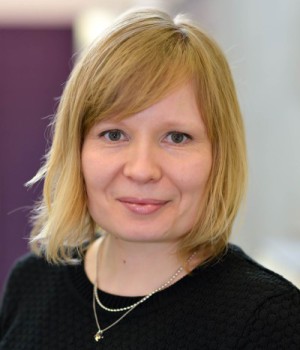
Mari Martiskainen

Reflections from the 12th eceee summer study By Dr Mari Martiskainen

As Colin Nolden mentioned in his post yesterday, four members of the Centre on Innovation and Energy Demand attended the eceee Summer Study held near Hyeres, south of France, during 1-6th June 2015. The bi-annual eceee’s Summer Study has been held since 1993 and it focuses on energy efficiency policy, research and implementation. The theme of the 12th eceee summer study was “First Fuel Now – Keeping energy efficiency at the top of the agenda”.

During the week of presentations ranging from technological innovation to various aspects of policy, impact and evaluation, several presentations also focused on the role of consumers in the energy system. For example Eva Heiskanen from the University of Helsinki said in her talk that public engagement in low carbon energy system needs to address people both as consumers and citizens. Myself and Colin Nolden from CIED argued in our paper that there should be a more active role for consumers in low carbon energy systems. We gave an example of communities as ‘pro-savers’, who focus equally on energy saving and renewable energy generation. While the role of the more active pro-saver becomes relevant in the transition to a low carbon energy system, several presentations also reminded me that we must ensure that the needs of the most vulnerable in our societies are not forgotten in energy debates. This is the case especially for those who experience fuel poverty and face the every day dilemma of whether to ‘eat or heat’. Read more ›

Follow Sussex Energy Group Facebooktwitterlinkedin
Tagged with: , , , , , , ,
Posted in All Posts, CIED, ECEEE series

Keeping energy efficiency at the top of the agenda – reflections on the ECEEE Summer Study

Photo of Colin Nolden smiling

Set in the south of France, the ECEEE conference is a sight to behold. 433 people arguing variably between islanding and implementation. The range of subjects fits the subject matter and the plenaries spiced with juicy names do little to challenge the focus of the event. It nevertheless needs to be understood as a unique opportunity for inquiry, investigation and interchanging of opinions amongst a well-connected and thematically homogenous group of people. Eurocentric by nature, however, it encompasses an air of disregard of issues facing the OTHERS. A sprinkling of poorly attended sessions addressing issues of the less fortunate classes (i.e. around three-quarters of the world’s population) bear witness to these shortfalls. Big names and quirky titles fare better.

The setting is difficult to beat and the usual conference fatigue never sets in as the precisely managed sessions allow for intense yet concentrated interaction and engagement. Food is abundant and of good quality; lunchtime wine ensures that discussions arising in morning sessions do not lose their intellectual vigour as the afternoon sun is set to drain motivational and physical capacities. Breakout sessions are focussed although often misconceived as presentation space by the organisers. Read more ›

Follow Sussex Energy Group Facebooktwitterlinkedin
Tagged with: , , ,
Posted in All Posts, CIED, ECEEE series

Prof Jim Watson’s UKERC blog: Would a Global Apollo Programme deliver the low carbon innovation we need?

Introduction to Jim Watson’s blog by Dr Ralitsa Hiteva

The Global Apollo Programme to Combat Climate Change report  which came out last week warns: “We are in danger”; “The perils of our current course”; “The dangerous shortfall in RD&D”. The report argues that the challenge we face as a society in limiting the rise in global temperature to 2 ̊C is a technological one, and that the solution is simply reducing the cost of renewable energy generation, storage and smart grids.The report calls for making renewable energy cheaper than coal by introducing a more ambitious program of publicly-funded research, rather than continued focus predominantly on incentives like feed-in tariffs for the private sector. However, current levels of publicly funded RD&D (research, development and demonstration) are insufficient to limit the impact of climate change to 2 ̊C. Read more ›

Follow Sussex Energy Group Facebooktwitterlinkedin

Tagged with: , , , , , , , , , ,
Posted in Fossil fuels, Guest Blog, policy, Summaries and Links

‘Sustainable Brighton’: Impressions on a day well spent with local stakeholders

Photo of Bipashyee Ghosh

How sustainable is the city of Brighton? What are the different sustainability initiatives that can be undertaken at a local level? How do these local initiatives network and collaborate with each other? What are the barriers and opportunities in such collaborative efforts and in individual projects? These are some of the questions addressed in a stakeholder workshop organised by SPRU (Science Policy Research Unit) as part of the research programme on “Accelerating and re-scaling Transitions to Sustainability” (ARTS). Read more ›

Follow Sussex Energy Group Facebooktwitterlinkedin
Tagged with: , , , , , , , ,
Posted in All Posts, Sussex and local

Opportunity and crisis in South Africa’s electricity

In April I wrote a blog in Le Monde Diplomatique about South Africa’s on-going electricity crisis. This crisis has resulted in regular load-shedding across the country since late last year as the country’s cash strapped utility Eskom faces a $17 billion funding gap to 2018. Electricity consumers face a 250 per cent cumulative increase in electricity prices since 2008. The country’s state-owned monopoly electricity sector was almost exclusively coal-fired until a procurement programme for privately generated renewable energy was introduced in 2011. Since writing my blog, there have been a number of notable developments in an electricity sector that is currently subject to constant confusion and very likely, change. Despite the uncertainty it is clear that South Africa’s electricity crisis has opened a window of opportunity for the development of different technologies and the procurement models that facilitate them.

Firstly in mid-April, government announced the winners of the latest round of the country’s renewable energy independent power producers’ procurement programme (RE IPPPP). This takes the total of privately generated renewable energy up to 5.2 GW (the country’s total installed capacity is currently 44 GW, of which only 33 GW is currently available). Government has also announced that a further 6 GW of renewables will be procured by 2020. In the case of electricity generated by wind and solar PV IPPs, the average cost of electricity has now reached grid parity with Eskom’s coal-fired power plants still under construction. When built, Medupi and Kusile will be the largest coal-fired power plants on the continent at 4,800 MW each. However, both have been subject to delays, labour unrest, and continuing cost overruns.

Read more ›

Follow Sussex Energy Group Facebooktwitterlinkedin

Tagged with: , , , , , , , ,
Posted in All Posts, Fossil fuels

Follow Sussex Energy Group on Twitter

Disclaimer

The views and opinions expressed here are solely those of the individual authors and do not represent Sussex Energy Group.

Subscribe to Blog via Email

Enter your email address to subscribe to this blog and receive notifications of new posts by email.

Join 113 other subscribers.

Archives

Subscribe to Sussex Energy Group's quarterly newsletter