


My awesome SPRU Masters experience

Okafor Akachukwu after graduating his SPRU Masters.

akI have always planned to follow-up my undergraduate studies with a policy course.  My work in different themes of development: poverty reduction, education, water and sanitation, health care and environment had clearly illustrated to me that access to efficient, clean and affordable energy is the key to human development efforts. And that Climate Change is another huge issue on the global agenda.

I had started to explore the role that science, technology and innovation plays in international development, through my previous studies and work in international development: I took trips with a friend to some off grid remote farming and nomadic villages in Nigeria’s North Central region, to understand how the people lived without access to electricity and other energy services. I am interested in exactly what hinders people in these villages from having access to efficient and clean energy.  I also visited island communities in Lagos for the same purpose.  These visits helped me take the final decision to study an energy, innovation, and sustainability related policy course.

I quite easily found the ‘Energy Policy for Sustainability‘ programme offered at the Science Policy Research Unit, University of Sussex, on-line. I met the entry requirements, applied and was offered a place. I arrived on campus to an experience that would be one of the most exciting academic and learning experiences I may ever have. I was not surprised that I enjoyed the course – I was motivated even before arriving for my studies. Weeks before arrival, the course convener had shared a reading list to serve as an introduction to the course. This was particularly helpful to me.

The lecturers and faculty members are passionate about their work, teaching and sharing their experiences. The classes are interactive and held in ‘safe environments’ which means that students are protected from any undue influence from lecturers, staff and fellow students.

Course seminars were the best classroom activity for me as they afforded students the opportunity to share knowledge and experiences, to discuss and argue on related topics and to get to know each other better, outside the usual university social events.

There are weekly (non-compulsory, but necessary) seminars on energy, climate change, science, technology, innovation, development and many other energy related fields.  These are delivered by visiting researchers from other universities and research centres. I benefited hugely from the few that I was able to attend; from recent ground breaking research findings to new thinking around old ideas and approaches. The seminars are an opportunity to challenge the normal thinking and disrupt the system at little bit. It was very encouraging to attend – Masters Students were always given priority over PhD candidates and faculty members during the comments and Q&A’s that follow the presentations. Everyone’s opinion and point of view were welcome, sought out and respected. Personally, I was usually given time to express some knowledge I had and to get validation from the answers or comments that I received. It’s also a good way to meet the rest of the SPRU community and to build friendships and valuable networks.

The lecturers were welcoming, especially in classes that I had voluntarily opted to take and for which I wouldn’t be assessed. They were encouraging, helpful and always responsive. The most exciting moment for me was when I proposed to use the STEPS Centre’s Pathways Approach to do an analysis for one of my term papers. The encouragement I got is something I will never forget. STEPS Pathways Approach is a new concept and it was unusual for me to use it for my term paper. I successfully did though, and with deepest thanks to my lecturer, today I am drafting a STEPS Working Paper out of that term paper. The encouragement I had from him is what I would wish for every student. It is not difficult to get that in SPRU – just challenge yourself and ask for help and encouragement.

I enjoyed my studies so thoroughly that I was very willing to be an ambassador for the course programme at the Postgraduate Open Evening and subsequently helped produce an official video to promote courses that SPRU offer including Energy Policy for Sustainability.

On graduating, I feel ready to work in any context that I find myself. Be it a policy, research or advisory position, consultancy, government, non-profit, business or academic. I am ready! I couldn’t be more proud to have passed through SPRU and SPRU through me. I have gained a deep understanding of the different and complex factors, dynamic interactions and contexts that challenge the development and governance of efficient, low-carbon energy systems and technologies in the 21st century.  Not only have I gained tremendous knowledge but I understand how to operationalize energy policy instruments and strategies to effectively achieve the desired outcomes.

Taking the Energy Policy for Sustainability course at SPRU is something I strongly recommend to anyone; you only have to be passionate about understanding our energy systems, making energy services more accessible and efficient, and keeping our environment and world, safe from climate change impacts.

For me, there is still a lot more that SPRU has to offer.  I am keeping in touch with the SPRU community and who knows – I may be going back there soon.

Okafor Akachukwu

Follow Sussex Energy Group Facebooktwitterlinkedin
Tagged with: , , , , ,
Posted in All Posts, Guest Blog, study

On the ‘deep state’ hypothesis – Phil Johnstone and Andy Stirling react to critique

Phil and Andy no textRecently Jessica Jewell from the POLET network offered a critical response to the hypothesis explained in a previous blog post by Andy Stirling and me about the links between civil and military nuclear power in the UK. Our hypothesis is that it is strong UK government commitments to maintaining specific military nuclear capabilities that are interacting with many other complex aspects to sway decisions in favour of nuclear power. But unlike a focus on the historical associations between civil and military related nuclear activity in relation to the transfer of ‘fissile materials’, what is unique about our hypothesis is that civil/military connections are envisaged to play out at the level of innovation and industrial systems in terms of technologies and skills surrounding nuclear propulsion capabilities for submarines.

As part of developing this hypothesis, we have discussed various literatures related to understandings of ‘the deep state’, drawing attention to less visible power structures which may impinge upon ‘conventional’ energy policy decision making. In her blog Jessica argued that the deal with China somehow ‘disproved’ our hypothesis (because the UK government would not risk China gaining access to sensitive submarine-related nuclear activity), while also making the claim (that has been frequently encountered) that to even pose the question regarding the linkages between submarine-related nuclear activity and civilian nuclear power somehow represents a ‘conspiracy theory’. We were grateful for this intervention; however, we felt that it mischaracterized key parts of our argument, and thus we responded to Jessica’s comments on the POLET Network blog. We hope these dialogues can continue….To read our response click here.


Follow Sussex Energy Group Facebooktwitterlinkedin
Tagged with: , ,
Posted in All Posts, nuclear, policy

Was COP21 a failure or a success?

Sandra Pointel

On her return from the COP21 climate change conference, Sandra Pointel considered the hefty debate over whether the Paris Agreement is a success or a failure. The polarisation between bad and good views of the deal is no surprise to anybody familiar with the politics of sustainability in general, and climate change negotiations in particular. Politics has always played a major role in decisions surrounding sustainable development and the long road to Paris was no exception. Beyond the rhetoric, the broad scope of the agreement opens the door for many avenues. Read more ›

Follow Sussex Energy Group Facebooktwitterlinkedin
Tagged with: , , ,
Posted in All Posts, Conferences and events, News

CIED gives evidence to the ECC on Home Energy Efficiency and demand reduction

I recently gave oral evidence, on behalf of the Centre on Innovation and Energy Demand, to the House of Commons’ Energy and Climate Change Committee responding to the inquiry into home energy efficiency and demand reduction. This was based on an earlier written submission drawing on a range of academic work done by myself and Dr Nick Eyre (Oxford). For those who can’t spare the time to watch the full hearing you might find this summary more manageable.

Energy efficiency policies have contributed to significant reductions in UK household energy consumption. Total household energy use decreased by 19% between 2000 and 2014, despite a 12% increase in the number of households and a 9.7% increase in population. On average, individual households now use 37% less energy than they did in 1970, with the bulk of this decrease occurring since 2004. Between 2004 and 2011, total household gas consumption decreased by 5% per year on average, or approximately 3.6% per year after temperature correction

illustration 2However, the rate at which houses are insulated has stalled recently as a result of a number of radical policy changes. The UK government decided to radically overhaul the existing system in 2011/2012. CERT and CESP came to an end, the Green Deal was launched and a substantially different supplier obligation – the Energy Company Obligation (ECO) was introduced.

The Green Deal was intended to overcome the barriers of split incentives and high upfront costs by financing energy efficiency measures through loans that were tied to the building rather than the occupant and paid through instalments on electricity bills. Since the Golden Rule prescribed that the cost savings from these measures must be larger than the repayments, only investments with high rates of return were eligible for full funding. These measures (e.g. cavity wall insulation) were previously targeted by the supplier obligations – whose targets gave some confidence that particular levels of energy savings would be achieved. In contrast, the Green Deal did not require a specific level of delivery, with the result that the outcome was highly uncertain.

With the Green Deal targeting high payback investments, ECO was largely directed towards more expensive measures with low rates of return, such as solid wall insulation (SWI). This represented a significant departure from UK and international experience, where supplier obligations have primarily been used to encourage relatively cost-effective measures. Part of the rationale was that the potential for cost-effective measures was declining, requiring a mechanism to support more expensive retrofits in the longer term. From 2013, most support for cost-effective measures was supposed to come through the Green Deal.

It is now clear that the Green Deal has failed to deliver any significant investment in energy efficiency. Its existence also resulted in ECO being focussed in areas in which it was less immediately effective, with the result that the energy-saving targets have now been reduced. Together, the Green Deal and ECO have been a major setback for UK energy efficiency policy.

Early assessments by myself (CIED) and Dr Nick Eyre (Oxford University) forecast that the introduction of the Green Deal and the restructuring of the energy efficiency obligations would lead to a decline in energy savings of around 80%. Whilst such forecasts are always uncertain, recent figures confirm that they were if anything an overestimate of the energy savings, with the rate of energy efficiency improvements dramatically slowing down.

The lessons learned from this experience should inform future policy design. It is evident that:

Supplier Obligations can be highly effective but should not be prescriptive about the type of measure and should allow the delivery of cost-effective energy efficiency improvements. Internationally, the vast majority of energy efficiency obligations target such measures thereby ensuring that a high proportion of customers benefit from the obligation. In contrast, high-cost measures allocate the benefits to a limited number of customers and can place disproportional burdens upon low income groups.

Previous Supplier Obligations included also many non-insulation and heating system measures such as energy efficient appliances, lighting and behavioural change. There is currently a lack of support for innovative technologies such as LED lighting and future obligations should be refocused with a view of including such technologies.

Reliance upon deemed saving estimates is recommended to avoid excessive administrative costs.

Unexpected policy changes such as the reduction of the ECO target in 2014 need to be avoided to create long-term policy stability and investor confidence.

The interest rate of the Green Deal was not attractive and significantly above current mortgage rates and high street loans which is a benchmark used by consumers when assessing the interest rate of such programmes. A low-interest mortgage or loan with interest rates of around 2-3% is an attractive proposition for investment in energy efficiency. Such a measure is likely to require government guarantee of the loans and/or subsidies to a financial organisation offering the loans.

The Green Deal’s focus on low-cost measures (limited through the Golden Rule) did not allow for more comprehensive retrofits without additional finance. For low-cost measures market research undertaken for the government showed that commercial loans have very limited attractiveness for most consumers. Future on-bill financing schemes as well as other types of loans should therefore focus on medium- and high-cost measures.

Jan RosenowThe Green Deal was primarily marketed as a financial proposition saving households money on their bills. Instead of a universal, top-down, marketing approach, we should learn from DECC’s own survey evidence that a multitude of factors beyond purely financial considerations motivate people to improve the energy efficiency of their home. A more effective marketing strategy needs to draw on those insights and speak a language that addresses consumers’ desires and requirements.
At CIED we look forward to reading the final report of the Energy and Climate Change Select Committee on this important policy area and of course to the response that will be  given by the Department of Energy and Climate Change.


Dr Jan Rosenow is a Senior Research Fellow at the Centre on Innovation and Energy Demand, based in SPRU at the University of Sussex.

Follow Sussex Energy Group Facebooktwitterlinkedin
Tagged with: , , , , , ,
Posted in All Posts, CIED

“Energy security is not all about building big legacy projects”: notes from a Select Committee enquiry

Emily Cox, Sussex Energy Group

As seems more and more the case in recent years, energy security is top of everyone’s agenda, probably at least in part due to recent reporting of increased risk of the lights going out this winter. Kent County Council decided to hold a Select Committee enquiry into energy security, to which myself and Professor Gordon MacKerron were invited to give evidence on behalf of the Sussex Energy Group.

The officials at Kent County Council were especially interested in two topics: ensuring that electricity supply can meet demand, and nuclear power. Electricity is an interesting case at the moment, with widespread fears about UK electricity security being sparked by recent unexpected power plant outages, impending closures of old nuclear and coal stations, and challenges caused by integrating intermittent renewables. On November 4th, the electricity system was once again in the news as the National Grid implemented so-called ‘emergency’ measures to keep the lights on. Nuclear power has also been receiving lots of attention recently, as a result of the ongoing discussions around the proposed new plant at Hinkley C which is, for the umpteenth time so far, now awaiting a supposedly imminent final investment decision.

At first glance, it was challenging to know what to tell the Kent Select Committee, because energy security for Kent is largely synonymous with energy security for the UK as a whole. Large-scale electricity generation is connected directly to the centralised transmission network, meaning that a new power station in Kent will have far more impact on national energy than on security in the local area. However, on closer inspection, some of the most interesting dynamics in energy security are taking place at the local level. According to UK Power Networks, Kent has seen one of the greatest increases in distributed generation (i.e. generation which is small-scale enough to connect directly to the low-voltage local distribution network). Distributed generation can be seen as both positive and negative for energy security, depending on what the important issues are perceived to be. On the one hand, distributed generation is beneficial because it adds supply capacity, and can also improve public engagement and understanding (which can in turn support acceptability for additional measures such as demand reduction), and can reduce fuel poverty for vulnerable households. On the other hand, distributed generation is problematic because it connects directly to the distribution network which means that the supply is invisible to the National Grid (thus causing complications for grid balancing), and it creates a two-way power flow which is a new engineering challenge for the local network operator. Distributed renewables such as rooftop solar could also potentially increase market uncertainty by dragging down wholesale prices (as has been experienced in Germany). This example is a good illustration of the importance of looking at energy security from multiple different perspectives.

The Select Committee, along with everyone else, wanted to know whether the lights are going to go out this winter. There is a lot of conflicting information about this, and of course none of us can predict exactly what electricity demand or supply will be this winter. However, a declining spare capacity margin doesn’t necessarily translate into an insecure capacity margin (it’s not possible to say exactly what level the capacity margin should be); in fact, it probably makes sense from an efficiency perspective to slightly reduce the very high margins which the UK has experienced over the last couple of decades. UK demand has been decreasing steadily, and I’ve not come across any really convincing predictions that this year it will suddenly rebound. Moreover, there is probably ‘hidden’ margin out there from distributed generation and flexible demand. The measures taken by the National Grid on 4th November actually illustrated that the UK electricity system is resilient at present. The interconnectors worked effectively (we imported around 200MW from Ireland), and the interruptible demand contracts which have been agreed by large consumers acted as a reliable means of reducing demand when necessary. The price of the extra electricity was extremely high; however, when averaged out over the year, even a wholesale cost of several thousand £/MWh for several hours makes very little difference to the overall cost of electricity. Contrary to popular belief, November is actually a challenging month for the electricity system, because despite the warm weather many stations which have been closed for maintenance over the summer are switched on again in early November, which can result in unexpected breakages.

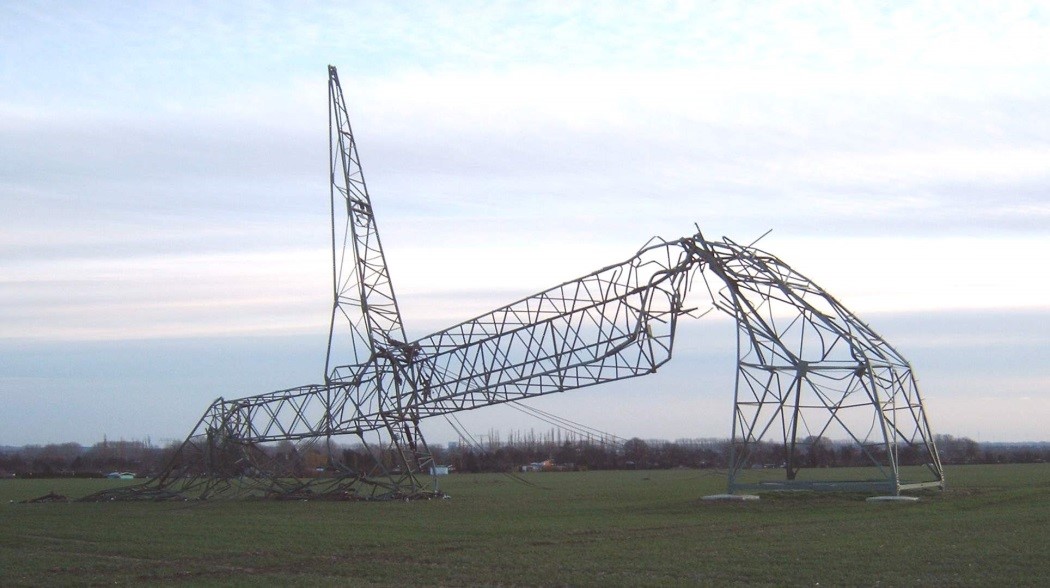
So on to the topic of nuclear power, on which the Select Committee had many questions. Foremost in their minds was the question of a new nuclear power station at the existing Dungeness site. However, Prof. MacKerron noted that in 2009 the Government announced that Dungeness was not being considered as a site for a new nuclear plant because of coastal erosion and flooding concerns.  While there has been some publicity about the possible suitability of Dungeness for a small modular reactor, this seems a long shot, as the concerns about the site would apply to any kind of reactor. The discussion around the Dungeness site actually gets very effectively to the root of the issue as far as I’m concerned – which is that energy security is not necessarily all about big legacy projects such as nuclear power stations. Nuclear power provides capacity; but then again, not all capacity is created equal, and building a new reactor on a site at risk of coastal erosion and flooding would quite possibly be a detriment to energy security. The vast majority of actual electricity shortfalls are caused not by a lack of generating capacity, but by problems on the transmission and distribution networks, most often caused by the weather. It might not be exciting, it might not be sexy, but some of the most important actions for improving energy security involve ensuring that networks are less vulnerable, for instance by cutting trees back and protecting against flooding. This is a timely take-home message: the recent floods which caused such chaos in Cumbria were, according to some quick modelling by the University of Oxford, 40% more likely due to climate change. Energy security clearly matters, but is a complex and multifaceted issue, and the major risks are often not those which first spring to mind.

Emily Cox 2015Emily Cox is a Research Assistant and PhD student with the Sussex Energy Group at the University of Sussex. She is a researcher on the ‘DiscGo’ project on discontinuity in socio-technical systems, with a focus on power and incumbency in the UK nuclear industry. For her PhD she is researching electricity security in the context of a low-carbon transition, developing a methodology which can be used to assess low-carbon transition pathways for their resilience, affordability and sustainability. Emily is also currently a research intern at Oxford University, examining the role of the public in meeting the UK carbon budgets. Emily has 3 years’ experience as an Associate Tutor at the University of Sussex, tutoring an MSc in Energy Policy and an undergraduate module in energy transitions. She recently worked for the Royal Academy of Engineering, undertaking research into the social and economic impacts of electricity shortfalls. She has also spent time working for E.ON Technologies at the Ratcliffe-on-Soar power station, researching energy security, district heating, distributed storage, and the UK Capacity Market. She previously worked as an area coordinator for Greenpeace. She holds an MSc in Climate Change and Policy, a BSc in International Relations, and half of a rather ill-advised BA in music. 

Follow Sussex Energy Group Facebooktwitterlinkedin

Tagged with: , , , ,
Posted in All Posts, Community Energy, nuclear, policy, renewables

Follow Sussex Energy Group on Twitter

Disclaimer

The views and opinions expressed here are solely those of the individual authors and do not represent Sussex Energy Group.

Subscribe to Blog via Email

Enter your email address to subscribe to this blog and receive notifications of new posts by email.

Join 113 other subscribers.

Archives

Subscribe to Sussex Energy Group's quarterly newsletter