
Transitioning to low-carbon transport must address social justice issues alongside emissions reductions

Dr Mari Martiskainen, Senior Research Fellow at SPRU and Equity and Justice Theme lead for the Centre for Research into Energy Demand Solutions (CREDS), and Dr Max Lacey-Barnacle, Research Fellow in Energy Justice at SPRU, explain why we must think beyond reducing emissions to ensure no one is left behind in the transition to low-carbon transport.

In the midst of the Covid-19 pandemic, there have been calls to re-think and re-design our personal transport system. Many people, motivated by a fear of infection, have opted for cars instead of public transport, and sales of bicycles have peaked.

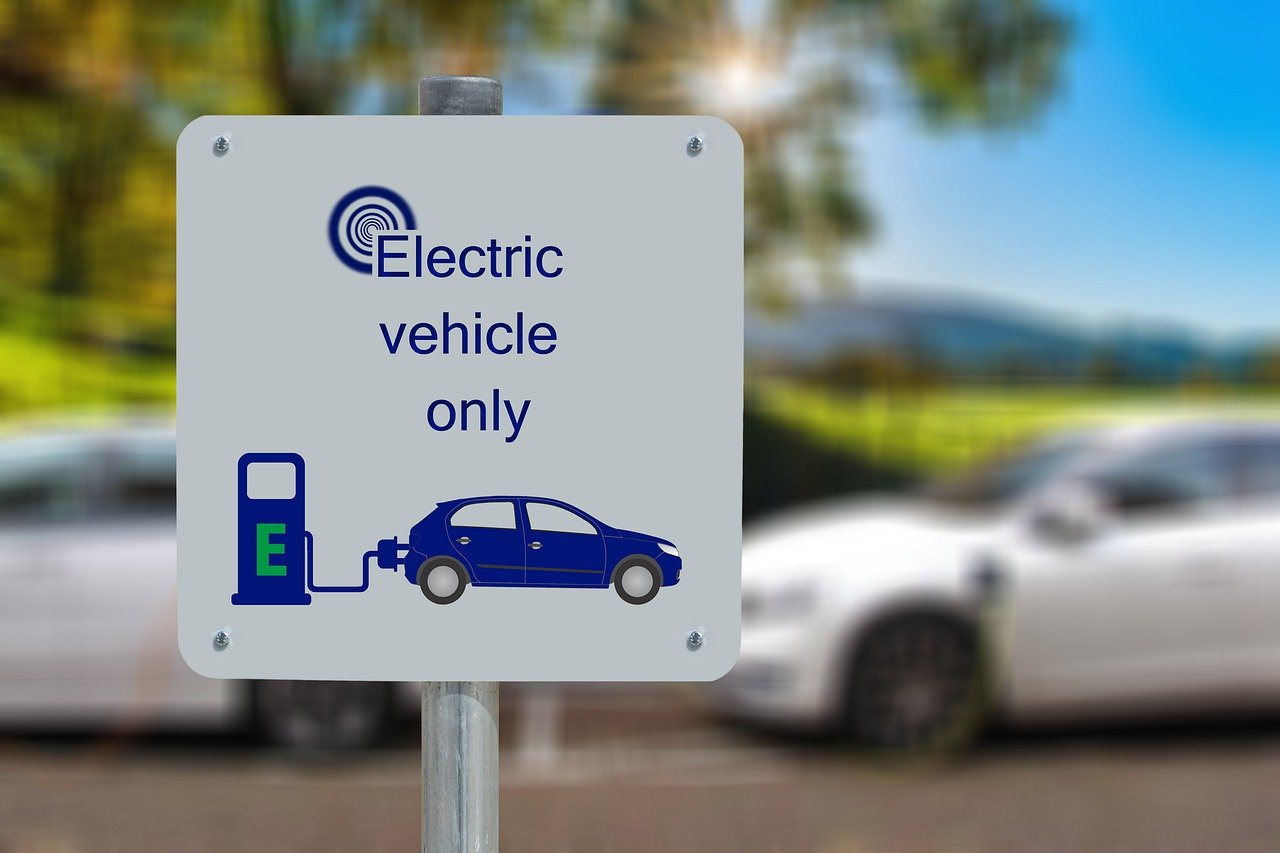
Before the pandemic, we were already witnessing the growth of low-carbon transport, with the number of electric vehicles (EVs) on the world’s roads, for example, increasing from 17,000 in 2010 to 7.2 million in 2019 – though research has found EVs are not the silver bullet to solve transport emissions.

E-bikes, meanwhile, could cut CO2 emissions by up to 50% in England (approximately 30 million tonnes a year) if people used them to replace as much of their car travel as they are able to.

With the arrival of Covid-19 and social distancing, we’ve seen a rapid increase in the number of people walking and cycling, forms of low-emission active travel which both bring added health benefits.

The UK Government has committed to investing £2 billion in active travel and promised an updated Cycling and Walking Investment Strategy this year. Pop-up bike lanes, wider pavements and cycle and bus-only corridors are becoming familiar sights as local authorities adapt transport infrastructure to reflect the ‘new normal’ and lay the foundations for permanent change.

We’ll need all these means of greener and healthier travel in our move towards a net-zero carbon society. But, if we are to build a socially and environmentally sustainable world, we also need to consider who can access them and how the technologies they require are made.

Transport poverty and why green transport design must be inclusive

In recent years, research has started to highlight ‘transport poverty’. This can be understood as the inability to afford or access necessary transport services.

Someone experiencing transport poverty may, for example, be unable to afford essential transport costs, or they may live far away from public transport such as buses and trains, having to rely on expensive private cars. This in turn could mean having to make choices in other areas of their life, such as how much energy to use at home.

Being in transport poverty restricts people’s ability to travel, for example, for work, school, caring duties, healthcare, and hobbies – it therefore directly impacts their ability to fully participate in society.

In addition, certain communities may be more at risk of transport poverty. For example, those living in rural and peri-rural communities may be more likely to encounter high transport costs due to a lack of convenient alternatives to cars. Those with pre-existing health and mobility issues, meanwhile, may also be more affected, for example by limited access to active travel options.

As we move towards green transport, we therefore need to acknowledge these inequalities and begin tackling them.

From local to global – a whole systems approach

A fair and equitable move to low-carbon transport also requires considering how green transport technologies are made.

We must ensure, for example, that certain countries do not form a ‘green elite’, with little thought given to the fact that many of the materials and minerals for low-carbon technologies like EV batteries often come from polluting mines that damage their local environment. Many such mines have also been shown to have poor working conditions which often exploit vulnerable workers, especially women and children, in the least economically developed countries.

A low-carbon transport system thus needs a whole systems approach that considers the whole supply chain, from materials and working conditions, to infrastructure and practices.

This means, at first, recognising those that are vulnerable. For example, a new EV purchased in the UK may be directly linked to child labour in the Democratic Republic of the Congo (DRC) where many children are used to mine for cobalt, an essential component of lithium ion batteries in EVs.

It also means designing transport systems that are accessible and affordable to all. For example, those with mobility issues may not be able to access the latest bike lanes built in our cities and not everyone can afford an EV or have the space to store a bike. This is where an increase in accessible and affordable low-carbon public transport, such as electric bus networks and new train and tram systems, can be essential to addressing issues of equity in the transition to a net-zero society.

Thus, the first step to creating a truly equal net-zero society is to acknowledge that issues such as transport poverty exist, and that some of our low-carbon transport options connect to injustices across the world.

While it is challenging, we must begin to recognise the inequalities in accessibility and affordability of transport systems, alongside acknowledging the whole-systems injustices a growing demand for new low-carbon technologies may create. Without this, low-carbon transport systems may risk increasing poverty and inequality.

Drawing upon a justice oriented lens and energy justice principles, we can begin to unravel the injustices embedded in low-carbon transport systems and find ways in which justice can be achieved.

Find out more about the Fuel and Transport Poverty in the UK’s Energy Transition (FAIR) project on the CREDS website.

Follow Sussex Energy Group Facebooktwitterlinkedin
Tagged with: ,
Posted in 'Whole systems' perspectives, All Posts, Energy systems and supply technology, Just and Sustainable Transitions to Net Zero, The Co-benefits of the energy transition, Wellbeing and ecological economics

Nuclear vs renewable energy and the critical importance of independent research

This is an adapted version of a Nature.com blog by Prof Benjamin K. Sovacool and Prof Andy Stirling, to accompany the publication of their paper “Differences in carbon emissions reduction between countries pursuing renewable electricity versus nuclear power” in Nature Energy. A University of Sussex press release also summarises the paper’s findings and policy recommendations.

The role of nuclear power in a low-carbon future has been subject to a long and contentious debate. Is a nuclear or a renewables pathway the best way forward, or do we need a “do everything” approach where every deployable technology is rolled out to decarbonise our electricity supply as soon as possible?

Many influential climate scientists and international organisations argue that a global shift towards nuclear power offers the best pathway to tackling the climate emergency and meeting the world’s increasing demands for electricity.

Others argue that renewable sources of energy are the best pathway towards a low-carbon electricity system and assert that they are cleaner, safer and more economically sustainable than nuclear.

In an attempt to negotiate these contending positions, a frequent mantra is that energy strategies should “do everything” in order to address the climate emergency. But – as a number of commentators have noted (for example, here and here) – this would actually be a highly irrational course of action.

Where “doing everything” involves making investments that are slower or less cost effective, which divert resources away from preferable options, or which in some other way impede them, the result would be potentially disastrous for carbon emissions mitigation.

Amidst many uncertainties, the real questions we should be addressing are about which investments offer the most cost-effective and beneficial ways forward.

Our new paper, Differences in carbon emissions reduction between countries pursuing renewable electricity versus nuclear power, seeks to contribute towards this debate.

Nuclear vs renewable energy – what this paper tells us

Our paper focuses specifically on situations in which real-world constraints mean strategic choices must be made on resource allocation between nuclear or renewables-based electricity.

Our research explores this dilemma retrospectively, examining past patterns in the attachments (i.e. investments) of different countries to nuclear or renewable strategies. Our paper addresses three hypotheses:

  1. A “nuclear climate mitigation” hypothesis: that countries with a greater attachment to nuclear power will tend to have lower overall carbon emissions.
  2.  A “renewables climate mitigation” hypothesis: that countries with a greater attachment to renewables will tend to have lower overall carbon emissions.
  3. A “crowding out” hypothesis: that countries with a greater attachment to nuclear will tend to have a lesser attachment to renewables, and vice versa. 

Across the study countries as a whole we found that the “nuclear climate mitigation” hypothesis is not sustained by the evidence at an appropriate level of statistical significance. The renewable climate mitigation hypothesis is confirmed with substantial significance. And the crowding out hypothesis is also significantly sustained.

Put plainly – if countries want to lower emissions as substantially, rapidly and cost-effectively as possible, they should prioritise support for renewables rather than nuclear power. Pursuit of nuclear strategies risks taking up resources that could be used more effectively and suppressing the uptake of renewable energy.

A windmill next to a body of water

Description automatically generated

What causes these patterns?

What might explain these patterns? Technologically, nuclear systems have been prone to greater construction cost overruns, delays, and longer lead times than similarly sized renewable energy projects. Thus, per dollar invested, the modularity of renewables projects offers quicker emissions reductions than large-scale, delay-prone, nuclear projects.

Furthermore, renewables tend to display higher rates of “positive learning” where increased deployment results in lower costs and improved performance, especially for wind farms and solar energy parks. This contrasts with the experience of nuclear power in France which has been prone to “negative learning,” rising costs or reduced performance with the next generation of technology.

In terms of policy, the incidents at Three Mile Island (1979), Chernobyl (1986), and Fukushima (2011), all resulted in significant tightening of regulatory requirements for nuclear reactors.

Finally, wider social factors may also work against nuclear energy, and for renewable energy, facilitating faster acceptance, permitting and deployment.

Of course, these are just informed speculations, beyond the scope of the paper itself. Other commentators will favor contrasting interpretations.

But here, perhaps the most important issue – especially given the prominence of the topic and the scale of what is at stake – is that this kind of analysis has been so remarkably neglected over recent years.

Given how highly charged and hotly contested the associated policy controversy is, it is rather strange that there is not a large body of work on these questions. Either way, the many open questions and issues of detail acknowledged in the paper show that much work remains to be done.

The critical importance of independent research – our view

We have presented the findings of our research. Now we must acknowledge the uncertainties and errors, divergent interpretations and clashing interests that make it difficult to achieve the comprehensive prioritising analysis called for at the beginning of this blog – while making a case for the vital importance of scientific scrutiny.

In an ideal world of “evidence-based policy”, energy and climate policy would only go ahead after comprehensive research into every relevant positive or negative aspect of all possible energy resources.

The resulting self-evident “facts” would be examined by objective analysts and any uncertainties eliminated, until a point where a single unambiguous ‘truth’ is determined – with grateful policy makers adopting the identified energy pathway or portfolio.

Unfortunately, we do not live in an ideal world.

Across various energy debates – and not restricted to any political constituency – crucial roles are often played by deliberate mis-representation of information, manipulation of discourse, co-option of leading opposing voices, direct subversion of opponents and stifling of meaningful public debate. 

Under conditions like this, the line between advocacy and scholarship (porous at the best of times) can become especially loose when analysts become passionate about their topic. The reasons for such passion can be as trivial as disciplinary identities or sectoral interests, or as deep as wider political ideologies. On all sides “theorising” can be reduced to a search for validation, and “investigation” to the selective collection of data. 

Energy debates suffer gravely from these syndromes. “Energy evangelists” on all sides are convinced they have found “the solution” to societies’ energy problems—whether this be solar energy, hydrogen fuel cells or nuclear reactors. The intensity of this advocacy (and the scale of the interests often behind it) can lead to everyone else’s solutions being treated as sacrilegious.

So, exchanges of ideas can become hostile battlefields where proponents are unable to reconcile their underlying differences.

There seems to be an especially pernicious asymmetry in this field. Those whom comparative analysis leads to be generally critical of nuclear power are labelled “anti-nuclear”, whilst no such generally-established terminology exists to the same degree for those who are (entirely legitimately – if debatably) critical of renewable energy.

The situation is aggravated by so much research in this field being (unlike our own) funded (directly or indirectly) by organisations with prior entrenched interests on one side or another.

Despite this, we have often found valued opportunities to bridge the divide with those who hold “opposing” views, but with similar open mindedness and good faith.

It is in this spirit that our analysis is offered. We are open about its background and limitations. We acknowledge that our evidence does not compel only one supposedly definitive interpretation. We are clear about the conditions attached to our own interpretations. By publishing our full dataset and the detailed procedures undertaken in our regression analyses, we offer a basis for others to contest our findings.

The “truth” of our study is in this sense not something arrived at by particular analysts claiming individually-transcendent authority, but by contrastingly-oriented analysts contending with each other in an open and pluralistic way, such as to arrive collectively at more robust understandings. This is the organised skepticism of independent science.

If our analysis stimulates reactions in the same vein, then the cause of scientific scrutiny is reinforced. If, on the other hand, it leads to less qualified assertions and ad hominen labelling, then the chance of bridging the polarised divides is sadly diminished. We hope it will do the former.

Follow Sussex Energy Group Facebooktwitterlinkedin
Tagged with: , ,
Posted in All Posts, Energy infrastructure, Energy systems and supply technology, Just and Sustainable Transitions to Net Zero, nuclear, renewables, The energy transition

A message from SEG’s Director, Benjamin K. Sovacool

This message is shared in SEG’s autumn 2020 newsletter. Join our new mailing list to get the latest updates about our research and events on transitions to sustainable, low-carbon energy systems.

Dear fellow energy sustainability enthusiasts,

Welcome to our autumn newsletter. Since I last wrote, we’ve seen the world transformed and we find ourselves at what could be an unexpected turning point on the journey to net-zero.

In SEG, our purpose has always been to understand and accelerate transitions towards sustainable, low carbon energy systems, but our work has taken on a new imperative now societies are considering how to align their recovery from Covid-19 with the demands placed on us all by the climate emergency.

In our response to the UK Government’s Post-Pandemic Economic Growth Enquiry we made it clear that our recovery must focus on building a clean, low carbon economy that’s fair and just. As researchers, it’s our job to provide policymakers with the evidence they need to deliver this and I’m proud to say that we are doing just this.

As ever, we’re working intently to make a difference. We’re researching the climate implications of working from home, working with local government to develop innovative financing models for retrofitting community buildings and exploring the viability of new economic activities in the Arctic region to deliver a just transition for the millions of people they affect – to name just a few of our activities.

Our research portfolio has grown even further recently with the launch of two new projects. LANDMARC will answer important questions about the potential for agriculture, forestry, and other land use sectors to enhance the uptake of CO2 from the atmosphere. EMPOCI will investigate the governance of sustainable energy-mobility transitions and identify practical ways to accelerate them, supporting the implementation of the Paris Agreement.

With the start of the new academic year, our Energy and Climate Seminar Series is once again creating a space for colleagues from academia, government and practice to tackle issues around climate change, energy policy and sustainability – and it’s now easier for you to take part in its new online format! I hope you will join us.

Benjamin K. Sovacool

Director, Sussex Energy Group

Follow Sussex Energy Group Facebooktwitterlinkedin
Posted in All Posts

Project update: Modern Energy Cooking Services

This update is shared in SEG’s autumn 2020 newsletter. Join our new mailing list to get the latest updates about our research and events on transitions to sustainable, low-carbon energy systems.

In two new working papers, a team led by the University of Sussex report first year findings from their Modern Energy Cooking Services (MECS) research project mapping Kenya and Tanzania’s e-cooking socio-technical innovation systems.

These ‘maps’ consist of visualisations of the actor-networks and actor-relations in the system along with elaborations on who the actors are, the extent and nature of their interactions, sketches of significant projects, and includes a discussion of emerging issues relevant to the further development of the innovation systems in the two countries. It also includes some summary attention to the systems’ context and enabling environments.

Based on this characterisation, they conduct a socio-technical innovation system analysis to determine strengths and weaknesses and derive several recommendations that the MECS Programme could implement to further its aims more effectively.

MECS is a £40 million UK Aid funded multi-partner programme of activities, led by Loughborough University, to promote modern energy cooking services in the Global South.

Follow Sussex Energy Group Facebooktwitterlinkedin
Tagged with:
Posted in All Posts, Energy Innovation and Digitalisation, Energy systems and supply technology

Project update: SONNET

This update is shared in SEG’s autumn 2020 newsletter. Join our new mailing list to get the latest updates about our research and events on transitions to sustainable, low-carbon energy systems.

SONNET brings diverse groups together to make sense of how social innovation can bring about a more sustainable energy system in Europe. SONNET is supported by the European Union’s Horizon 2020 Research and Innovation programme.

Six cities and six research institutions in Europe are using techniques – like ‘City Labs’, case studies, citizen surveys and more – to figure out how we can help make sure that social innovations accelerate the transition from the use of fossil fuels to a more sustainable energy system.

Find out what’s been happening in SONNET lately…

Event. Bristol hosts its City Lab launch event on re-energising community buildings. SONNET’s Bristol City-Lab kicked-off in the summer. Speakers included Richard Lowe of the BCC Energy Service and Caroline Bird of the Bristol Energy Network, which is also part of the lab. Find out how the City of Bristol and SPRU are testing innovative financing models to implement vital energy efficiency upgrades in community buildings.

Event. Fighting for Local Power: how a UK Bill seeks to support local energy producers. Watch this SONNET webinar on campaigning for local renewable energy, exploring the example of the Local Electricity Bill in the UK.

Publication. SONNET Energy Read #1: About the social dimension of energy transitions. SONNET aims to understand and show the diversity of social innovation in energy transitions, going ‘beyond only energy cooperatives’. In this Energy Read this diversity is portrayed in a typology and illustrated with examples, putting an emphasis on the six cities that are partners in the  SONNET project. Ultimately, we see that energy transitions have inseparable social and technological dimensions to them.

Event. On Friday 2 October SONNET took part the solutions session “Social Innovation in Energy Transitions” at the 9th European Conference on Sustainable Cities & Towns: Mannheim2020. Notes from the event will be shared on the SONNET website.

Event. SONNET at the 18th European Week of Regions and Cities. SONNET is taking part in the Social Innovation for Energy Transitions – Participatory Lab at the European Week of Regions and Cities on 22 October 2020. The lab, co-organised by Energy Cities and ICLEI Europe, will offer a chance to discover new tools and processes for accelerating the energy transition, rooted in the experience of cities participating in three EU-funded projects (SONNET, TOMORROW and UrbanA). Please note registration is now full.

New publications

Beyond instrumentalism: Broadening the understanding of social innovation in socio-technical energy systems, Energy Research & Social Science.

Follow Sussex Energy Group Facebooktwitterlinkedin
Tagged with:
Posted in All Posts, Energy and Society, Energy Governance and Policy, Just and Sustainable Transitions to Net Zero, Local Energy, The energy transition

Follow Sussex Energy Group on Twitter

Disclaimer

The views and opinions expressed here are solely those of the individual authors and do not represent Sussex Energy Group.

Subscribe to Blog via Email

Enter your email address to subscribe to this blog and receive notifications of new posts by email.

Join 96 other subscribers.

Archives

Subscribe to Sussex Energy Group's quarterly newsletter