

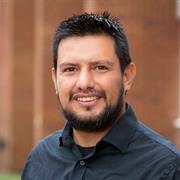
Dr Luis Ponce Cuspinera, Associate Professor in Engineering, offers reflections on his experience of curriculum redesign.
What were the motivations behind a curriculum review in Engineering and Informatics?
There were several. I’d recently returned to Sussex after three years at Dyson, where I helped set up a new engineering institute. That experience, of designing everything from scratch, really opened my eyes. When I returned to Sussex I noticed some modules had changed, especially post-COVID, and the course felt less cohesive. Individual modules were strong, but they weren’t always working together as a unified programme.
I also realised that some course conveners had inherited programmes they didn’t fully understand and who hadn’t had the chance to reflect on the course as a whole. At the same time, the university was launching Curriculum Reimagined and discussing changes to the Sussex Academic Framework. It felt like the right moment to act, especially since we hadn’t had a curriculum review in years due to the pandemic.
How did you engage and support your colleagues throughout the review process?
I started with separate workshops for Engineering and Informatics staff to tailor the discussion to each group. I introduced the concept of curriculum review, what it is, why it matters, and shared insights from pedagogic research and my own experience designing curricula.
I then gave course conveners a set of actions to reflect on and followed up a few months later. I also pointed them to support from our Academic Developer, Sam Hemsley, and encouraged them to engage with Education Enhancement. My aim was to empower them to take ownership of their courses, not impose changes from the top down.
What pedagogic strategies did you encourage to enhance the student experience?
I focused on three key areas:
- Assessment bunching. I encouraged conveners to review how assessments were spread across the semester. Debunching assessments can reduce student stress and improve wellbeing.
- Course alignment. I asked conveners to consider both technical and non-technical alignment. Are modules building on each other logically? Are students learning skills they can apply soon after? Are professional and employability skills embedded throughout the course?
- Graduate characteristics. I encouraged conveners to define what kind of graduate their course is shaping. What should students be able to do by the end of the degree? This helps clarify the course’s identity and appeal and supports recruitment.
What challenges did you encounter, and how did you navigate them?
Change can make people defensive. Some conveners felt their courses didn’t need improvement, especially if recruitment was strong. I tried to contextualise the need for change, highlighting evolving student expectations, sector trends, and future regulations.
Sometimes I brought data to support the case for change. I also used my subject knowledge to guide conversations and challenge assumptions. It was important to respect people’s time and priorities, especially when they were juggling research or other commitments.
What outcomes or early impacts have you observed since the review?
One big win was that our conveners were well-prepared when the new academic framework was implemented. They’d already started thinking about necessary changes.
We’ve seen updates to two postgraduate courses that weren’t recruiting well. Conveners added new interdisciplinary modules, which aligns with university priorities and could boost recruitment. One undergraduate course successfully debunched assessments, which is complex but impactful. Another convenor created a visual map of module alignment, far exceeding what I’d shown in the workshop. It’s great to see colleagues take ideas and make them their own.
One challenge though was student engagement. I’d hoped for more involvement from students in the review process. Some conveners used NSS feedback, but I’d like to see more direct student input, perhaps through working groups. That’s something I’ll reflect on and improve in future reviews.