
Cath Senker: Assistant Professor in Academic Skills
Introduction
As teachers, we hope to make our teaching as inclusive as possible for the wide range of students in our classes, in terms of both curriculum and pedagogy. How can we do this? This year, I have been gathering examples of excellent inclusive practices from teachers across The University of Sussex to create a helpful toolkit that can be adapted for different subjects. This blog post highlights some key aspects of the toolkit and you can read the full version online: Inclusive teaching practices: a toolkit for narrowing ethnicity awarding gaps.
All the contributions are aligned with six key practices that have been shown to narrow ethnicity awarding gaps:
- Decolonisation of the curriculum and anti-racist pedagogy
- Co-creation of the curriculum
- Inclusive assessment
- Student engagement
- Fostering sense of belonging
- Academic skills and student support.
I’ll briefly talk about these factors, mention some toolkit examples and provide tips for using the toolkit.
1. Decolonisation of the curriculum and anti-racist pedagogy
University curricula need to be ‘inclusive and reflective of diverse perspectives’, as Banerjee states in her evidence-based recommendations for narrowing ethnicity awarding gaps (Banerjee 2024). Decolonising the curriculum starts at the basic level of diversifying the names used in case studies and the authors in reading lists. To go further requires ‘a deeper reflection on thoughts and assumptions underlying knowledge’ (de Sousa, Fatilewa and Mistry 2021). The toolkit contains examples of such in-depth decolonisation, such as Dr Sabrina Gilani and Dr Ashleigh Keall’s Aboriginal Law module (Law), which focuses explicitly on Indigenous perspectives.
2. Co-creation of the curriculum
Linked to decolonisation is the involvement of students in decision-making processes in their teaching, which includes co-creating the curriculum (QAA 2024: 22). In her Conservation Biology module (Life Sciences), Dr Deborah Glass runs debates on topical conservation issues; the students work in groups to co-create the materials. Student co-creation of assessments gives students agency and makes the assignments more relevant and engaging (Canal and Child 2025). In Prof Zahid Pranjol’s Introduction to Human Disease module (Life Sciences), groups of students decide on their own creative, innovative and inclusive assessment outputs, such as a mind map or a YouTube video.
3. Inclusive assessment
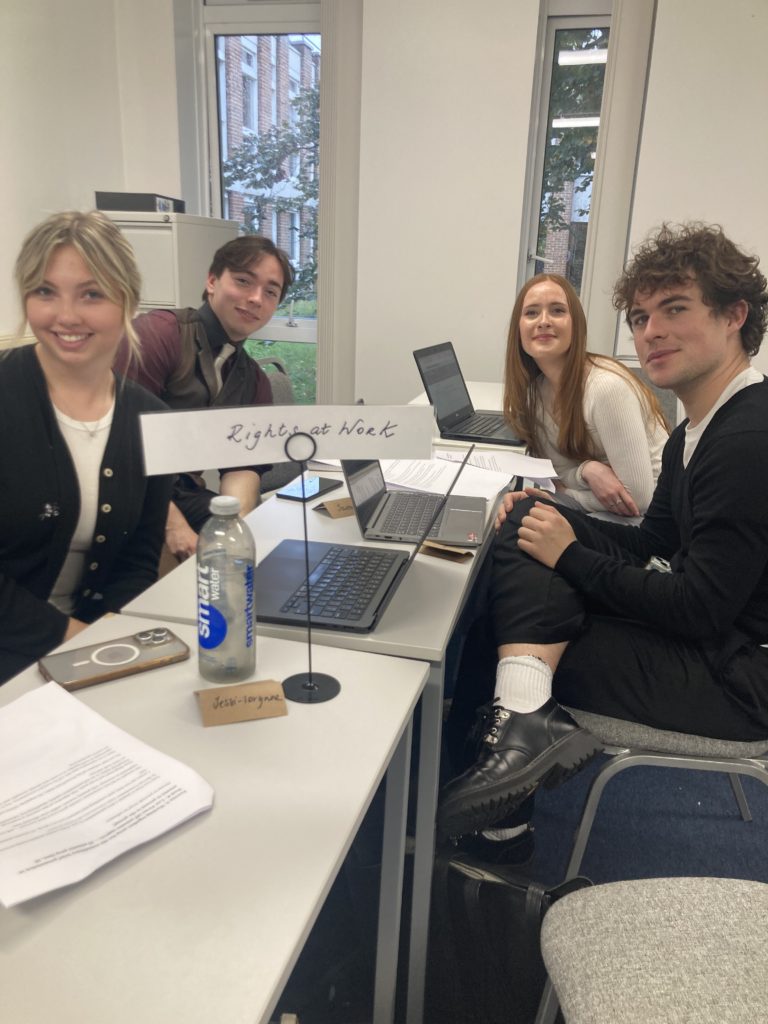
Inclusive assessment can be defined as ‘the provision of assessments that allow all students to do well without receiving alternative or adapted assessments’ (Bain 2023). According to this definition, Prof Pranjol’s assessment is inclusive because it is flexible. The Awarding Map notes that: ‘Diversification of assessment type, either in place of or in addition to more traditional assessment methods, may have a positive impact on student experience and degree outcomes’ (QAA 2024: 26). Canal and Child agree that diversification is vital. They highlight the importance of developing ‘…discipline-specific or authentic “real world” tasks to demonstrate their [students’] learning and development of a range of skills relevant to their discipline and future work.’ (Canal and Child: 991). Jeanette Ashton and Dr Verona Ní Drisceoil’s Professional Skills: Law in Action module (Law) includes the task of setting up a student law firm to offer legal advice to a local organisation.
4. Student engagement
The student-centred practices above foster engagement. As Newbigin and Tucker note, when you incorporate such practices, the tutor’s role becomes ‘curatorial and facilitative’. Students take part in discovering knowledge rather than passively receiving it. They use their lived experiences to connect learning to issues relevant to their lives (Newbigin and Tucker: 11). In Chris Stocking and Jo Osborne’s interculturality modules (English), students relate the module readings to their own knowledge and experience, which leads to a high level of participation and engagement.
5. Fostering sense of belonging
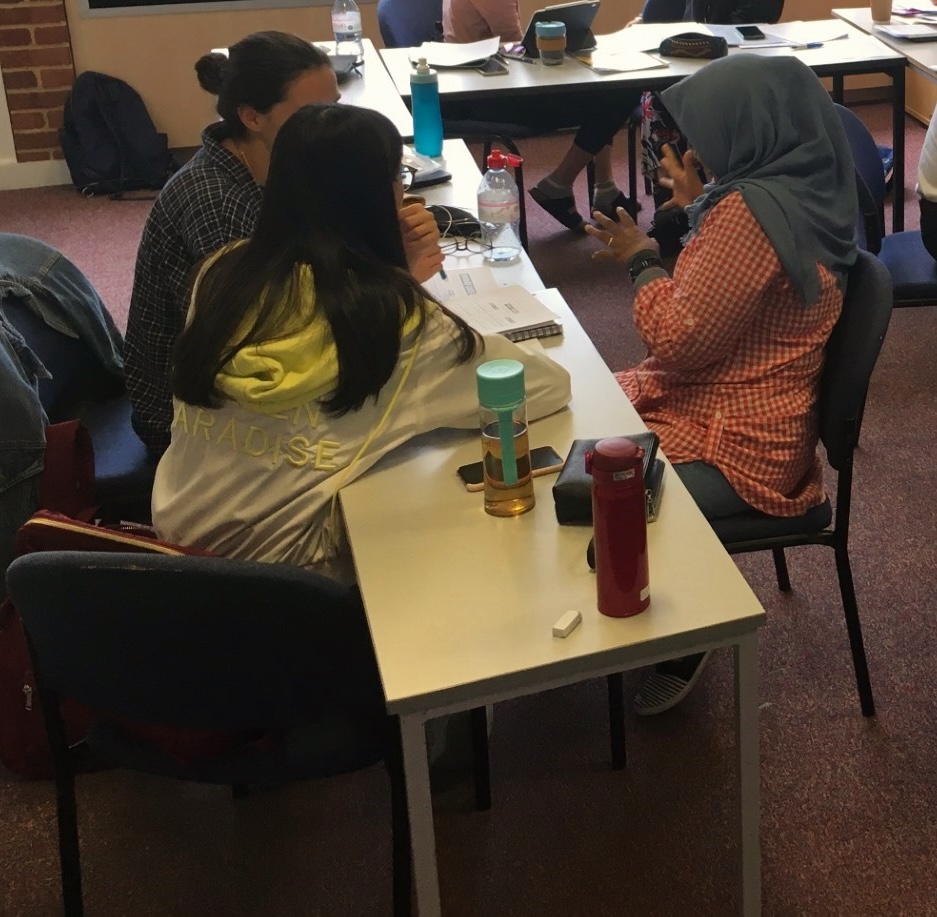
Students feel a greater sense of belonging when they see their own experiences reflected in the curriculum. The TASO Theory of Change curriculum review project at the University of Law noted as an impact that students of colour ‘show an increased sense of belonging as they identify more with the content of the curricula – are more engaged and find accessing curricular content easier, as it is more relevant to them’ (University of Law). Dr Xiangming (Tommy) Tao’s Business School modules contain diverse protagonists in business case studies, making the curriculum more representative and strengthening students’ sense of belonging. Feelings of belonging are linked to narrowing ethnicity awarding gaps. According to Banerjee, ‘When students feel connected to their institution and have a sense of belonging, they are more likely to persist and complete their degrees. This can help to reduce degree awarding gaps and improve outcomes for all students.’ (Banerjee: 43)
6. Academic skills and student support
Providing tailored academic skills support can also help to narrow awarding gaps. At the University of Birmingham, the Birmingham Scholar programme is ‘designed to support students from all backgrounds to thrive at university and beyond.’ It is offered to black students from the most deprived neighbourhoods, care leavers and students from non-selective state schools. ‘Preliminary quantitative evidence… suggests the Scholar programme may help to reduce awarding gaps by improving degree outcomes for Scholars who engage with the programme’ (Harper and Campbell 2023). Based on Museus’s Culturally Engaging Campus Environments (CECE) model of success for racially diverse student populations (Museus 2014), Hengyi Wang’s Learning Community programme (Business School) extends beyond academic skills to provide a comprehensive model that incorporates students’ personal development support.
How to use the toolkit
The toolkit contains a range of examples that can be adapted to different disciplines, from easy-to-implement tips for encouraging more engagement in the classroom to deeper-level change, involving rethinking systems of knowledge. It is organised in sections that I hope will be convenient for teachers. They don’t match the six factors above because most contributions relate to more than one factor for narrowing awarding gaps.
- Decolonising the curriculum
- Seminars
- Lectures
- Team-based learning and group work
- Assessment
- Academic skills and student support
The contributions all have a summary, course information, description of the practice and outcomes – how the practice can help to narrow ethnicity awarding gaps. Some include comments and reflections from students and/or tutors. The Resources section has links to materials for narrowing ethnicity awarding gaps from Sussex and other universities.
I welcome any feedback on outcomes from teachers who have used these or similar practices. This is an ongoing project. Please contact me if you’d like to contribute to the toolkit or have recommendations to improve it: Cath.Senker@sussex.ac.uk
Reference list
Bain, K. (2023) ‘Inclusive Assessment in Higher Education: What Does the Literature Tells Us On How To Define and Design Inclusive Assessments?’, Journal of Learning Development in Higher Education, 27: 1, https://doi.org/10.47408/jldhe.vi27.1014 (accessed 12 May 2026)
Banerjee, P. (2024) ‘Connecting The Dots: A Systematic Review Of Explanatory Factors Linking Contextual Indicators, Institutional Culture And Degree’, Higher Education Evaluation and Development 18.1: 48, https://doi.org/10.1108/HEED-07-2023-0020 (accessed 15 April 2026)
Canal, M.M. and Child, R. (2025) ‘Impact of the Type of Assessment on Awarding Gaps In Bioscience Undergraduate Degrees’, Assessment & Evaluation in Higher Education, 50.6: 991, https://doi.org/10.1080/02602938.2025.2500365 (accessed 15 April 2026)
Harper, P. and Campbell, L.B.M. (2023) ‘Addressing the Awarding Gap, Fostering Belonging: Developing Enhanced Academic Skills Support for our Birmingham Scholars’, Journal of Learning Development in Higher Education 29: 1, https://doi.org/10.47408/jldhe.vi29.1074 (accessed 24 April 2026)
London Metropolitan University (2025) ‘London Met Among Top Universities for Closing the Awarding Gap’, 20 November (accessed 21 April 2026)
Museus, S.D. (2014) ‘The Culturally Engaging Campus Environments (CECE) Model: A New Theory of Success Among Racially Diverse College Student Populations’, in Paulsen, M. (eds) Higher Education: Handbook of Theory and Research 29, Springer, https://doi.org/10.1007/978-94-017-8005-6_5 (accessed 12 May 2026)
Newbigin, E. and Tucker, S. (2025) ‘Teaching History Inclusively: A Pedagogical Case Study from an Institution Shaped by Empire’, Transactions of the Royal Historical Society, 1–27, https://doi.org/10.1017/S0080440125100510 (accessed 12 May 2026)
QAA (2024) ‘The Awarding Map’, available to QAA members (accessed 27 January 2026)
de Sousa, S.; Fatilewa, O.; Mistry, T. (2021) ‘Inclusive Curriculum and BAME Student Advocacy in a Business School: Reflections on Three Years of Inclusive Module Reviews’, Open University Widening Participation and Lifelong Learning 23.3: 48–56(9) https://doi.org/10.5456/WPLL.23.3.48ƒ (accessed 12 May 2026)
University of Law (2024), Monitoring of Inclusive Learning (MOIL) Panel, TASO (accessed 15 April 2026)