

Dr Deema Sonbol (Assistant Professor in Marketing)
A few years ago, I bought simple name tags from Amazon. It cost around £7. I decided to use it deliberately in my seminars because I wanted to know my students’ names – and, more importantly, I wanted them to know that I had made the effort to know them.
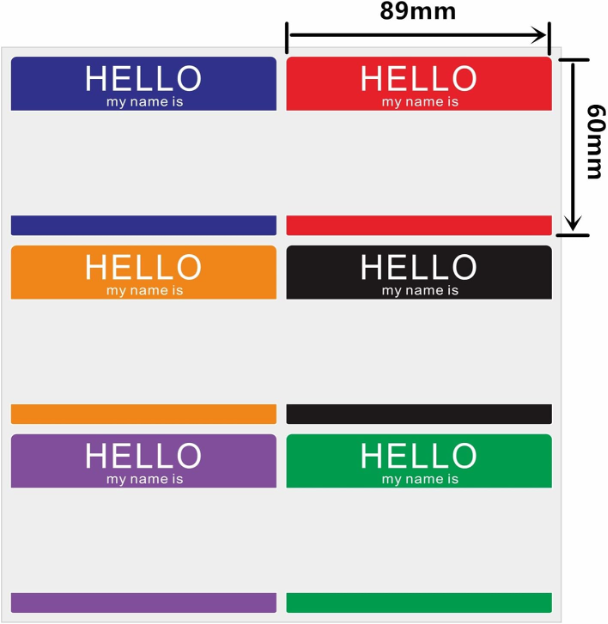
In my seminar cohorts, I would ask students to use the name tags so that I could learn their names and address them directly during discussions. In lectures, where the number of students made this more difficult, I would also try to use students’ names whenever they volunteered an answer or contributed to a discussion. This became something I was quite adamant about. I did not want students to feel that they were simply one person in a large cohort or another name on a register. When a student contributed, I wanted to be able to say their name: “Thank you, Sarah”, “That is an interesting point, Ahmed”, or “Yes, Maria, could you tell us a little more about that?” For me, the name tag was therefore not really about remembering names. It was a small way of changing the interaction between myself and my students.
University can sometimes feel anonymous. Students can sit in a room with hundreds of other people, attend lectures, submit assessments and leave without ever feeling that their individual presence has really been noticed. I have always felt that this matters. Knowing a student’s name may seem like a very small thing, but using someone’s name can communicate that you recognise them as an individual. It can also make it easier to create a classroom environment where students feel comfortable contributing, asking questions and engaging with their peers.
For me, this is closely connected to how I think about teaching. I want students to feel that they are worthy of my attention and that their contribution matters. There is also something quite powerful about the effort involved. I teach relatively large cohorts, so learning everyone’s name is not always easy. Students know this. They can see that there are many of them and only one lecturer standing at the front. That is why I wanted to make the effort visible. Using names tags was a small signal that said: I am trying to know you. It also helped me change my own behaviour. Rather than thinking of the class as a group of students, I was constantly reminded to see the people in front of me as individuals.
In module evaluations, students repeatedly commented positively on being known by name and on the relationship they developed with me. Importantly, I saw this positive feedback across consecutive years. This made me stop and think. Something that had cost me £7 had become something students remembered as part of their experience in my class. The comments suggested that what mattered was not the physical name tag itself. It was what the name tag represented: the feeling that their lecturer knew who they were and recognised their presence. For me, this was a useful reminder that students do not necessarily need grand gestures from us. Sometimes, the things that communicate care are remarkably ordinary. Learning a student’s name can change the way university interaction feels. It can make answering a question feel less like speaking anonymously in front of a room and more like having a conversation with someone who knows you. It can also make it easier for students to approach their lecturers outside class because the relationship has already started to become more personal and human.
The evaluation feedback did not prove that the name tags alone produced these outcomes, of course. Students’ experiences are shaped by many aspects of teaching and learning. But seeing the same theme emerge in feedback over consecutive years made me realise just how significant this seemingly small practice could feel from the student’s perspective.
Learning students’ names takes time, particularly when teaching large cohorts. It is much easier to remember the names of 15 students in a seminar than it is to remember the names of 200 students sitting in a lecture theatre. There is also the fear of getting someone’s name wrong. I have made mistakes, and I think it is important not to let the fear of making a mistake stop us from trying. Students are generally very understanding when you make the effort to learn how to pronounce or remember their name correctly.
I will continue using name tags and deliberately learning students’ names in my teaching. But I also want to go beyond my own classroom. I would like to encourage colleagues to think about the small, everyday things we can do to reduce the distance between staff and students. Knowing students’ names is only one example. Greeting students, remembering something they previously mentioned, asking how an assessment went, or simply acknowledging a student’s contribution can all help create a more human learning environment. If something as simple as a name tag can make students feel seen, recognised and valued, then perhaps it is worth asking ourselves what other small things we could do every day that communicate the same message.
For more guidance on the importance of pronouncing a person’s name correctly, and practical advice on how to do this effectively, please see Say Our Names.