
Chris Stocking (Assistant Professor in English Language Teaching), Jo Osborne (Lecturer in English for Academic Study), Natacha Akaliza and Erlinda Joseph (Intercultural Student Ambassadors)
Introduction
Many international students arrive at Sussex already carrying extensive intercultural expertise. Much of this has been developed previously by navigating different or unfamiliar contexts, learning to make sense of new social codes, and by building a feeling of belonging from scratch. In a 2022 plenary for The British Association of Lecturers in English for Academic Purposes (BALEAP), the applied linguist Adrian Holliday named this directly, describing international students as ‘intercultural experts’ in their own right. We think this reframing carries a real responsibility for a university like Sussex, to help students recognise the expertise they already have, and to support them in seeing themselves not as outsiders adapting to a pre-existing culture, but as people with the standing to help shape it. Interculturality, the concept underpinning all of this, is worth pausing on for anyone encountering it for the first time. It is a way of understanding culture, identity, and communication that treats these things as relational and always in motion, rather than as fixed features that can be read off someone’s passport. It stands in contrast to older, more static framings of cross-cultural difference, drawing instead on intersectionality, systems thinking, and a critical eye on how the language of ‘othering’ shapes who feels like they can belong.
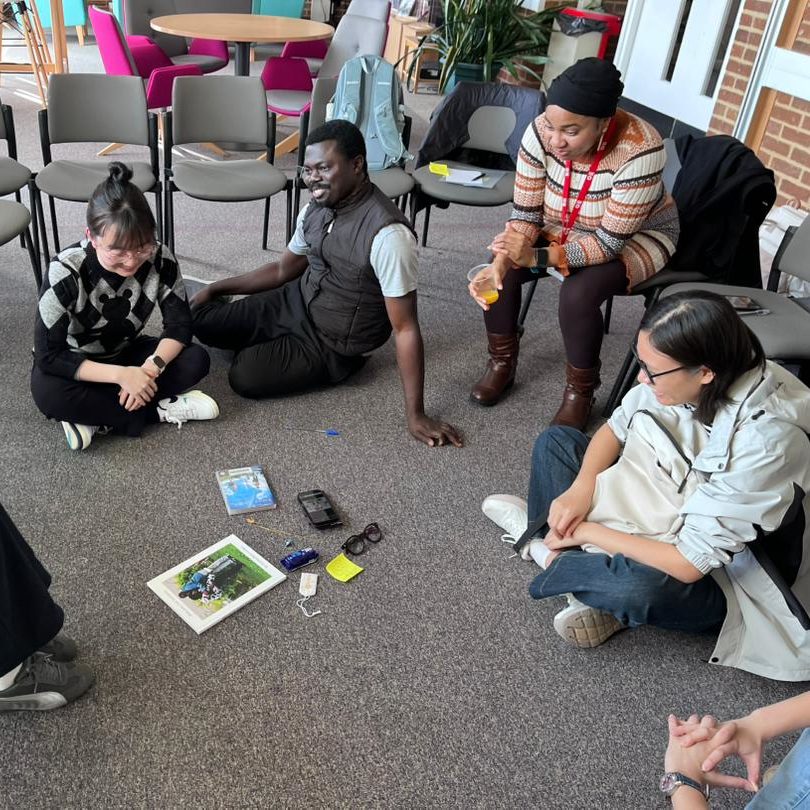
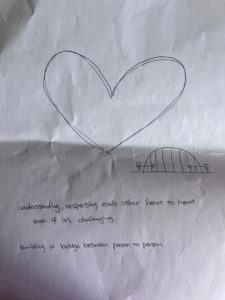
The Intercultural Reflection Series puts this thinking into practice. Designed by Chris Stocking and Jo Osborne and delivered by two appointed Intercultural Student Ambassadors, the Series unfolds across six sessions. Over the course of these sessions, international students come together in a student-led, discursive space created to support open dialogue and to provide a platform from which students might come to understand themselves and their place within the university’s academic culture in more meaningful ways. Each session takes on a different theme. In session 1, students explore how they define their own international identity. In session 2, they discuss how they have experienced being othered or have unintentionally othered others in turn. In session 3, they reflect on their relationship with English as a language they are expected to master rather than one they can claim as their own. In session 4, they consider what it means to be an ‘intercultural global citizen’ and whether such an identity position is even desirable. Session five introduces Adrian Holliday’s own ideas of how ‘small cultures’ (1999, 2016) form between people regardless of nationality, language or ethnicity, before the Series closes with a collective reflection in which students come together to share their learning and compose a shared poem. Alongside these in-person sessions, a dedicated Canvas site offers short, accessible pre-recorded videos on the intercultural theory underpinning these reflective sessions, introducing students to concepts like non-essentialism, ethnorelativism, intersectionality, native-speakerism, and small cultures, giving them a shared vocabulary for the expertise they already hold.
For the 25/26 year, the second year the Series has run, the reflective sessions increased from 1.5 hours to 2 hours, giving students a slower pace for meaningful reflection. The Intercultural Ambassadors also brought a new lens to the sessions, receiving instruction on ‘harvesting’ what Nora Bateson calls ‘Warm Data’ (2017). Conventional, ‘cold’ data isolates variables, treating, for instance, a student’s nationality or English language proficiency as facts that can be understood or measured on their own. ‘Warm Data,’ by contrast, insists that nothing meaningful can be understood in isolation from the living relationships and context it sits within. Applied to the Series, this means learning to see each student not as a data point to be measured against a fixed cultural or academic standard, but as a person embedded in an unfolding web of relationships: to their discipline, to the friends and the communities they have built at Sussex, and to the cultural contexts they have left and the ones they are now navigating. In this sense, the Series puts Warm Data harvesting into practice; it functions as a space in which the kind of relational, contextual sharing and understanding that intercultural learning asks of us can actually take place.
The effects of this learning have gone well beyond the sessions themselves. Students have told us that the Series gave them a space where they didn’t need to perform a version of themselves to fit in, and where speaking from their own positionality was validated collectively rather than smoothed over. It helped some feel, for the first time, a genuine sense of belonging and mattering to the university. Facilitated throughout by two incredibly caring and deeply humble Intercultural Ambassadors, Natacha Akaliza and Erlinda Joseph, the Series has also helped students build support networks that have outlasted the programme itself. Following the success of its first run in the 2024/25 spring term, the Intercultural Reflection Series has since developed into a certified CPD programme, offering formal certification for a kind of non-standard learning that can often go unrecognised.
Listen to and read more from our Intercultural Ambassadors and Series participants below:
1. Akaliza (Intercultural Ambassador)
Natacha Akaliza is a Rwandan daughter, sister, friend, and Tata (Aunt). Her professional experience spans research and analysis in climate adaptation, equity and social inclusion in Rwanda, including within smallholder agriculture. Her non-professional experience spans questioning, observing, laughing with tears, and overthinking. She is curious about the world and mostly humans, she is a lifelong learner.
Akaliza reflects on the Series
The Intercultural Reflection Series was a space where we, as international students, came together to reflect. I joined as a facilitator, not really knowing which student was going to show up, except my co-facilitator. The experience was quite new to me. Some of the concepts we discussed were completely new and unfamiliar, like lingua franca and essentialism, while others, like othering, were things I had come across before.
Some of the sessions were challenging, but not because we didn’t understand the concepts. It was more because of the different, and sometimes uncomfortable, views that we had to sit with. What I really appreciated was that people still showed up, even when the conversations were difficult. I think some of the deeper learning and connections happened because of that. We got to understand where other people were coming from, while also recognising our own biases and how they can sometimes get in the way of that understanding. But most importantly, I think we developed a deeper respect for each other.
There was also a lot of internal work happening for each of us. I realised that while some of the barriers are very real and valid, allowing those barriers to define how we interact with others is also, to some extent, a role we play. And unlearning some of those things is a role we can choose to play too.
Generally, I think students might hesitate to join something like this. They might wonder what it is, whether it is worth their time, or whether it will take away from their studies. And I understand that hesitation. But I don’t think this is an extra thing that takes time away. It is an opportunity to reflect, and I think it gives something back, in how you navigate classrooms, the campus, and the world. Because the understanding it gives you, of yourself, of other people, and of the spaces you share with others is not separate from the education you pursued. In many ways, I think it is part of our education. The part that teaches us new ways to think about relation.
2. Lindu (Intercultural Ambassador)
Erlinda Joseph (Lindu) is a gender, labour and migration researcher, educator and organiser with over 8 years’ experience supporting migrant, domestic and women workers across Southeast Asia. She is currently completing an MA in Gender and Development at the Institute of Development Studies, University of Sussex. She has experience in feminist participatory action research (FPAR), programme implementation, worker education and grassroots organising. Erlinda is also an avid hiker and long-distance runner who loves to challenge herself and believes nothing is impossible.
Lindu reflects on the Series
Through the Intercultural Series, I learned how to navigate spaces with people who are different from me. I realised that if I truly want to understand someone, open communication and sharing are essential; otherwise, I can never fully know that person.
During the Series, I initially thought I knew some people through our daily interactions. However, in the sharing sessions, I discovered many layers in each person that I had never known before. This experience opened my eyes to how many layers we all must unpack, negotiate, and accept to exist within a particular space. I found that unpacking these layers of the self was not easy, as they are often connected to different emotions and personal experiences. Nevertheless, I am grateful that I had the opportunity to do so through these sessions. The Series has changed the way I see others and helped me understand that many of my perceptions of people are shaped by my own upbringing and life experiences.
Another important lesson I learned from this Series was overcoming my lack of confidence when communicating in English with native speakers. I used to believe that I had to speak perfect English to have meaningful conversations. However, these sessions taught me that English is a lingua franca, and it is okay not to be perfect. Most importantly, the experience helped me develop ownership and confidence in my use of the language.
I am truly grateful for this space and the opportunity to be part of this Series. I especially valued the conversations and sharing sessions with Akaliza and Chris, as they inspired me to reflect more deeply on the world around me and how I connect with it.
I also enjoyed the facilitation sessions and learned a great deal about creating warm data, an area that I would like to pursue further in the future. In particular, I am interested in exploring how academic knowledge and artistic approaches can be combined to generate meaningful forms of data and understanding. I believe this perspective will be valuable for my future work and research.
Akini
Akinsanmi Fowowe is a dedicated researcher and academic with a strong interest in the sustainable utilisation of renewable biomaterials, biomass valorisation, wood adhesives, and nanocellulose isolation. He is currently pursuing a PhD at the University of Sussex, focusing on lignin-based anticorrosion coatings, a bio-based solution for industrial applications. With a background in wood products engineering, Fowowe holds an MSc in Pulp and Paper Technology from the University of Ibadan, Nigeria, where he also served as a Lecturer II. In 2024, he was awarded the C.V. Raman International Fellowship for African Researchers in India. His PhD is funded by the Black, Asian, and Minority Ethnic (BAME) Scholarship. He has contributed to the field through research publications and conference presentations.
Akini reflects on the Series
The Intercultural Reflection Series was a thought-provoking, structured course that moved beyond simple awareness into deeper self-examination and practical reflection. What stood out most was its progression, beginning with identity, moving through how we define others, then exploring language, competency, culture, and finally ownership of intercultural identity. That sequence, especially the short introduction videos, made the learning feel cumulative rather than disconnected, and encouraged critical engagement with the assumptions behind language and behaviour at the university, not just participation.
The main lesson learned was that identity is not fixed or singular, but shaped by context, relationships, and the language used to describe it. Terms like “global citizen,” “international student,” “native speaker,” and even “culture” carry hidden assumptions that influence belonging and exclusion, something the sessions on othering and English as a lingua franca made especially clear. How people are positioned in institutions can either empower them or leave them feeling peripheral. The course helped reframe interculturality as something active, ethical, and relational, rather than merely descriptive.
It also changed how I understood myself. My international identity is not simply a label given by an institution, but something I can define and own. It shifted how I think about mattering at the university too, not as someone merely adapting to a system, but as someone whose experiences, language practices, and perspectives contribute to the learning environment. That shift moved me from feeling observed or categorised to feeling visible and legitimate within the university community.
Learning, I realised, is not just about receiving information, but about participating, reflecting, questioning, and bringing my own experience into dialogue with others. My identity and perspective are not peripheral to that process but central to it. Ownership came to feel personal and shared at once, personal because I am responsible for my own development, and shared because learning becomes richer when different identities and perspectives are valued. Overall, the Series fostered a stronger sense of confidence, belonging, and agency, both in my intercultural identity and in my role as a learner.
Evy
Yuwei Qiu (Evy) is a first-year PhD student in English at the University of Sussex. Her research focuses on representations of Chinese merchants in British literature, particularly women merchants. With a background in Comparative Literature, this is her first experience of living and studying abroad for an extended period
Evy reflects on the Series
This course offered me a brand new perspective of seeing myself as an international student in Sussex and in the UK. The arrangement of the course is reasonable and inclusive. The facilitators put a lot of effort into preparing, left enough space for participants to think and share, led us through our daily experience with theories as a tool, and helped me to be more conscious about myself and the environment. The Canvas is also useful with the keywords and bibliography.
In terms of what I learned, first is knowledge about intercultural theories and studies. I was familiar with some–like stereotype, identity, global citizen and othering, but not with others–like essentialist paradigm of culture, lingua franca, intercultural blocks and threads. This course helped me understand all of them better and deeper. Also, I made some good friends during the course. It was not easy to really pay attention to someone, try to understand another culture without pretending I do when the difference is huge and obvious, and to be honest and polite. I have learned to be more open and honest with myself and others and would say it is the best thing to take away for the rest of my life. What’s more, our facilitators also inspire me on how a class could be. This course is based on individual experiences, so it is very important that the participants can feel safe and creative when we try to dig into the deeper part of our daily experience and feelings. I really enjoy all the painting, poem writing and dancing as tools to learn more about myself and others and would love to use it for my future classes.
Beyond what I learned, the course also changed how I understood myself and my sense of mattering at the university. Yes, definitely. I was not confident when I speak to native speakers or in a public space, always reflect on how others would think about me and the grammar mistakes I made. But now I realize I am not less qualified with using the language as a tool to communicate. Also I am more conscious and cautious when I try to make judgement about other people. I have learned to read people as individuals instead of the products of different cultures.
Looking ahead, I think I will be more comfortable to get engaged in different activities (both academic and others) and to reach out for help if it’s needed. And I would feel more qualified and confident to be an international student.
Miki
Miki Fukase is currently talking an MA in International Education and Development at Sussex.
Miki reflect on the Series
The Intercultural Reflection Series helped me reflect more deeply on my identity as an international student, not as something fixed or simply defined by nationality, language, or institutional labels, but as something dynamic, relational, and constantly changing.
One of the most important things I learned was to move away from an essentialist understanding of culture. It is easy to say, “Japanese people are like this,” “British people are like that,” based on what we learned from different sources. However, the Series helped me realize once again that these categories, while sometimes useful, can also limit how we understand ourselves and others. I began to see culture as more heterogeneous, fluid, and shaped through relationships and lived experiences.
The discussions on othering and agency were also particularly meaningful for me. As an international student, I have sometimes felt that I am seen through narrow assumptions, for example, as someone whose English is not perfect, someone who needs help, or someone who comes from a different culture. At the same time, I also realized that I unconsciously categorize others by nationality, language, accent, or cultural background. This awareness made me more careful about how I see and speak about others. It also reminded me that ignorance or incorrect assumptions can hurt people, even when there is no bad intention.
One more thing I learned is that intercultural understanding does not simply mean accepting everything without question. Sometimes we need to listen with openness and humility; at other times, we also need to draw boundaries and say clearly when something feels wrong. For me, intercultural learning involves both the courage to make mistakes and the courage to accept, respect, and learn from other people.
Another important learning point was about language ownership. Studying in English, I have often felt insecure about whether my English is “good enough.” However, through the discussions on English as a lingua franca and language ownership, I came to understand English not as something owned only by native speakers, but as a shared language through which people from different backgrounds create meaning together. At the same time, I also became more aware that English can have very different meanings for different people, especially for those whose own languages have been marginalized or displaced. This reminded me that language is not just a communication tool; it is also connected to identity, power, memory, and respect.
More broadly, the Series encouraged me to connect my personal experiences with theory, to ask questions in my own words, and to allow my thinking to change through dialogue with others. Speaking with people from different cultural backgrounds in the class helped me understand not only others, but also myself more deeply. Differences can create misunderstandings and tensions, but they can also be beautiful. In an increasingly globalized world, where more cultures and experiences are being shared across borders, I want to continue valuing difference, listening carefully, and respecting others as whole human beings.
I also really appreciated the structure and atmosphere of the Series. The two student facilitators provided thoughtful and supportive navigation throughout the sessions, and the materials prepared by the teacher were clear and accessible. The space felt inclusive and welcoming, making it easy for students to participate. I especially valued the use of dance, poetry, and art, as these creative activities helped reduce the distance between students and created a more open environment where we could share our thoughts honestly.
Overall, the Intercultural Reflection Series gave me a valuable opportunity to reflect on who I am, how I relate to others, and how I want to take ownership of my learning and identity at university. It helped me feel that my experiences, questions, and voice matter within the university community.
Kina
Kina Nicholas is currently talking an MSc in Climate Change, Development and Policy at Sussex. They reflect on the Series:
The Intercultural Reflection Series helped me understand culture as something that is dynamic, complex, and shaped by people’s different identities, histories, and experiences. The concepts that stood out most to me were intercultural competency and global competency, because they encouraged me to think about how we build belonging through care, empathy, and openness, especially when we encounter difference.
One of the most meaningful parts of the Series was realising how much intercultural learning already happens in everyday university life. For example, living with flatmates from completely different cultural backgrounds has taught me how important it is to listen, ask questions respectfully, and share parts of my own culture too. Our cultural dinner nights, where we cook food from our own countries and explain its meaning, have become a practical form of intercultural dialogue. They show how connection can be built through small acts of sharing, curiosity, and mutual respect.
The Series also changed how I understood myself and my sense of mattering at university. Being in a multicultural class again reminded me that my own background, experiences, and perspectives are valuable. Hearing from others helped me appreciate that everyone brings different “threads” of experience into the classroom, into the study space, into what makes the University of Sussex, with students from over 173 countries, a unique and inclusive space; and that these differences can deepen learning rather than divide us.
Finally, it helped me see greater ownership in my learning. It made me feel that learning is not only about receiving knowledge from lecturers, but also about contributing my own experiences, reflecting critically, and learning through dialogue with others. It encouraged me to take more responsibility for how I engage with people, ideas, and difference at this amazing institution. It was truly a joy to take that mid-week break and vent, learn, understand and improve through these reflection Series. This was an extremely valuable addition to my university experience!
Closing comments
Taken together, these reflections return to a handful of the same ideas, arrived at independently by students who had never held conversations about interculturality with one another before. Each describes a shift away from thinking about identity, culture, or language as something fixed, given by a passport or ethnicity, and toward something made, in relationship, through the specific people and situations each student found themselves navigating. Each also describes a similar movement in how they came to see their own place at Sussex, from feeling observed or categorised to feeling genuinely legitimate, visible, and heard. And each, in their own words, connects that shift to a changed understanding of learning as something they actively own and shape by drawing on their own experiences, cultural frames, and positionality.
Enacting Sussex 2035
The Intercultural Reflection Series embodies the spirit of the University of Sussex’s 2035 Strategy, promoting Global and Civic Engagement, Human Flourishing, and Global Knowledge Equity. It empowers students to understand themselves not as passive participants in a global university, but as active contributors to a more equitable, connected, and culturally conscious academic community.
References
- Bateson, N. (2017) Warm Data. Available at: https://norabateson.wordpress.com/2017/05/28/warm-data/ (Accessed: 17 August 2026)
- Holliday, A. (1999) Small cultures, Applied Linguistics, 20(2), pp. 237–264. https://doi.org/10.1093/applin/20.2.237
- Holliday, A. (2016) Revisiting intercultural competence: small culture formation on the go through threads of experience. International Journal of Bias, Identity & Diversities in Education, 1(2). pp. 1-14. https://doi.org/10.4018/IJBIDE.2016070101