

Welcome to the Education at Sussex Newsletter. Your update to support the student experience at the University.
Welcome to the Education at Sussex Newsletter

Our newsletter aims to support everyone’s work in education by bringing together the latest updates, opportunities, events and examples of inspiring educational practice from across the University. It highlights the ideas and innovations shaping our students’ learning and experience, helping colleagues stay connected, share good practice and build momentum around education. Further education resources for staff at Sussex can be found under the Education tab on the Staff Hub, and on the Learning Matters blog.
This month’s theme is inclusive education: central to our institutional priorities, essential to the success of all students, and particularly relevant to enhancing the international student experience. Useful resources include the Education and Student Life Strategic Plan (for connecting inclusive practice with our education and student experience priorities), Inclusive Sussex (for understanding our approach to equality, diversity and inclusion), and information on the forthcoming OfS statement of expectations in relation to disability (for preparing to strengthen disabled students’ access, participation and outcomes).
Useful links: Staff Hub: Education | Learning Matters | Newsletter archive
Contents
1. Welcome from Professor Zahid Pranjol: Inclusive educational practice in the sciences

With teaching now well under way, this issue turns to inclusive education. It runs through almost every conversation I have with colleagues, whether we are discussing assessment, belonging, or the first-year experience. Here is what has shaped my thinking, and where I hope we go next.
Much of what I know about inclusion I learned by supporting students to make decisions about how to approach their education. In our biomedical science modules, small groups choose a disease, plan how it would be diagnosed and treated, then decide how to present it: a poster, a short video, a mind map or a slide deck. My chapter in Cath Senker’s Inclusive Teaching Practices toolkit sets out why that choice matters. When students draw on skills they already have, more of them can show what they know, and three in four told us the projects helped them connect learning across modules. Many groups also become lasting support networks, as our Learning Matters case study on formative group work describes.
Choice is also central to my work on inclusive STEM curricula. Inclusion is often discussed in terms of reading lists, but assessment is where questions of fairness are sharpest, and letting students decide how they show their learning is one practical way to address that. Content matters too. That means telling fuller stories of science, from Rosalind Franklin’s part in revealing the structure of DNA to Onesimus, whose knowledge of smallpox inoculation reached Boston decades before Jenner. It also means global classrooms, linking our students with peers in India and Africa. As I said on the Learning Matters podcast, the aim is to widen the canon of STEM curricula, not erase it.
Looking ahead, I would like us to build on this in three ways. First, assessment designed at course level, not module by module, with choice of format (where learning outcomes allow) and tasks that stay authentic alongside generative AI. Second, designing for belonging from day one, through structured peer learning, strong personal tutoring and working with students as partners. Third, a sharper habit of evaluating our education: looking at continuation, awarding and progression data course by course, and testing what we try with the same care we bring to our research.
Much of our best practice happens quietly within individual modules. If you are trying something others could learn from, please email AcademicDevelopers@sussex.ac.uk to share it in a future issue.
2. Resource spotlight
Inclusive Teaching Practices toolkit
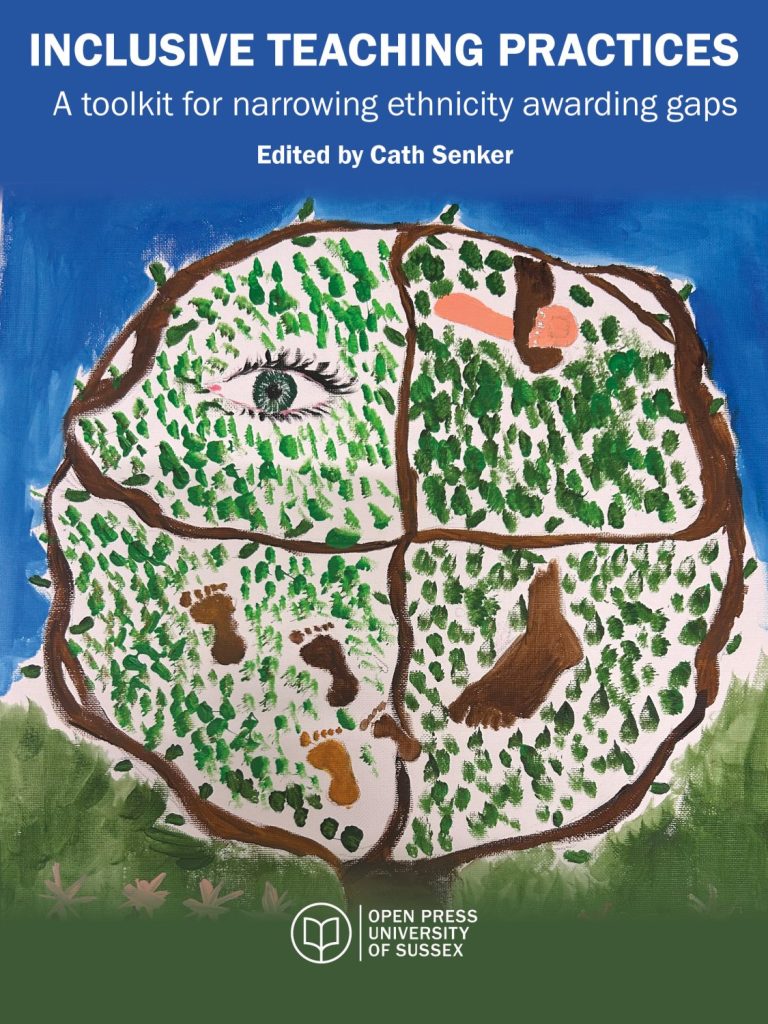
Don’t miss the new Inclusive Teaching Practices toolkit, edited by Cath Senker (Assistant Professor in Academic Skills). A valuable source of evidence-informed practice and a celebration of the innovative work already happening across our community, the toolkit draws on excellent practice from colleagues across Sussex. Explore the toolkit to find practical examples and case studies from a range of disciplines, with ideas that can be adapted to your own teaching.
The launch event for Inclusive Teaching Practices is happening on Wednesday 28 October at 1–2pm. The event will be held in the Gallery in the Library. Light refreshments will be provided. Please RSVP if you wish to attend.
Intercultural Reflection Series
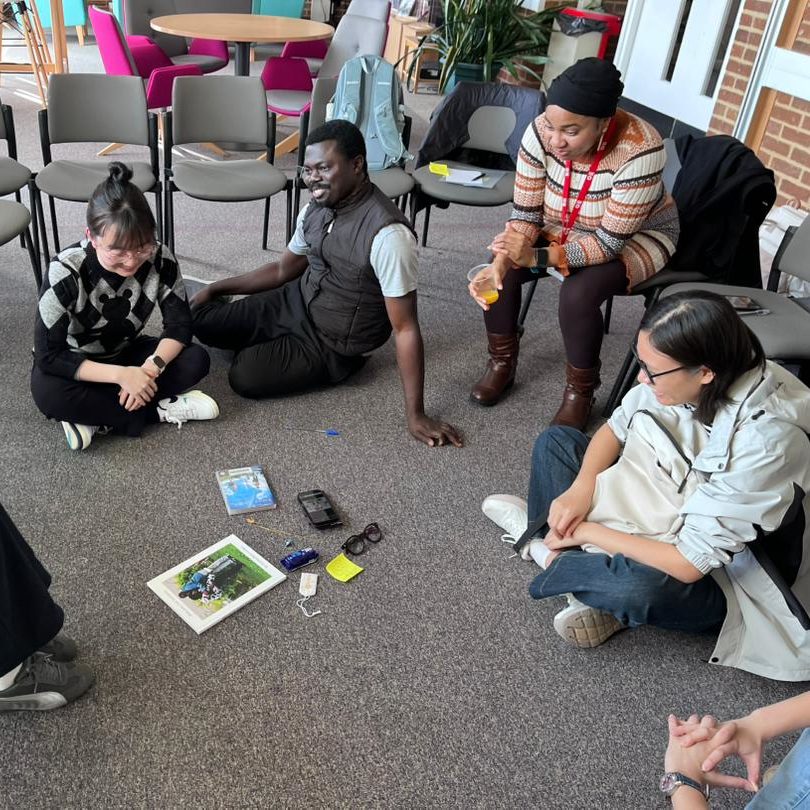
How can we create learning spaces where students can engage meaningfully with difference, reflect on their own assumptions, and develop a stronger sense of belonging? Two recent Learning Matters posts by Chris Stocking and Jo Osborne explore this question through the Intercultural Reflection Series and a new set of eleven principles for critically reflective intercultural learning. Grounded in feminist, decolonial and intercultural pedagogies, the principles offer an ethical framework for facilitating dialogue that balances challenge with care, while the student-led Series demonstrates their impact in practice. Colleagues interested in inclusion, intercultural learning and student engagement are encouraged to explore both articles.
Recruitment is currently underway for two Intercultural Ambassador positions for the 2026/7 Intercultural Reflection Series. The programme is planned to run on Wednesday afternoons from Weeks 5-10. Session times and locations are still being confirmed. Details will be shared with faculties once the times and locations are confirmed.
The Intercultural Reflection Series and a new set of eleven principles embody the spirit of the University of Sussex’s 2035 strategy, promoting global and civic engagement, human flourishing, and global knowledge equity. They empower students to understand themselves not as passive participants in a global university, but as active contributors to a more equitable, connected, and culturally conscious academic community.
Collaborative Autism Learning, Scholarship and Education (Coaslesce)
COALESCE is a research and scholarship group in the School of Psychology at the University of Sussex. They bring together autistic people, researchers, educators and community partners to explore how autistic people learn, create, and experience the world. Their work spans research, teaching, co-production and engagement, with a focus on inclusive learning and meaningful collaboration. Find out more about the group and their upcoming events via their webpage.
3. Updates and events at Sussex
Professor Michael Okorie awarded prestigious National Teaching Fellowship
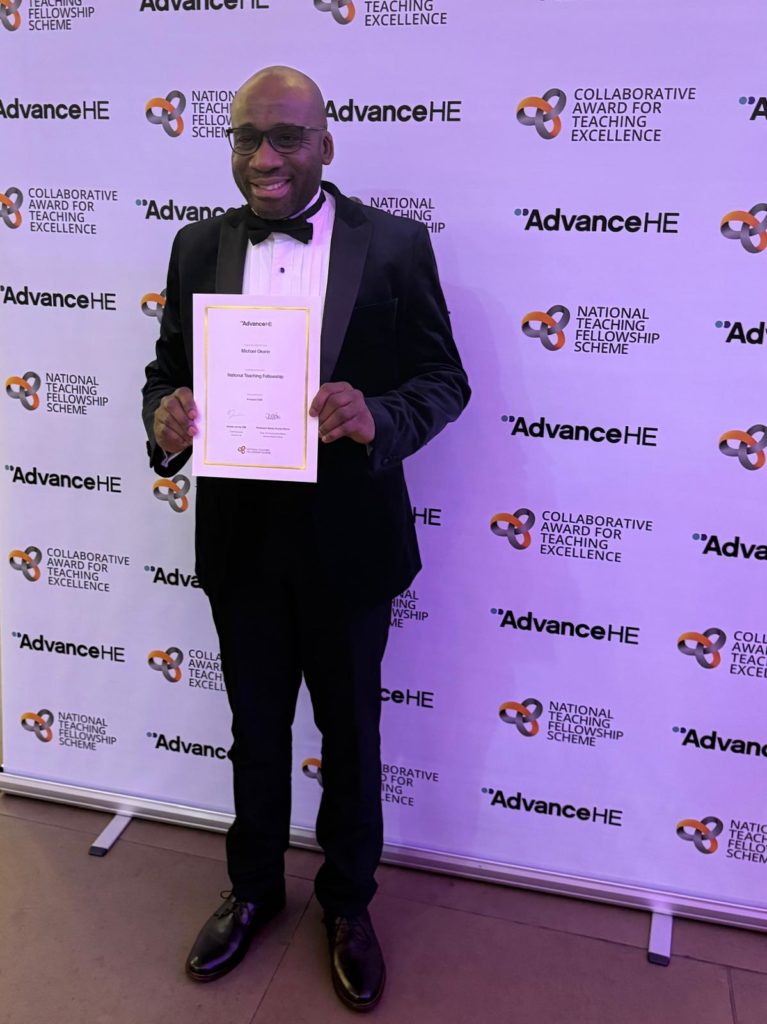
Congratulations to Michael Okorie, Professor of Clinical Pharmacology & Therapeutics and Head, Department of Medical Education at Brighton and Sussex Medical School (BSMS), who has been awarded a prestigious National Teaching Fellowship from Advance HE. This special award recognises Professor Okorie’s outstanding contribution to student learning and teaching in higher education. Read about it on the Staff Hub.
Course Convenor Canvas Site and Induction Session
On Wednesday 7 October, we hosted the Course Convenor Induction Session. It was great to see such a positive turnout and level of engagement, and we would like to thank everyone who attended. For colleagues who were unable to join us, we recorded the session and all of the information covered is also available on the Course Convenor Canvas site. This is a developing resource, and we welcome your feedback on both the induction session and the Canvas site. If you have a couple of minutes to spare, please complete this short feedback form. This will help us improve our resources.
Teaching in the Forest Food Garden
Did you know that the Forest Food Garden can be booked for teaching, research, and community activities? This unique outdoor learning space provides an opportunity to bring teaching and research into a natural environment and is available for colleagues across the University to use.
The garden can be booked via the Forest Food Garden Teamup calendar. The space is large enough to accommodate more than one group at a time, but if you notice an existing booking, please contact Perpetua Kirby (p.kirby@sussex.ac.uk) to discuss availability. If your activity requires gardening equipment or access to waterproof coats and wellies, Perpetua can also arrange access to the garden shed key.
For activities that would benefit from a combination of indoor and outdoor teaching, the nearby Northfield Bar is also available to book. The space includes a screen for presentations and offers shelter in wet or very sunny weather. To arrange a booking, please contact Ryan Tobin (R.Tobin@sussex.ac.uk) or Wayne Spicer (W.Spicer@sussex.ac.uk).
Whether you’re planning a field-based teaching session, student project work, research activity, or community event, these spaces offer exciting opportunities to diversify learning beyond the traditional classroom.
Spotlight on AI
Read the September spotlight on AI in Education post for updates on: reflections on developing AI-literate graduates, Microsoft CoPilot’s new TeachApp for staff, and insights into emerging trends in teaching, assessment and accessibility plus links to new publications and events across the sector.
Save the date: Sussex Education Festival
The next Sussex Education Festival will be held on 7 May 2027 in the Conference Centre at Bramber House. Please save the date. Further details, including the call for proposals, will be shared via Learning Matters News and this Newsletter in due course.
Save the date: Community Engaged and Experiential Learning. A Symposium
Across Sussex, colleagues are developing innovative experiential learning through community partnerships, live projects, professional practice, fieldwork, placements, and real-world challenges. To showcase this work and connect colleagues across disciplines, Katherine Kruger is organising a short symposium on 7th April 2027, 12 – 4 pm. Arts C 233. The event will provide an opportunity to share experiences and explore what makes experiential learning meaningful for students, partners, and staff. Sussex colleagues interested in contributing are invited to contact K.Kruger@sussex.ac.uk
For regular updates on education-related events, don’t forget to engage with the Scholarship area on Teams.
4. Career development opportunities
Senior Fellowship

Want to be among the first to achieve Senior Fellowship through Sussex’s new accredited scheme? Our first submission deadline is Monday 2 November 2026 at 5pm. This early route is ideal for colleagues who already have substantial evidence of leading and enhancing learning and teaching. To join this first cohort of applicants, or to find out more, email sfhea@sussex.ac.uk. Standard submission opportunities are also available each November, February and June.
5. Scholarship opportunities, resources and events across the sector
- 10-Year ALNiversary Showcase: A Decade of Active Learning. Every Tuesday this November, the Active Learning Network (ALN) celebrates its milestone 10-year anniversary with the global ALNiversary Showcase! Sessions will provide concrete, actionable strategies that you can immediately embed into your own teaching, module design, and curriculum leadership.
- Explore upcoming Wonkhe events. From sector-leading conferences and ticketed events to free webinars and subscriber sessions, Wonkhe offers regular opportunities to engage with current debates and developments in higher education.
- The Times Higher Education Webinar Series brings together academic leaders and sector experts to explore topics such as AI in education, student success, digital transformation and internationalisation. These free online webinars offer practical insights to support teaching, learning and institutional practice.
- The AdvanceHE Teaching and Learning Conference 2027 will bring together academics, professional services colleagues, technicians, institutional leaders, researchers, students and sector partners to explore how higher education can shape futures, reimagine education and empower society in a changing world. Call for papers closes on 24th November 2026.
- The Advance HE Equality, Diversity and Inclusion Conference 2027 provides a space to rethink and refresh approaches to EDI, celebrate successes, and contribute to a collective conversation about shaping the future of equality, diversity and inclusion in higher education globally. Colleagues are invited to submit proposals. The submission deadline is 30 October 2026
- In September, the Quality Assurance Agency (QAA) hosted a week-long online Assessment and Feedback Roadshow, bringing together colleagues from across the UK to explore the future of assessment in higher education. The programme featured 45 sessions showcasing evidence-informed practice, innovative approaches, case studies and practical toolkits. Session recordings are now online, and we encourage colleagues to explore the programme, which offers valuable insights for anyone involved in teaching, learning and assessment.
Useful links: Staff Hub: Education | Learning Matters | Newsletter archive