In this case study, Dr Myrna Hennequin, Lecturer in Economics, shares her strategies for making online quantitative assessments more AI resilient.
What I did
I redesigned the online assessments for the module Quantitative Methods for Business and Economics: Maths (QMBE A). This introductory maths module for Foundation Year students is assessed by several Canvas quizzes. My goal was to create computer-markable exams that are varied, balanced and more resilient against academic misconduct through AI or collusion.
Why I did it
Creating effective online assessments for quantitative modules poses several challenges. With the rapid rise of AI tools such as ChatGPT, I was concerned about cheating through the use of AI. At the same time, timetabling issues implied that the window during which the in-semester tests were available had to be extended from one hour to four hours, increasing the opportunity for collusion.
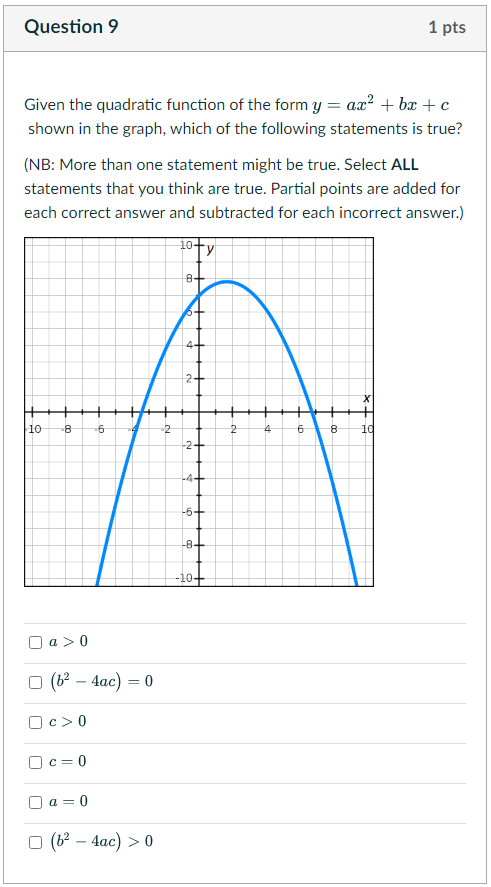
In response to these issues, I aimed to make the quizzes more resilient. As the current free version of ChatGPT (GPT-3.5) does not allow for uploading images, I ensured that each quiz included one or more questions involving graphs.
I also took advantage of Canvas’s built-in maths editor, which puts formulas in LaTeX format. It is currently not possible to directly copy these formulas into ChatGPT, which deters students from quickly copying an entire question including formulas.
Another strategy I use is randomisation. Canvas allows for randomising questions as a whole by using question groups or setting up numerical questions with random numbers using formula questions. To prevent collusion, I ensured that nearly all quiz questions were randomised in some way.
Lastly, I created a varied and balanced exam by using different question types. Even within the MCQ assessment mode, there are many ways to ask questions beyond the standard multiple-choice question consisting of a prompt and a set of answer options. I make use of a range of question types available in Canvas quizzes:
‘Formula questions’ are numerical questions with randomised numbers.
‘Fill in multiple blanks’ can be used to let students construct a step-by-step solution to a problem.
‘Multiple answers’ are multiple-choice questions where there might be more than one correct answer.
‘Multiple dropdowns’ are essentially fill-in-the-blank questions with predetermined answer options.
‘Matching’ questions ask students to match a series of statements to a fixed set of answer options.
Combining various question types makes it possible to test different aspects of learning and get students to demonstrate depth of knowledge in a computer-markable format.
Challenges
Designing robust quizzes and AI-proofing questions requires time and creativity. It can be time consuming to plan new approaches and to test how well ChatGPT responds to each type of question. However, the Canvas instructor guide proved very useful as it introduced me to the different possibilities within Canvas quizzes.
Impact and student feedback
I always provide practice quizzes containing the same type of questions as the official assessments, so that students know what to expect and can prepare in advance. Students are happy with this combination of summative and formative assessments: on this year’s mid-module evaluation, 21 students (out of 62 respondents) mentioned the practice quizzes and/or the official online tests as a positive point in their written comments.
In terms of results, the distribution of marks for the assessments this year was very much in line with previous years. This suggests that the marks were not inflated by the use of AI tools or other misconduct.
Future plans
While my approach makes the quizzes more robust for the moment, AI tools are rapidly evolving. I would expect AI to get better at dealing with images (e.g. graphs) and mathematical formulas. This will be an additional challenge for the future.
Top 3 Tips
Think creatively: can you ask your quiz questions in a different way? Consider making use of the various question types available in Canvas quizzes.
Include images (e.g. graphs) to make it harder to answer questions using AI (*). Use Canvas’s built-in maths editor for any formulas so that they cannot directly be copied.
Use randomisation to deter collusion. You can randomise questions as a whole by using question groups, or set up numerical questions with random numbers using formula questions.
(*) NB: Don’t forget that some students may have visual impairments and require screen readers. You could try to add alt text to the image in such a way that the quiz question can still be answered, but without giving away too much information.
Science Policy Research Unit, University of Sussex Business School
Katerina Psarikidou is Lecturer in Sustainable Development at the Science Policy Research Unit. She is the University of Sussex Business School PRME Champion, a UN initiative for Responsible Management Education. She is a Fellow of the Higher Education Academy and the Sussex Sustainability Research Programme. She is principal and co-investigator for 3 scholarship and research grants engaging in processes of co-creation with student and citizen communities. Her pedagogic scholarship is published at the international journals of ‘Postdigital Science and Education’ and ‘International Med Education’.
Alejandro Luna is a Lecturer in Sustainability, Innovation and Energy Policy in the Science Policy Research Unit (SPRU). He is convenor of the MSc course Science and Technology Policy. He is one of the Business School UN PRME Champion Institution Co-Leads. He is investigator in a USBS-funded scholarship grant. Alejandro sits at the Resilience Frontiers Technology Advisory Group (part of the UNFCCC secretariat). He is a Fellow of the Higher Education Academy.
Introduction
As part of our university lives, we have all encountered ideas of ‘inclusive curriculum design’ as a key objective and imperative of teaching and learning in Higher Education Institutions (HEIs). However, what does it mean? And, what is the role of students in it?
As early as 2011, Advance HE published its commissioned report ‘Inclusive Curriculum Design in Higher Education’ providing definitions, generic guidance as well as specific to subject or disciplinary area (Morgan and Houghton, 2011). According to this report, “an inclusive curriculum design approach is one that takes into account students’ educational, cultural and social background and experience as well as the presence of any physical or sensory impairment and their mental well-being” (Morgan and Houghton, 2011, p.5). As also highlighted in the report, “it is an imperative on institutions that they design their curriculum in such a way as to promote success among all students” (ibid:5).
From the above, we understand that students are central to the mission of (re)designing university curriculums in more inclusive ways. However, what needs to be clarified in the above, is the role that students can play in the process of (re)designing curriculums in more inclusive ways.
Inclusive curricula and co-creation
It is often the case that inclusive curriculums are designed by university educators themselves without engaging students in the formulation of ideas and proposals for more inclusive teaching, learning and assessment practices. As also discussed in relevant scholarship literature, student engagement can be key for student learning – not only in terms of securing the effectiveness of the (re)designed curricula, but also in terms of enhancing students’ belonging to the university, and therefore their overall levels of retention and academic performance (Zhao and Kuh, 2004; O’Keeffe, 2013).
This was also our experience and understanding from discussions we had with our students in late 2023, as part of our USBS-funded scholarship project titled ‘Co-creating a USBS staff-student community on innovative teaching and learning’.
In December of 2023, as part of our scholarship grant, we conducted two co-creation workshops with students from two ODL modules that each of us convened and had recently delivered. The ODL MSc Sustainable Development course provides fertile ground for (re)designing curricula in more inclusive ways – both in terms of the diversity of the student cohort coming from all parts of the world, age groups, ethnic, professional and disciplinary backgrounds, but also in terms of the challenges of inclusion that can sometimes emerge in relation to online teaching and learning (Mackenzie et al, 2021).
As also indicated in the title of our project, the aim of our workshops was to engage students in co-designing innovative methods for teaching, learning and assessments that would put students’ learning needs centre stage.
In both workshops, students highlighted inclusion as a key objective as well as a challenge for (re)designing the curriculum, especially in online environments. As said:
“I also just wanted to pick up on the interesting on the diversity and inclusion…that was what triggered my thinking around how I think it’s a real challenge when you’re doing online learning” (Student 1, Workshop 2, 2023)
Students as active agents in their own learning
As students explained, for them, ‘inclusion’ referred to a diversity of both teaching and learning methods that can cater to people’s different learning needs, but also to methods that can make students more active agents in their own learning.
For example, students from both workshops proposed student-led seminars for case-based learning. They proposed the organisation of cross-module seminars that would be led and delivered by students, in which students could present cases related to their own professional, cultural and disciplinary backgrounds and experiences.
As students explained, these seminars would also be important for enabling students to advance their knowledge by “putting theory into practice” (Student 1, Workshop 1, 2023). However, they also stressed the importance of these seminars in creating new more inclusive spaces of learning: both in terms of students being actively involved in running the seminars but also in terms of fostering social interaction and community belonging amongst themselves and to the university.
However, what students also underlined that they find “most useful” was “conversations like these” (Student 2, Workshop 1, 2023) facilitated by our workshops, and thus processes in which students feel included in discussions about (re)designing curriculum in more inclusive ways.
Thus, as evidenced in our workshops, questions and aspects of inclusion have been key in students’ discussions as well as their proposals going forward. Students talked about inclusion as a key challenge, especially in the context of online teaching and learning, but also as a key solution to enhancing their own student experience and learning. As also evidenced above, for them, (re)designing the curriculum in ways that would support the development of student-centred as well as student-led learning communities is key for supporting their learning in more inclusive ways. However, for students what is also important and would like to see more of is their engagement in processes of (re)designing the curriculum, in ways that have been done through our workshops!
Conclusion
The discussion above raises some broader questions about inclusive curriculum design. From our co-creation workshops, we learned that inclusive curriculum design is not just about methods of teaching in class and how to make them more inclusive. There is also a lot of learning that takes place outside the class, and it is for us, as educators, to support student learning by facilitating the development of those student-led communities of learning. Finally and very importantly, it is also very much about how to make processes of curriculum design more inclusive in order to design methods of teaching and learning that are truly inclusive. And, here student engagement is key. And, as students commented, our workshops can be an example of how this can be done!
References:
MacKenzie A, Bacalja A, Annamali D, Panaretou A, Girme P, Cutajar M, Abegglen S, Evens M, Neuhaus F, Wilson K, Psarikidou K, Koole M, Hrastinski S, Sturm S, Adachi C, others (2022) Dissolving the dichotomies between online and campus-based teaching: A collective response to the manifesto for teaching online, Postdigital Science and Education, 4(2): 271-329.
In this case study, Seun Osituyo, Deputy Director of Student Experience and Director of MSc Accounting and Finance at USBS, explains how she uses Vevox to increase student engagement.
What I did
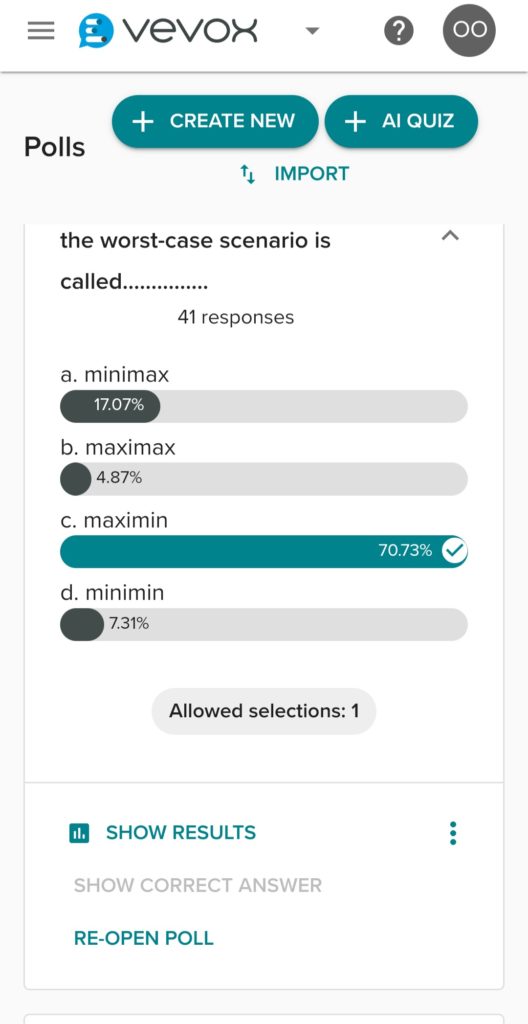
One of the tools I have used to promote active participation during my teaching is Vevox. I set multiple choice questions on Vevox, based on a previous lecture or seminar. Then students are provided with the meeting ID and asked to attempt the questions on Vevox at the beginning of the lecture or seminar.
Why I did it
I am always interested in improving student engagement during my lectures and seminars. Many students have smartphones, and I thought it would be useful to engage them using the device that they are already familiar with. Some students also bring other devices such as laptops and tablets to the classroom. Students can access the Vevox site with these devices and do not need to create an account to use the tool. One benefit of Vevox is that it allows anonymity. Students’ responses on Vevox can be completely anonymous (unless they choose to indicate their names in their responses). Vevox is incredibly helpful when delivering a module for the first time as it allows me to check that students have understood the concept(s) I am teaching. I also use Vevox to collect informal feedback on my teaching delivery. This feedback helped me know, for example, that I was speaking too fast during the first lecture and that helped me improve in other lectures I had with the same cohort. Many students are motivated when they are listened to and using Vevox helped me to build a comfortable environment for students to achieve the learning outcomes.
Challenges
I did not encounter any challenges when using Vevox. The process was really simple–I only had to create the quiz and share the session ID with students to access it during the lecture.
Impact and student feedback
Students who participated in the Vevox exercises found them useful. One student mentioned Vevox in their comment on the best aspects of the module, explaining that they enjoyed being given formative assessments regularly. I used Vevox every week on that module. This student wrote: “The way that the lectures are taught like workshops and how there is a test in the seminar. This motivates you to go away and learn the lecture content ready for the test in the seminar.”
Future plans
I have continued using Vevox to check students’ understanding of concepts. In my most recent module, I used Vevox every week to assess students’ understanding of pre-lecture videos during the synchronous lecture in one of my modules. This helped me identify the areas in the pre-lecture videos that need to be revisited. In terms of the teaching delivery, it helps me to know what works for the students. I will continue to use this tool and others, where it is practical to do so.
Top 3 tips
Give students instructions about how to access and complete the quiz in advance. Ideally, you should add the Session ID to your lecture PPT slides and publish it before the lecture.
Give students a few minutes when accessing the Vevox for the first time.
This should be obvious but explaining the purpose of taking the quiz often improves engagement.
Dr Verona Ní Drisceoil, Reader in Legal Education at the University of Sussex Law School, explains how she developed a new Case Briefing Assessment for her Year 1 core law module to promote inclusivity and foster transferable skills.
What I did
As an educator, I am motivated by assessment ‘for’ learning and not just ‘of’ learning (See further Sambell et al (2012)). In this respect, I endeavour to provide modes of assessments that offer approaches for all students to grow and feel empowered. In my year 1 core law module, instead of requiring students to write a case note essay, I developed a new assessment that asks students to take on the role of a Trainee Solicitor and prepare a case briefing presentation for their supervising solicitor and other partners of the ‘law firm’. Students pre-record the case briefing presentation and submit for marking. A particularly novel element of the assessment is that students are expected to include an evaluative judgement (see further Boud et al. (2019; Tai (2018)) of their performance. This is pitched as ‘you stay online to discuss the briefing’ with your supervising solicitor. They are, in this respect, also assessed on self-reflection.
To develop this new assessment, I adopted a backward design approach. Backward design requires one to work back from the assessment and ensure students receive ample opportunities to practice and develop the skills required to excel in said assessment. Students have 7 seminars in this module. Working backwards from the assessment, the focus for the seminars is as follows:
Seminar 7: Digital Literacy, exemplars and how to upload the recording.
Seminar 6: OSCOLA Referencing
Seminar 5: Voice Work 2
Seminar 4: Voice Work 1
Seminar 3: The Doctrine of Precedent and Human Rights
Seminar 2: Write a Case Summary
Seminar 1: Introduction to Law
The Brief:
You are a trainee solicitorat the law firm Clyde & Clyde, London. Your supervising solicitor, Valerie Adebisi, asks you to research the Supreme Court case of AM (Zimbabwe) (Appellant) v Secretary of State for the Home Department (Respondent) [2020] UKSC 17, [2020] 2 WLR 1152 and prepare a legal case briefing presentation of 10 minutes (max) for your supervising solicitor and the Head of the Human Rights Division at the firm.
The client is unable to attend. You have been asked to record the presentation so that it can be added to the client’s file. Once you complete the presentation, you stay online to have a reflective debrief with your supervising solicitor where she asks you to respond to a number of questions.
Why I did it
The primary motivator and guiding rationale for changing the mode of assessment in this core module was, and is, widening participation. I believe that all students should have the opportunity to develop voice work skills. Whilst we, as a law school, offer a range of extracurricular opportunities to support students to develop voice work and advocacy skills, many of our students cannot take part due to a restraint on numbers and other responsibilities they might have, including caring responsibilities or work. For that reason, I sought to embed this key transferable skill, and opportunity, into a core law module so that all students could take part and could develop these skills.
Challenges
The most challenging aspect of supporting students with this assessment mode is the additional IT element. It is important to ensure that students have the required digital literacy to complete and submit confidently. I now feel that students have all the support they require but it has taken much trial and error and exploration of the best platform to use (e.g. Panopto, Zoom, or alternative) and how to best relay guidance to students.
This year, the final seminar of the module gave students an opportunity to practice recording and uploading a short video. The purpose of this was so that students could test software and become familiar with the submission process on Canvas Online.
Impact and student feedback
Feedback from students has been overwhelming positive and shines through in the evaluative judgement aspect of the module itself. Students speak about enjoying the challenge of a ‘differing approach’, having the opportunity ‘to practice and develop their advocacy’, ‘to apply the law as a trainee solicitor’, to ‘overcome fears’ and to ‘feel proud’. The feedback and reflections that speak to empowerment and growth are particularly rewarding for me as a teacher.
Future plans
I have no intention to move away from this mode of assessment, but consideration of how to improve will, of course, always continue. Building on this teaching practice and approach, I am co-authoring a book, alongside Dr Jo Wilson and Jeanette Ashton, on ‘How to Design and Embed Authentic Assessment in Law’ (Edward Elgar, 2025).
Top 3 tips
Work, from the start of design, with your Learning Technologist
Ensure the module supports the new mode of assessment. Remember the importance of backward design.
If you are adding a different IT component, ensure your guidance is clear. Remember that students will be using different devices, and they may not have the software they require for the assignment.
References
Boud, D. et al. (2018) Developing Evaluative Judgement in Higher Education: Assessment for Knowing and Producing Quality Work Abingdon, Oxon; Routledge.
Sambell, K. et al (2012) Assessment for learning in higher education. Abingdon, Oxon; Routledge.
Tai, J. et al (2018) ‘Developing evaluative judgement: Enabling students to make decisions about the quality of work’, Higher education, 76(3), pp. 467–481. doi:10.1007/s10734-017-0220-3.
In this case study, Dr Jo Wilson, Senior Lecturer in Commercial Law, talks about how she introduced optionality in assessment modes in her final year module, Advanced Contract Law in Practice, to create more inclusive and accessible assessment practices.
What I did
Law students are predominantly assessed through critical essay writing in their final year at Sussex. As such, I wanted to give students the opportunity to try alternative assessment modes while incorporating student choice. To do this, I ask students to take on the role of Trainee Solicitor, and they can choose between producing either a poster presentation or a pre-recorded oral presentation on a commercial contract clause/phrase of their choice. Accordingly, this assessment incorporates optionality, both in terms of mode of assessment, and subject matter. Students are given the following instructions:
You are a Trainee Solicitor at Carlill & Partridge LLP. Your firm is hosting its annual research seminar, the theme of which this year is ‘Drafting Commercial Contracts’. You have been asked to pick any legal/commercial/boiler plate clause/phrase that features in commercial contracts and produce EITHER a poster presentation, OR a 10-minute pre-recorded oral presentation with accompanying visuals. Your presentation should cover:
What the clause/phrase is;
The function of the clause/phrase;
How such clause/phrase should be drafted/written;
(If applicable) relevant litigation relating to drafting issues of the clause/phrase;
Critique of the commercial/legal issues raised by the clause/phrase
References
When offering optionality in assessment, it is imperative that there is transparency and clarity regarding how assessments are marked. To ensure this, I created a set of bespoke marking criteria for each assessment mode. I also created two visuals on Canva which summarise in simple terms how the marking criteria apply to each of the assessment options.
Further, and most importantly, I embedded into the module design, a two-hour seminar which is dedicated to preparing for the presentation assessment. In terms of timing, the presentation is due for submission in Week 9, and this seminar takes place in Week 7. This timeframe was chosen deliberately so that students can get information at a crucial time, but also so that they could have some breathing space to work on their presentations, rather than having to use their time to prepare for another substantive seminar.
The seminar is broken down into two parts. First, I provide students with information regarding the expectations for the assessment, and then we go through the marking criteria and look at exemplars. Second, students are put into pairs/small groups with other students who are working on a different clause/phrase, and they are asked to present and give feedback to each other on their work in progress.
Why I did this
It was the benefits of authenticity and optionality that were the driving forces behind the adoption of this approach. First, in relation to authenticity, I chose this approach so that students could develop skills that will benefit them in their lives beyond university, including their ability to be creative, to present information clearly and succinctly, and to deliver their ideas orally. By giving the students a role to play, and by giving the assessment an authentic purpose, I found that students were much more engaged in the learning process, because they were able to apply their knowledge in a meaningful way to a real-world context (Mueller 2005).
In terms of optionality, the Quality Assurance Agency for Higher Education (QAA) has recently highlighted the need for the higher education sector to design more inclusive, accessible, and flexible assessment choices (Firth et al 2023). Waterford and West (2006) define inclusive assessment practice as ‘a flexible range of assessment modes made available to all, capable of assessing the same learning outcomes in different ways.’ In recognition of this, I was keen to incorporate optionality on this module, so that students can take control of their learning and pick a mode of assessment that lends itself to their strengths (O’Neill 2011).
Challenges
The assessment design itself was fairly straightforward. However, time and resources were required to develop the material to support the students in the planning and execution of this non-traditional, authentic mode of assessment.
Impact and student feedback
The student response to using optionality has been overwhelmingly positive. At the end of the module, I invited students to complete a short survey. Of the 23 students that responded, 100% agreed or strongly agreed that optionality creates a more inclusive learning environment. Unsurprisingly then, the qualitative comments very much so spoke to the benefits of this approach in terms of accessibility and inclusivity:
“It equals the playing field”
“Students can choose the best suited assessment mode to get a fairer academic assessment of them”
“As different students have their strengths and weaknesses, optionality allows more inclusivity and room to prove your best effort.”
“People are able to be assessed in formats they are more comfortable with and suit their learning style.”
“Students are allowed to choose a mode that tailors to their strengths”
“Means we can play to our strengths and lets people with other skills (such as creativity) succeed.”
Future plans
This approach worked incredibly well, and I received excellent feedback from students, both formally and informally, so I intend to continue with it, just as it is!
Top 3 tips
Embed a teaching session that is dedicated to preparing for the assessment.
Create bespoke marking criteria for each assessment mode for transparency.
Think carefully about the different assessment modes and the skills that will be required of students.
References
Firth, M. et al, ‘Optionality in Assessment: A cross institutional exploration of the feasibility, practicality & utility of student choices in assessment in UK higher education (QAA, Oct 2023).
Mueller, J. ‘The authentic assessment toolbox: Enhancing student learning through online faculty development’ (2005) Journal of Online Learning and Teaching 1
O’Neill, G. (Ed) ‘A Practitioner’s Guide to Choice of Assessment Methods within a Module’ (2011, Dublin: UCD Teaching and Learning, http://www.ucd.ie/teaching/resources/assessment/howdoyouassessstudentlearning/
Waterfield, J. and West, B. ‘Inclusive Assessment in Higher Education: A Resource for Change’ (2006 University of Plymouth: Plymouth)
Optionality in assessment has recently come under the spotlight, with the QAA highlighting the need for Higher Education to develop more inclusive, accessible, and flexible assessment choices. In response to this, the University of Manchester recently led on a QAA funded project which gathered insights from over 1200 academic and professional services staff and students across a number of UK Higher Education institutions regarding the expectations and challenges of providing flexible assessment. In their final report, published on 31 October 2023, they set out the key findings and themes that emerged from that research, and make a series of recommendations to the sector (Firth et al 2023). In this article I will consider some of those findings and recommendations in the context of my own experiences of, and student reflections on, the introduction of optionality in a final year law module at the University of Sussex.
What is optionality in assessment?
Waterfield and West (2006) define inclusive assessment practice as “a flexible range of assessment modes made available to all, capable of assessing the same learning outcomes in different ways.” Adopting a slightly broader approach, Firth et al (2023) define optionality in their report as giving “some level of control over student decision-making about when, how, and in what format they submit assessments, and whether this is individual or collaborative.” As such, this flexibility could relate to, for example, the subject-matter, mode, word length, weighting, and timing of the assessment, or whether it is an individual or group effort (see, e.g. Wanner et al 2021; O’Neill 2017).
Introducing student choice in Advanced Contract Law in Practice
Advanced Contract Law in Practice is a 15 credit, final year optional module which I convene at the University of Sussex. This module, which ran for the first time in the 22/23 academic year, is broadly split into two parts; drafting commercial contracts, and interpreting commercial contracts. The assessment in question relates to the former topic.
In terms of the assessment brief, students take on the role of a Trainee Solicitor and they are asked to produce, for the purposes of their employers annual research seminar, either a poster presentation, or a pre-recorded oral-presentation on a commercial contract clause/phrase of their choice. Below are the instructions students receive:
You are a Trainee Solicitor at Carlill & Partridge LLP. Your firm is hosting its annual research seminar, the theme of which this year is ‘Drafting Commercial Contracts’. You have been asked to pick any legal/commercial/boiler plate clause/phrase that features in commercial contracts and produce EITHER a poster presentation, OR a 10-minute pre-recorded oral presentation with accompanying visuals. Your presentation should cover: What the clause/phrase is; The function of the clause/phrase; How such clause/phrase should be drafted/written; (If applicable) relevant litigation relating to drafting issues of the clause/phrase; Critique of the commercial/legal issues raised by the clause/phrase References
I designed the assessment in this way for two reasons. First, I wanted the assessment to be authentic, so that students could develop skills that will benefit them in their lives beyond university (McArthur 2023), including their ability to be creative, to present information clearly and succinctly, and to deliver their ideas orally. By giving the students a role to play, and by giving the assessment an authentic purpose, I found that students were much more engaged in the learning process, because they were able to apply their knowledge in a meaningful way to a real-world context (Mueller 2005).
Second, and most importantly, I wanted to embed an element of student choice, both in terms of subject matter and mode of assessment. I chose these particular aspects of flexibility because I wanted to maximise engagement, and give students the opportunity to tailor the assessment to their strengths as a learner (O’Neill 2011). These benefits are also recognised in Firth et al’s (2023) report, which highlights greater inclusivity, supporting diverse learning styles, and enhancing the student learning experience as some of the positive traits of student choice in assessment (p2).
Reflections
At the end of the Spring term in 2023 I invited students on the module to complete a short survey on their experiences and perceptions of optionality in assessment practice. Of the 40 students enrolled on the module 23 completed the survey. In terms of results, 100% of the participants agreed or strongly agreed that optionality creates a more inclusive learning environment and, interestingly, 100% also agreed or strongly agreed that optionality makes a final year module more attractive. To gain a deeper insight into these perspectives, I then asked students to comment first on the benefits of optionality, and then on the potential drawbacks. The discussion that follows will analyse this data in the context of some of the findings and recommendations of Firth et al’s (2023) report, focusing first on two key benefits, and then on two key drawbacks and the steps I have taken to mitigate them.
Benefits of optionality
Inclusivity was one of the key themes to emerge from Firth et al’s (2023) study in relation to the benefits of optionality. Both staff and students agreed that assessment optionality could enhance inclusivity, though it was important that students could access the relevant resources, and be supported in the development of the skills necessary to complete the different assessment formats (p17). Accordingly, Firth et al (2023) recommended that:
“Educational institutions should prioritise the introduction of diverse assessment formats to explicitly address accessibility and concerns about fairness, ensuring access to necessary resources and skills development to prevent the unintentional widening of awarding gaps.” (p17)
Unsurprisingly, inclusivity was most commonly cited by the students completing my end of module survey as the key benefit of optionality, with many of the sentiments from Firth et al’s (2023) report mirrored. Students recognised that they have diverse learning styles, with different strengths and weaknesses, and allowing student choice in assessment levelled the playing field, in the sense that it gave them the opportunity to pick an assessment mode or subject matter that played to their strengths. One student summarised the benefits of student choice well, stating that:
“It does not limit students. Everyone (especially those with learning disabilities like myself) has different strengths and ways of learning. Through optionality, everyone is given the chance of success when they might have previously been limited. It equals the playing field.”
These notions of inclusivity and fairness, I argue, are the key driving forces behind the adoption of optionality in assessment; we must give our students the opportunity to demonstrate the knowledge and skills they have gained in a way that makes sense to them as a unique learner.
Another key theme to emerge from Firth et al’s (2023) study in terms of the benefits of optionality, and something that is inherently linked to inclusivity, is the impact of choice on student outcomes. In their study, students argued that by allowing them to select an assessment method that aligns with their backgrounds, abilities and skills, they are able to tailor their learning experience and potentially improve their academic performance (p18).
In my own survey, many students made the same connection between choice and improved student outcomes. One student commented that “People do better in different types of assessments so they are more likely to get higher grades in an assessment type that they prefer” and another argued that it “Allows individuals the opportunity to attempt the assessment mode they feel most comfortable with, which consequently could help them to achieve the best grade possible.”
Interestingly, one student stated that optionality “Means we can play to our strengths and lets people with other skills (such as creativity) succeed.” This is really poignant, and demonstrates the importance of giving students the opportunity to be assessed in non-traditional ways.
As a word of caution, Firth et al (2023) found that academic staff were concerned that students might consistently opt for assessments they felt more comfortable doing, and potentially miss out on valuable learning experiences and skills development (p20). I agree with this concern and think it highlights the need for conversations and planning around assessment choices to be taken at year or course level. This will ensure a holistic approach where students have the opportunity to explore and develop a range of skills across their modules.
Drawbacks of optionality
One of the key concerns demonstrated in both Firth et al’s (2023) study, and my own survey, related to perceptions of fairness between different types of assessment. Firth et al (2023) reported that students thought assessment methods should be fair, and that no method should be punitive or disadvantageous. From an academic perspective, concerns were raised regarding the perceived differences in the difficulty of various assessment types, and the need to maintain trust in the assessment process (p18).
Similar views were demonstrated by the students completing my survey, many of which focused on the potential inequity across different modes of assessment, and the role of the teacher in ensuring a consistent approach to marking. One student commented that it is “Difficult to assess both modes in the same way”, while another was concerned that students might be “marked to different standards…if one option was easier than the other.” Similarly one student argued that optionality “requires the professor to be extremely aware of how to even out the playing field between the two assessments so that marking is equivalent across the board.” Finally, another student responded that “The assessment modes may vary in difficulty which might make the module a bit more unfair than if there was only one mode of assessment.”
At first glance, these responses are concerning, and could serve to undermine the core aim of optionality which is to create a fair and inclusive assessment environment. However, the anecdotal evidence from my own module, is that students have very differing views on which assessment modes are more difficult than others. Many students commented that the poster presentation was the easier option, whereas others argued the same to be true of the oral presentation. This observation feeds usefully into the narrative regarding the diverse skills, experiences and capabilities of our students, and therefore, I argue, actually reaffirms the importance of optionality in giving students the opportunity to play to their individual strengths.
The other key concern raised by students related to feeling confused and overwhelmed by the options. The burden of choice was discussed in Firth et al’s (2023) literature review, though it did not emerge as a key theme in their final report, which is interesting, given that many students commented on this as a concern in my survey. For example, one student commented that “Students may feel overwhelmed with the choice they have to make”, and another commented that “It may be difficult and sometimes overwhelming to decide what to choose.” This reflects the findings of Brown et al (2020) who highlight that some students can find greater choice time consuming, overwhelming and challenging.
In response to both of these drawbacks, it is imperative that 1) marking criteria is tailored and clear, and 2) students are fully supported in making their assessment choices.
Regarding the marking criteria, Firth et al (2023) recommend that:
“When offering students the option to choose their assessment format, academics should prioritise transparency and consistency. This means creating and communicating well-defined grading criteria that align with learning outcomes. This approach ensures that students will have a clear grasp of expectations and how their work will be assessed.”
I agree that transparency in relation to the marking criteria, and how it will apply to the different modes of assessment, is key. For my module, I have created a set of bespoke marking criteria for each assessment mode – the poster presentation, and the oral presentation – so that there is transparency, and clarity, regarding how their assessments are marked. To accompany this, I created two visuals on Canva which summarise in simple terms how the marking criteria applies to each of the assessment options.
Further, and most importantly, I think it is important to dedicate time within the teaching framework, to support and advise students regarding their assessment choices. As such, I have embedded into the module design, a two-hour seminar which is dedicated to preparing for the presentation assessment. The seminar is broken down into two parts. First, I discuss with the students information regarding the expectations for the assessment, we go through the marking criteria and together we look at exemplars. Second, students are put into pairs/small groups with other students who are working on a different clause/phrase and they are asked to present and give feedback to each other on their work in progress. This session was very well received, with students commenting that it helped to clarify expectations and relieve assessment anxiety.
Conclusion
Firth et al’s (2023) research provides some incredibly important insights and recommendations regarding inclusive assessment practices in Higher Education. My own experiences of introducing optionality, and the results from my own student survey, reflect and build on those findings. While the benefits of student choice are clear, some of the drawbacks could potentially undermine those benefits. However, with careful planning, adopting a transparent approach, and providing adequate support, I argue that those concerns can be largely mitigated.
Dr Jo Wilson is Senior Lecturer in Commercial Law at the University of Sussex
References
Brown, N., Morea-Ghergu, D. & Onwuka, N. ‘Assessments: letting students decide’ in: Mawani, S., & Mukadam, A. (eds). Student Empowerment in Higher Education: Reflecting on Teaching Practice and Learner Engagement (Berlin: Logos Verlag 2020)
Miriam Firth et al, ‘Optionality in Assessment: A cross institutional exploration of the feasibility, practicality & utility of student choices in assessment in UK higher education (QAA, Oct 2023)
McArthur, J. ‘Rethinking authentic assessment: work, well‑being, and society’ (2023) 85 Higher Education 85
Mueller, J. ‘The authentic assessment toolbox: Enhancing student learning through online faculty development’ (2005) Journal of Online Learning and Teaching 1
O’Neill, G. (Ed) ‘A Practitioner’s Guide to Choice of Assessment Methods within a Module’ (2011, Dublin: UCD Teaching and Learning), available at: http://www.ucd.ie/teaching/resources/assessment/howdoyouassessstudentlearning/
O’Neill, G. ‘It’s not fair! Students and staff views on the equity of the procedures and outcomes of students’ choice of assessment methods’ (2017) 36(2) Irish Educational Studies 221
Wanner, T., Palmer, E., & Palmer, D. ‘Flexible assessment and student empowerment: advantages and disadvantages – research from an Australian university’ (2021) Teaching in Higher Education 1
Claire Potter is a Senior Lecturer and the course convenor of the BSc / BA Product Design degrees, teaching on and leading on a variety of modules. In this case study, Claire describes how module and course design help develop students’ insights, skills and confidence in generating and presenting research outcomes.
What I do:
My final year module, ‘The Role of Design in the Circular Economy’, uses a 6-week mapping project to engage students in preparatory analysis and evaluation to inform their subsequent design project submission. The mapping task asks students to research the businesses, users and activities along a Brighton street (this year it’s stretch of London Road) and communicate, in a map format, how they each represent or fit within circular economy principles. I break the principles down into a set of categories and encourage students to come up with their own too. The ‘map’ can be hand-drawn, 3D, digital or interactive – it is completely up to the student. Whatever the format, a viewer must be able to clearly identify the business, service or store – and how it does or doesn’t fit into the circular economy.
In Week 6, students deliver a 5-minute presentation of their map, their understanding of the road and how the circular economy is demonstrated in that space.
Why I do it:
The outcomes of this assessment directly inform the subsequent design portfolio submission of a product that will increase engagement in the circular economy. Their design must originate from a clear need and can be sold or utilised by businesses or users of the road. The product must be 3D (designed to be made of stuff) but can include an app or digital element.
While the design portfolio is a little more structured, I remain flexible about the format of the map. This enables students to play to their strengths as designers, encouraging them to dig deeper into processes they love. The marking and feedback (verbal on the day of the presentation followed by written marks and feedback using a rubric) focuses on the quality of students’ research and reflection and their communication through the map and presentation. Students are also encouraged (within time limits) to ask questions or comment on their peer’s talks.
The 5-minute map presentation slot is purposefully short. It makes it manageable for markers but, importantly, also enables students to practice delivering research outcomes in a clear and concise manner. This is one stage in the incremental development of our students’ skills and confidence in presentations, beginning in first year with formative group presentations, which help prepare our students to deliver a 15-minute solo presentation (on 4 months of work) as part of their final year design project module.
Impact and student feedback:
The mapping exercise helps students understand how to work with and communicate data in a different way, in a format people can use. Also, while students tell me they find it challenging (there are a LOT of shops to explore) they also say they find it interesting, meaningful and that they appreciate the opportunity to apply the knowledge they’ve been learning.
Future plans:
Students put a lot of time and effort into the mapping project. So much so that, from 2024/25, the weighting of this element will increase from 20 to 30 percent. So that my current students don’t feel hard done by, and to check my logic, I’ve discussed with them how the marking criteria will be adapted for future cohorts to reflect the new weightings.
Top 3 tips:
Provide marking criteria from week one and ensure students understand what they need to do to meet them.
Remind students that the module contact time is not project time – they are expected to engage in X-number of hours of self-directed research.
Mitigate students’ anxiety about presenting by giving them some control over when they speak, e.g. to tell you if they’d rather not go first or would prefer to present immediately after a friend.
After obtaining a BA (Hons) in Philosophy and English Literature from The Open University in 2019, David Russell joined Sussex Writes in 2020 while completing his MA in English: Literature, Culture and Theory. He is now in the second year of an English PhD, supervised by Dr Rachel Stenner, and Professor Andrew Hadfield. His research topic concerns the rhetoric of early modern disease. Russell was motivated to join Sussex Writes for two simple reasons: firstly, because he shares the team’s enthusiasm for all things creative, and secondly, because he wanted to help kindle this same enthusiasm in others. Having previously occupied the roles of media content provider, and workshop coordinator, he has recently been appointed assistant director of Sussex Writes. Russell has a keen interest in poetry/dramatic verse, and especially rhythm and meter, fuelled by my 30 years drumming experience.
In early 2023, Dr Emma Newport’s creative writing outreach initiative, Sussex Writes, planned a day-long widening participation event for Year 11s. On Tuesday 18th July, the Sussex Writes workshop-team then welcomed 90 pupils from Hove’s Blatchington Mill High School on to campus to participate in a day of activities. There were six in total, run at various locations around the university. Pupils were led round in groups of 15, with each group participating in each activity for approximately 20 minutes. The day had three key aims: firstly, to give pupils a taste of campus life; secondly, to collaborate with them on a range of innovative, student-led, creative exercises; thirdly, if possible, to inspire them to pursue, beyond the event itself, something they learnt about, or sampled, during one of the exercises, providing that any intention on their part to do so be guided by their personal aspirations, and desire for self-enrichment.
In this respect, I draw on the work of Jon Rainford who writes that the responsiveness to individuals’ aspirations that is at the heart of WP policy has “morphed into into policy that sought to align individual aspirations with what higher education institutions have to offer. Where individual aspirations were not for HE, they were instead positioned in deficit and in need of “raising” (Rainford). Like Rainford, I hold that ‘Aspirations are not universal but are personal, shaped by individual concerns about what matters in life’ (Rainford, 2021, p. 414). That we aspire to those things that hold value for each one of us, relative to our own unique cultural and socio-economic circumstances, is a view that drives my own pedagogical approach.
With the aforementioned aims in mind, I thus designed and delivered an interdisciplinary activity which took place at the Jubilee lecture theatre. This activity explored synaesethesia. Having briefly discussed with the pupils the etymology of the term, and looked at some literary examples, I challenged them, not to write about it, but to practice it, percussively. Here, I drew on Ghanian musical tradition. As Joseph Nketia explains,
The use of drums as “vehicles of language” is a widespread art in Africa. Drums, however, are not meant to compete with human speech in ordinary everyday life, but rather to supplement it in certain situations: to replace it in situations in which the human voice would be too feeble, or situation in which certain things are better drummed than spoken. (Nketia, 1955-57, as cited in Smith, 2018, p. 53)
Based on the suggestion that their experience of the University of Sussex was ‘better drummed than spoken’, I worked with each group of pupils to interpret, through drumming, the look and feel of the campus. Together, we proceeded to explore these campus rhythms via an array of percussive equipment including bongos, drum kit, snare drum, digital drum pad, cajon, egg shaker, and tambourine.
My goal was to engage with each group of pupils by way of fun, dynamic, active learning that would encourage them to think about how people other than themselves might experience the world. My intention, in so doing, was to promote greater understanding, empathy, and above all tolerance, of differences in perception and comprehension of their shared environment through what Margarita Steinberg (2019) calls ‘tangible embodied expressions of theoretical concepts’, a method conducive to ‘teamwork, problem solving, and enhancing interpersonal skills’. Employing both conversation and percussive experimentation, each one of us thus articulated in our own unique way, whether through beats or clicks, palm-strikes or stick-hits, the biological rhythms, societal rhythms, rhythms of nature, and of technology, at work on campus. This process sparked lively debate about a variety of topics ranging from education to architecture, from migration to mental health.
For me, there were three main takeaways from running this event. The first was the pupils’ genuine relish for this mode of self-expression; and when I say relish, I mean literally running to get their hands on the equipment, and get involved! This kind of willingness to participate, or at least have a go is, in my experience, often lacking when children are asked to attempt something unfamiliar. The second was that participants were extremely attentive from beginning to end. For example, there was lots of questions being asked throughout the day, which for me is always a good sign that pupils are really engaged. But above all, what I couldn’t help but notice was just how happy, joyous even, these pupils were, evidently revelling in the physicality and spontaneity of the exercise. Indeed, the highlight of the day came when one boy was given free rein on the drum kit; he wasn’t just smiling, he was beaming, and come the end of the session, reluctant to relinquish the drum sticks.
I believe any activity that can get young people this enthused about study, about being creative, about collaborating, is worth repeating. And it is my conviction that this exercise has other, as yet unexplored, applications, one of which would simply entail expanding its scope. In other words, more composition time, more time to critique their compositions, more percussive equipment, all culminating in a performance for parents, teachers, and peers.
I have also had some success using drumming to teach rhythm and meter in prosody, translating the unstressed and stressed syllables into kick drum and snare drum beats, respectively. The advantage of this approach was to provide listeners with a distinctly audible contrast between the two kinds of syllabic stresses. Hence, I was able to demonstrate the four primary rhythms – iambic, trochaic, anapaestic, and dactylic. Asking students to clap hands, and stomp feet so as to recreate these rhythms also served to create a memorable teaching experience that helped them to consolidate their newly acquired knowledge, and therefore better retain what they had learnt.
References
Nketia, J. (2018).‘The Poetry of Drums’. The poetry of drums. In Victoria Ellen Smith (Ed.),Voices of Ghana: Literary Contributions to the Ghana Broadcasting System, 1955-57 (pp. 53–59). Woodbridge: Boydell & Brewer.
Rainford, J. (2021). Are we still “raising aspirations”? the complex relationship between aspiration and widening participation practices in English higher education institutions. Educational Review, 75(3), 411–428. https://doi.org/10.1080/00131911.2021.1923461
Steinberg, M. (2019). A Tango for learning: An innovative Experiential Learning format using Embodied Learning’. In Wendy Garnham, Tab Betts, and Paolo Oprandi (Eds.), Disrupting traditional pedagogy: Active Learning in practice. University of Sussex Open Press. <https://doi.org/https://doi.org/10
Dr Zahid Pranjol, Senior Lecturer in Biomedical Sciences and Deputy Head of School for Life Sciences, explains how a formative project-based learning (PBL) group work assessment helps develop his Foundation, first and second year students’ belonging and team work skills.
What I do:
I use a problem-based learning approach to formatively assess my students’ knowledge and understanding of their learning from lectures. I give each group of 4-5 students a disease and task them with planning how to diagnose and treat it. The format of the submission is up to the group (e.g. a mini poster, a video, mind map, PowerPoint, Prezi or a text document) so they also need to decide together how to present their response so that it meets the learning outcomes and marking criteria, which includes some credit for the creativity and accessibility of the submission. I provide guidance on the length of their submission (e.g. max 4 slides or a 2-minute video or audio piece), project planning, inclusive teamwork and how to run meetings, but the rest is up to them.
The submissions are double marked (which is manageable for around 16 groups) and the feedback we provide comments on the scientific content but focuses more on their presentation and communication.
Finally, as the project is formative, I also offer a prize for the best submission. Also, (with consent) the top ten submissions are shared with the wider cohort who often refer to them when revising for lab practicals and exams.
Why I do it:
The assessment provides a valuable means for students to reflect on and apply their learning and develop their analytical, critical thinking and communication skills. I’ve also co-authored a paper on the wider transferrable skills developed by these students. However, the social and peer learning aspect of the task is just as important. I leave it up to the groups to arrange meetings, which happen outside of teaching time. This demands they agree ways to communicate with one another and facilitates the creation of peer support networks and, over the years, quite a few friendships. Students also learn team working, leadership and influencing and communication skills along the way.
Last, but not least, this approach also builds in flexibility, which also supports inclusive teaching and learning. For example, giving student groups a choice over their format enables them to draw on pre-existing skills and interests within the group.
Impact and student feedback:
When surveyed, the majority of students agreed that the project helped them better understand content from the lectures. While students sometimes complain about the group work aspect, requiring them to work in groups means they meet new people and (hopefully) develop informal peer support networks. In fact, some students reported having kept in touch with their groups beyond the end of the project and throughout their degree and others have commented on the fact the project helped them understand their strengths and weaknesses when working with others.
Future plans
I’ll continue with using this task with students and sharing it with colleagues from all schools. My long-term plan is to turn this activity into a summative assessment and, perhaps, apply this approach to designing lab experiments via co-creation! Watch this space.
Top 3 tips:
Make it clear to the students the purpose and value of the assessment, e.g. how the task will help them bring together different strands of their disciplinary learning and see how they interconnect.
Also explain how the format of the assessment will help them develop transferrable skills and learn more about the process of learning.
Give students the freedom to choose what they want to do and space to think and make that decision with others (but be ready to support and advise if need be!).
In this case study, Dr Katie Piatt, Head of Educational Enhancement and co-Chair of the Playful Learning Association, talks about how she developed an escape room for the University Pasts and Futures conference as a fun way to introduce students and staff to the work of Asa Briggs.
What I did
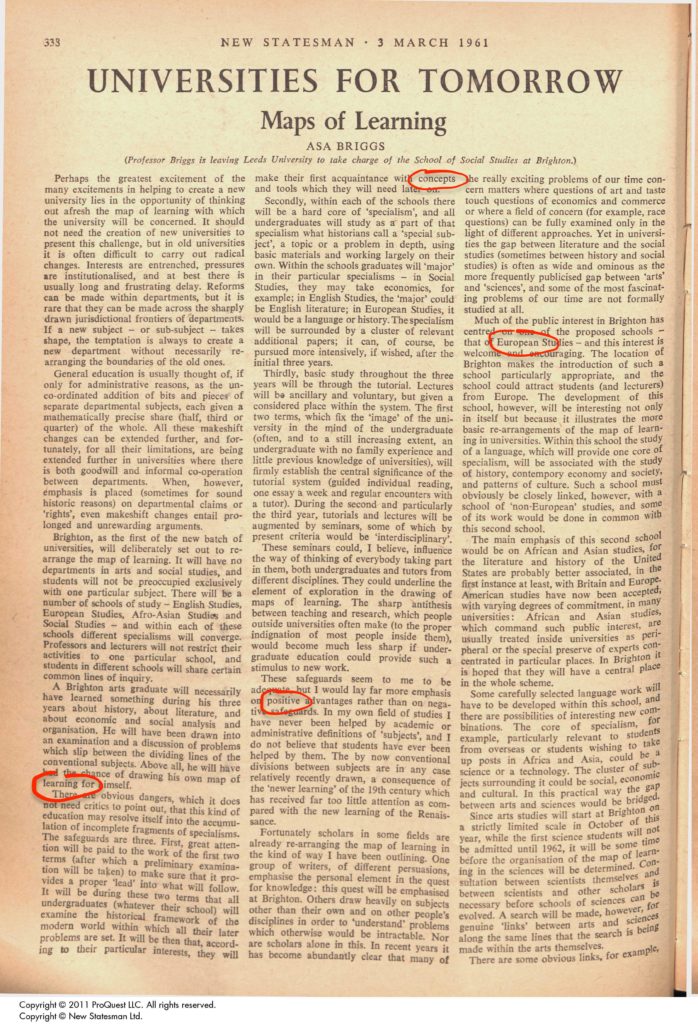
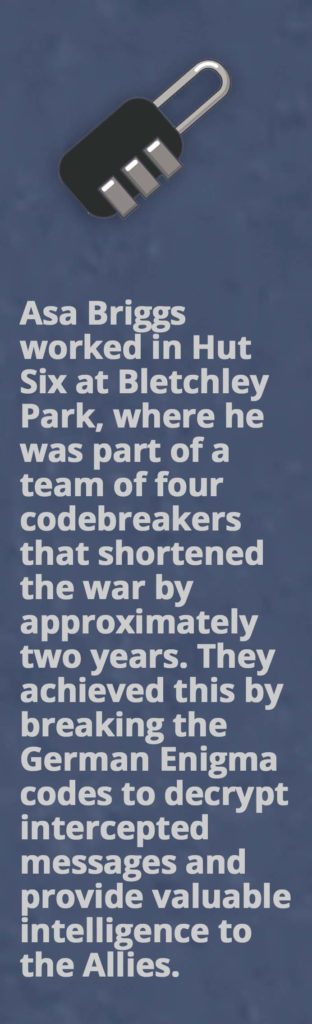
I designed and implemented an escape room for the Universities Past and Futures conference held by the School of Media, Arts and Humanities in September of 2023. This conference set out to explore what we can learn about the past of the University and how we can imagine its future by exploring the archives and showcasing the history of the University’s people and architecture. I wanted to introduce participants (students and staff) to Asa Briggs, who was a professor of history at Sussex and served as dean, pro-vice chancellor and vice-chancellor. Reflecting on his time at Sussex, Briggs stated that he had more pleasure intellectually forming the University of Sussex than all his other experiences to date (Field, 2011). Briggs’ passion for the University and his storied history working for Alan Turing’s code-breaking team at Bletchley Park inspired my idea to introduce his role at Sussex through an escape room. Assisted by my parents, who studied at Sussex, and members of the EE team, I located a variety of archival materials related to Briggs’ time at Sussex. Using these materials, I designed puzzles that would familiarise players with some code breaking techniques. We ran the session five times across the day so that different groups could participate.
Why I did it
Playful learning helps to create safe learning environments in which learners are empowered to work together, take risks and build resilience. By creatively exploring new possibilities and ways of being, students are more likely to remember what they have learned. I thought that an escape room would be an ideal way to exemplify playful techniques in education and used this event to demonstrate how we can explore University history in different ways. I also wanted to provide a team bonding experience that enhanced communication skills and an understanding of each other’s strengths. I designed this escape room to showcase the benefits of playful learning, but I also wanted to provide participants with a novel example of open scholarship, demonstrating different ways of teaching and knowledge exchange using University archives.
Impact and student feedback
Participants really enjoyed the experience and commented that it would be good for students as a way of learning. They noted that the theme of the escape room and the problems that it involved complemented the conference presentations and enabled them to engage with the ‘map of learning’ in an interactive way. I was really pleased with how the escape room provided an opportunity for conference participants to get to know each other and work together to solve problems, which provided a more meaningful way to make new connections than a typical meet and greet.
Challenges
Designing the escape room for the right level was a challenge. My expectation was that most participants would be beginners, so I did not want the puzzles to be overly difficult. This is why it is important to test the escape room with participants before implementing it at your event or in the classroom. Designing the escape room for a particular time slot was also challenging. We wanted participants to attempt the breakout room between the different conference sessions, which meant that I had to reduce the number of problems so that participants did not feel rushed. Although I designed this escape room as a short fifteen-minute activity, it could be extended to work as a longer activity for students in class.
Future plans
I plan on keeping this as a resource to demonstrate playful learning through escape rooms and as an example for others to think of designing their own.
Top tips:
Make sure to run lots of testing on your puzzles—what is obvious to you is not to everyone else and it spoils the fun if people get frustrated.
Don’t overcomplicate it! Remember the aims and plan each puzzle around that. It is tempting to add red herrings and lots more archive material, but this just takes longer to plan and makes it harder for players
Borrow do not spend! There are lots of materials that can be used as props around the university. Reach out to the Educational Enhancement team who can help lend you boxes and padlocks and old typewriters or whatever you need.
Make and test your reset plan! As this activity was being run repeatedly through the day, we needed a plan to reset things as quickly as possible. For example, the order you need to local keys back inside boxes is critical.
Learning Matters provides a space for multiple and diverse forms of writing about teaching and learning at Sussex. We welcome contributions from staff as well as external collaborators. All submissions are assigned to a reviewer who will get in touch to discuss next steps. Find out more on our About page.
Please note that blog posts reflect the information and perspectives at the time of publication.